
Who Actually Fires Your Mugs: Subcontracted Firing and the Risk It Hides
A buyer spends a day at the factory: the forming is watched, the glaze line is checked, a decoration proof is signed. Behind a wall a kiln is running, and the assumption is that it belongs to the factory and that the ware inside belongs to this order.
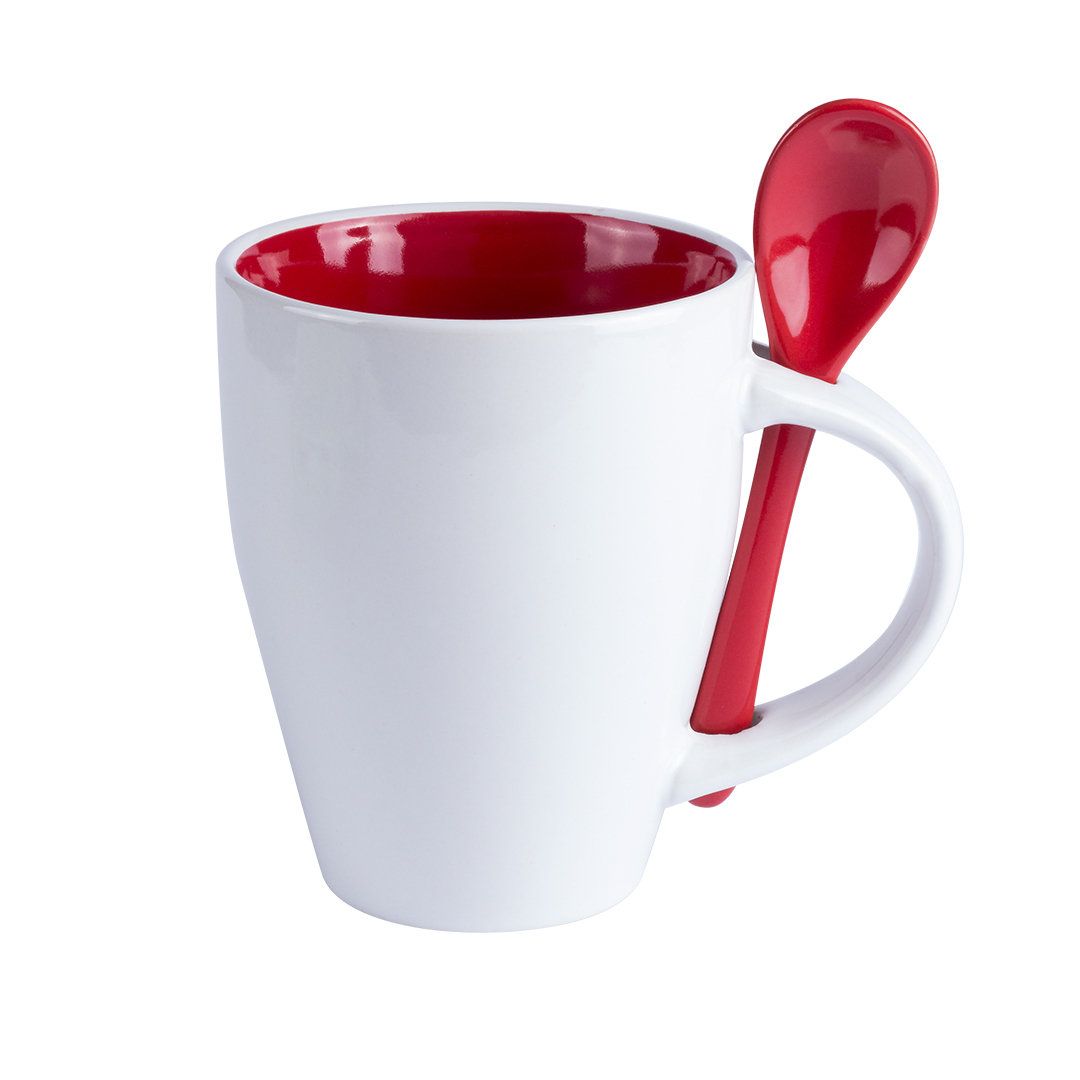
Products in this guide: Ceramic Spoon Mug with Handle Slot · Ceramic Mug with Bamboo Lid
Both are worth testing. The kiln is the most expensive and least flexible equipment in the process, and plenty of workshops that form, finish and decorate to a high standard do not own one, or own one smaller than what they quote.
Outsourced firing is ordinary industrial organisation, not a warning sign. What it changes is who controls four things the order depends on: the queue your batch waits in, the profile that fixes your colour, the party who owns a defect appearing only after firing, and how fast a reorder can be made identical.
Three models, and only one owns the kiln
- Fully integrated: forming, glazing, firing and decoration on one site, usually a continuous kiln for volume plus shuttle kilns for short runs.
- Semi-integrated: forming and glazing in-house, firing bought as a service from a kiln-owning neighbour in the same cluster.
- Decoration workshop: bisque bought in, decoration applied, and the decorating fire sent out again.
Only the first puts the production plan and the kiln calendar in one document. In the other two, the date you are quoted derives from someone else's loading schedule and is only as firm as the slot behind it.
Why the kiln leaves the building
Firing concentrates capital. A kiln wants to run continuously and near full, and cost per piece collapses only when it does, so five thousand pieces is a fraction of a cycle for a plant that must keep a tunnel kiln fed.
Gas and electricity are a large share of firing cost, and emission rules make a small, intermittently used kiln unattractive to hold, so buying firing as a service turns a fixed cost into a variable one. Peak concentration finishes the job: when a cluster's orders land together, every kiln in the district is queued. Firing is also a separate craft from forming and glazing.
What changes when the kiln is not yours
Queue priority comes first. Your batch waits in a schedule that belongs to another business with its own customers, and the date promised may already assume a slot nobody has booked.
Load sharing is second. Your ware can share a cycle with another customer's body and glaze, and setting marks, kiln dust and colour drift do not respect the boundary between two orders in one car. A cobalt glaze nearby can pull a white towards blue, which is not negligence but what a shared atmosphere does.
Attribution is third. A defect appearing after firing can belong to the body, the glaze, the setting or the cycle, so split responsibility produces a slower remedy: the first conversation is about whose step failed, not how to fix the batch.
Repeatability is fourth. Another kiln means another profile, and another profile means another colour even from the same glaze batch. You discover it on a shelf, not in a report.
The quietest version is the decorating fire
The arrangement buyers miss most often is the factory that does own a kiln, just not the one that matters for decoration.
Body firing stays in-house, decoration is applied, and the ware travels out for the decorating fire at a lower temperature. Because a kiln is visible and running on site, the question feels answered. It is not: decoration colour, gold line quality and the survival of fine detail depend on a profile set by another company, and short runs wait for a full load before they fire at all.
Ask the two steps separately. Who fires the body and who fires the decoration are different questions, and a supplier answering only the first has not answered the second.
How a buyer finds out in one afternoon
Ask how many kilns the site runs, of which type, and what monthly fired capacity is in pieces rather than value. Ask separately who fires the decoration. Then ask for the firing record of the last batch shipped, tying a date and a kiln load to an order number.
A site walk adds the rest. Kiln cars, setters and stacked kiln furniture indicate firing on site, and their absence in a plant claiming full integration is worth a question rather than a verdict.
The cheapest test is three pieces from three separate firings of the same article, side by side on a table. A supplier with a real firing history can produce them, and the differences are the honest measure of what a reorder will look like.
What to write into the order
Name the production site and the firing site in the specification, and require written notice before either changes. A silent kiln switch is a specification change and belongs in the same document discipline as any other. The spec freeze guide explains how artwork and packing files are locked between orders.
Hold one sealed reference per kiln, kept by both sides, so a colour argument has a physical object at its centre rather than two memories. The master sample guide explains how sealed references keep batches identical.
Define an attribution window and a re-fire allowance: how often a piece may be re-fired before it counts as a reject, and who pays for the handling between. A re-fired piece is rarely identical to a first-fire piece, which makes the allowance a quality term rather than an administrative one.
Add a batch record tying the kiln load to the order, so a complaint six months later is traced to a cycle instead of an impression.
The cost is not where buyers expect it
Buyers assume a factory without its own kiln must be cheaper because it carries less equipment. The arithmetic is less favourable: handling between two sites adds breakage, transport adds a truck movement and a second loading, and the queue adds time that has to be absorbed somewhere.
What the arrangement removes is control, meaning the ability to pull a batch forward, hold a colour across two orders, and answer a complaint with an internal investigation rather than a negotiation between two companies. An owned kiln is no guarantee either, since a badly loaded in-house kiln produces worse ware than a well-run shared one.
So the question is not whether the factory owns a kiln. It is whether the supplier can name the kiln that fired your order, produce three pieces from three runs, and repeat the result next time. If it can, the arrangement is irrelevant. If it cannot, the arrangement is the reason.
Related Products
Explore products featured in this guide:



Have questions? See our Sizes & Finishes FAQ and Ordering & Certifications FAQ.
Need a custom quote? Send an inquiry or browse our full product catalog.

