




Why the Wall Thickness Drifts: Casting Time, Slip and the Second Batch
Two mugs arrive from the same supplier, share a catalogue reference and weigh within a few grams of each other. One has a rim you can press until it gives; the other feels like a different object in the hand, and it is the one the buyer approves twice.
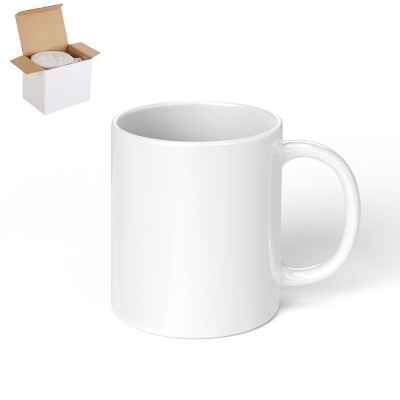
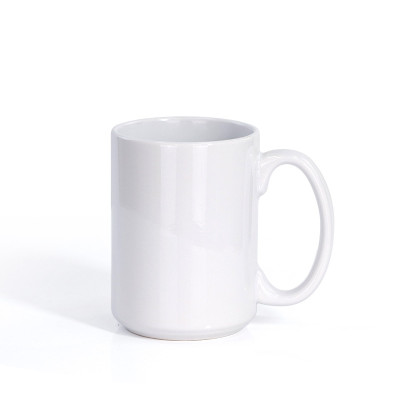
Products in this guide: 650ml Large Ceramic Coffee Mug · Porcelain Ceramic Soup Bowl
The mould did not change between them. What changed is the wall, the one dimension the tooling does not settle. A mould fixes the outside surface; on a cast piece the inside is built by the clay itself, and how much gets built depends on how long the slip stands and on the condition of the material doing the building.
So thickness is a function of time and of a material state that drifts through a shift: measurable, specifiable, and almost never written into an order.
The Mould Gives the Outside Only
Slip casting works by subtraction. Liquid clay is poured into a plaster mould, and the plaster draws water out of the slip where the two touch. Clay solids stay behind and build a shell against the mould face, which is the outside of your mug. The cavity left inside is not machined and not held to a dimension by any tool. It is the residue of however long the slip was allowed to stand.
Drain the slip and the shell stops growing, but not instantly. A film clings to the inside and keeps thickening the base while the piece stands upside down.
Jiggering and pressing reach an uneven wall by another route: thickness comes from the clay in the blank and from the profile tool shaping the inside. The tool cannot thin the base without weakening the foot, so the profile thickens downward by design.
Four Things Set the Rate
How fast the shell builds is a process question, and four inputs move it:
- Slip density and its chemistry. Water content plus the dose of deflocculant that keeps particles apart. Too little and the slip is thick and thixotropic, building fast but unevenly. Too much and it is thin and slow, draining badly and leaving a soft base.
- Plaster condition. A dry, cool mould draws hard. A mould that has run all morning is saturated and draws slowly, so the same dwell gives a thinner wall by afternoon.
- Slip temperature. Warm slip casts faster than cold. A tank that cooled overnight behaves differently in the first hour of a shift than in the fifth.
- Dwell and drain. How long the slip stands before draining, and how completely it leaves. Extra dwell is the easiest way for an operator to rescue a stubborn piece, and it is invisible in the finished goods.
These four move together, so the operator compensates by eye. That compensation is the drift: it rarely produces a reject, just a batch that weighs the same and behaves differently.
Why the Line Is Never Even
Even in a well-run plant the wall is a curve. Three physical facts make it so.
Pressure first: slip at the base stands under the weight of everything above it, so water is pushed into the plaster harder there than at the rim.
Geometry second: a rim is a narrow edge where two mould halves meet, with a large plaster area against little clay. It drains fast and cannot thicken indefinitely, so it stays the thinnest part.
Drainage third: slip left on the inner surface runs down and pools at the base, adding mass where the piece is already thickest. The taller the piece, the stronger the effect.
A wall that tapers from base to rim is normal and desirable. What is not normal is a taper that changes between batches, because then a customer holding two shipments will notice something no inspection report explains.
What the Buyer Feels When the Line Moves
A thinner rim is not cosmetic. It is the thinnest section, so it chips first in a dishwasher rack, in a stack and in a bus tub, and it heats and cools fastest, which is where a thermal-shock crack begins.
Distribution changes the hand as well. A mug can weigh the same as its predecessor and feel top-heavy or hollow, because where the mass sits matters more than the total, so a sample approved on weight and colour alone can lose the property the buyer liked. The handle junction is the other stress point: a wall gone thin there will not carry a full mug for long, and a handle that separates in service is the most expensive failure in this category.
Measure Three Points, Not One
A single caliper reading at the rim tells you almost nothing, because it cannot separate a deliberate design from a drifting process. Measure in three places: just below the lip, at mid-height and just above the foot.
Take five pieces, not one. What matters is not the average but the spread between the thickest and thinnest reading at each position: a tight spread with a consistent taper is a controlled process, a loose one is a process running on operator compensation.
Two notes. Measure fired, glazed ware in the same state both times, since glaze adds a measurable layer. And record where the caliper sat, because a millimetre either way gives a different number on a tapered rim.
What to Write in the Order
Ask for a nominal thickness at the three points with a tolerance band rather than an exact figure, plus a maximum spread within one batch. Name the approved sample as the arbiter when readings disagree, which is what a sealed reference is for: the master sample guide explains how that reference is held and re-checked The master sample guide explains how sealed references keep batches identical..
Then add the change clause, because the drift almost always comes from a change nobody announced: a new slip supplier, a different deflocculant dose, moulds replaced after wear, a longer dwell, a move to another casting line. All are product changes even when the drawing is untouched, and the spec freeze guide sets out how to word that clause The spec freeze guide explains how artwork and packing files are locked between orders..
Finally, name the method: which three points, with what instrument, on how many pieces, in which state. A tolerance without a method is a number two people will read differently.
No buyer can watch a slip tank. But the wall ends up on the outside, where a caliper reaches it, and that is the cheapest proxy for whether the process was in control. If the third delivery has a rim two-thirds the thickness of the first, something changed in that plant. The e-mail will not mention it, which is why the measurement belongs in the order.
Related Products
Explore products featured in this guide:


Have questions? See our Sizes & Finishes FAQ and Ordering & Certifications FAQ.
Need a custom quote? Send an inquiry or browse our full product catalog.