





The Idle Mould: What Happens Between Order Two and Order Three
A custom mug shape is a small asset with a long, mostly empty calendar. It runs for two or three weeks, the order ships, and the mould goes back on a shelf. A buyer who reorders twice a year leaves it doing nothing for the other forty-eight weeks.
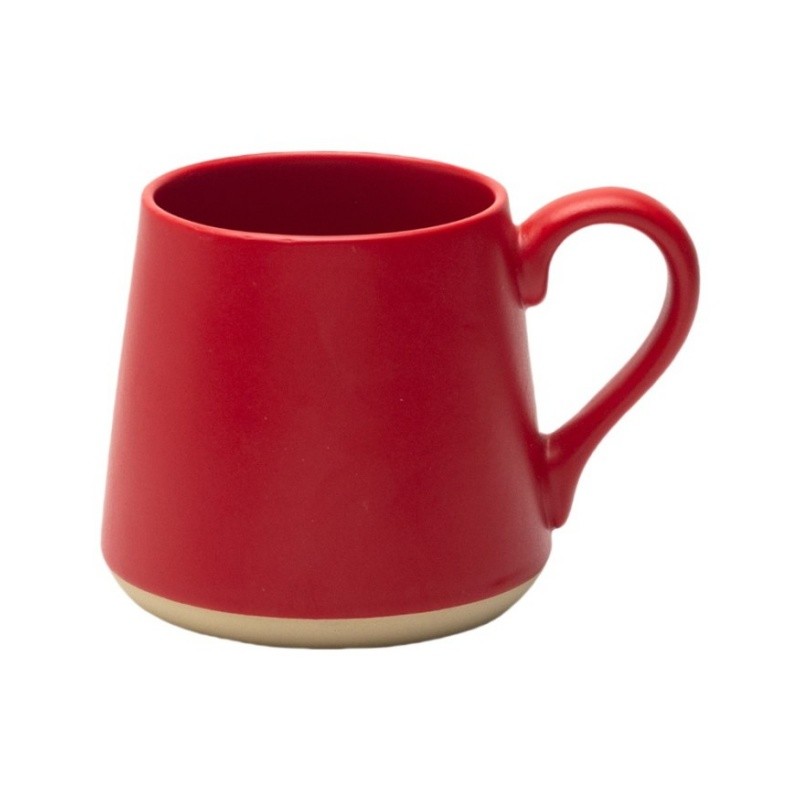
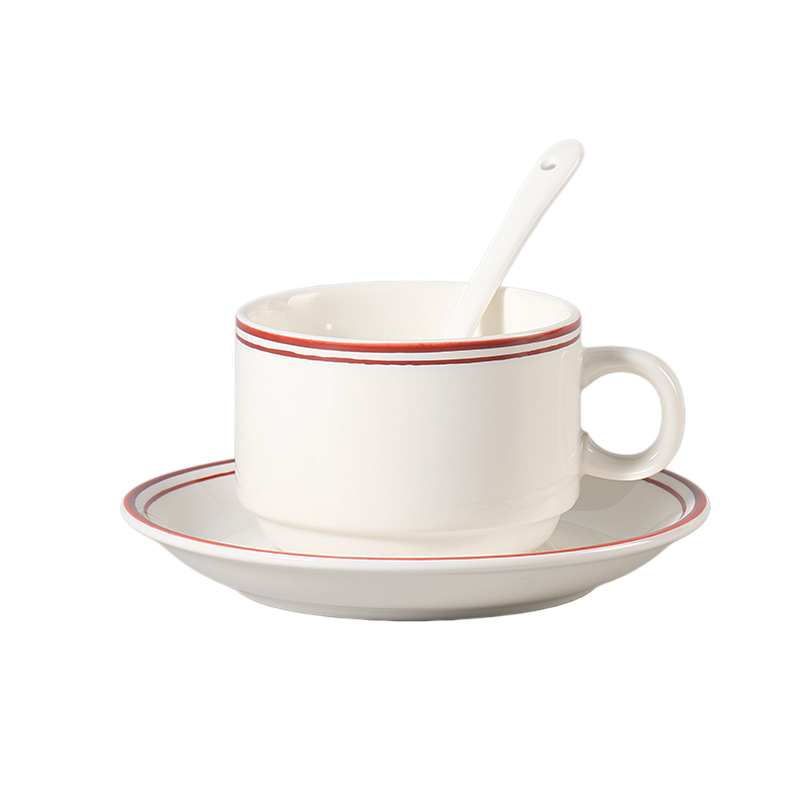
Products in this guide: 500ml Stoneware Ceramic Mug Matte Glaze · Custom Coffee Cup and Saucer New Bone China Set
That idle time is not neutral. A mould is porous or metallic, it sits in a building with weather in it, and it is moved by people whose attention is on a container loading this week. Most size and surface problems we are asked to explain on a third run were decided in that idle period, not on the line.
What follows is how we look at an idle mould from the factory side, what a buyer can reasonably ask about it, and what belongs in the order while the mould is still new. See the full ceramic sourcing process map.
What You Actually Paid For
A quotation line that reads mould can hide two or three different objects. For a jiggered or ram-pressed mug there is a master or case mould that carries the shape, and a set of working moulds, usually plaster, which touch the body. For pressure casting, or a handle with a heavy undercut, there may be a metal or resin mould instead.
So the first question is which of them exists, and how many working moulds the set contains. A set of two and ten behave differently when one is retired, and the invoice rarely says which you bought.
Plaster Ages by Absorbing
A plaster working mould takes water out of the body on every cast. Drying between casts returns it, and each cycle takes a little of the surface with it, so the working face slowly loses the sharpness that made the piece.
Idle time is where the damage concentrates. A plaster mould left in a humid shed keeps the water it should have given up, and a soft mould deforms under its own weight and whatever is stacked on it. One dried too fast in front of a heater does the opposite: it shrinks unevenly and the cavity drifts slightly oval.
Run three starts, pieces leave the kiln a millimetre narrow at the rim, and nobody connects that to the mould spending August in a damp corner. A plaster working mould is normally good for a few hundred to a couple of thousand casts. Where a mould sits inside that range is only knowable if somebody counted. The spec freeze guide explains how artwork and packing files are locked between orders.
Steel and Resin Age by Handling
A steel cavity absorbs nothing, but its working face is polished, and a polished face sitting in humid air will rust. Rust is a change of surface rather than a stain that washes off, and the first pieces made after it carry the texture.
Resin and polymer moulds fail at the edges, at the flange and around the ejector points, and they fail from being lifted and moved rather than from being used. A mould dragged across a floor once a year for eight years has been damaged eight times.
Where It Sits Matters More Than How Long
Two moulds can be idle for the same period and come back in different condition. The difference is the store.
- Off the floor, on a rack, working face protected and nothing resting inside the cavity.
- Away from the kiln, where the air is hot and dry, and away from the glaze line, where it is wet.
- Nothing stacked on top of a plaster mould, including other plaster moulds.
- A cover that keeps dust off but is not sealed tight, because a sealed bag holds moisture in.
- One label per part: article code, cavity number, the date it last ran and the number of casts taken.
- One person who controls access, so the set is not borrowed for another buyer's trial and returned with a chipped edge.
Most of that costs a rack and a marker, not a new mould.
The Record Nobody Keeps
Four facts decide whether a reorder is a copy or a near miss: how many working moulds are in the set, how many casts each has taken, the first-piece measurements from the last run, and where the mould is now.
Factories answer the first, sometimes the second, and rarely the third unless asked. That record exists if the last order was inspected at first-off. The fourth question is a phone call worth making before the deposit.
Four Checks Before the Reorder
Ten minutes at the start tells you what kind of run it will be.
- The first piece measured against the sealed reference you approved, at the rim, the height and the foot diameter.
- The foot ring on a flat slab, watching for rock rather than measuring for it.
- The handle joint, where a tired mould shows first, as a line or a step at the seam.
- The weight of the first ten pieces against the last run, because a thin wall is a mould that has lost material.
If one of the four has moved, the decision belongs to the mould, and it belongs before the run. After the run it becomes a sorting problem. The master sample guide explains how sealed references keep batches identical.
What to Write Into the Order
A mould clause is short and it is worth more than its length.
- The storage term: how long the factory holds the mould without charge, and what happens when that period ends.
- Access: the right to inspect it, or to have it photographed, on request.
- Replacement: who pays when the mould fails before the expected number of casts and the shape is still in production.
- Notice: how much warning before the factory scraps, re-purposes or recycles the mould.
For a shape that runs once a year, the replacement line matters more than the storage line. A mould that fails in year four means a new mould and a second sampling round, and the buyer without the clause pays for both.
What to Put in the First Enquiry
- Whether the shape is new or comes from the factory's existing body of shapes, and how many working moulds the quotation includes.
- How many runs a year you expect, and the usual interval between them.
- Who stores the mould between runs, and for how long.
- Whether a first-piece record exists from the previous supplier.
- The article code and cavity number you want marked on the mould.
Our minimum is 5,000 pieces per item or per decoration, so a custom shape is a decision about several years, not one season. Treat the mould as a piece of equipment that belongs to you, ask where it lives, and the third run stops being a surprise.
Related Products
Explore products featured in this guide:
Have questions? See our Sizes & Finishes FAQ and Ordering & Certifications FAQ.
Need a custom quote? Send an inquiry or browse our full product catalog.