




The Bamboo Lid: Moisture, Mold and the Lines That Prevent Both
The mug was approved on its body. Glaze, weight, handle, rim and print each went through a sample round, and the lid came along because it was already on the sample. Nobody wrote a line about it. Six months later the container opens in a humid port, the lids carry a pale bloom underneath, and the argument begins about whose defect it is.
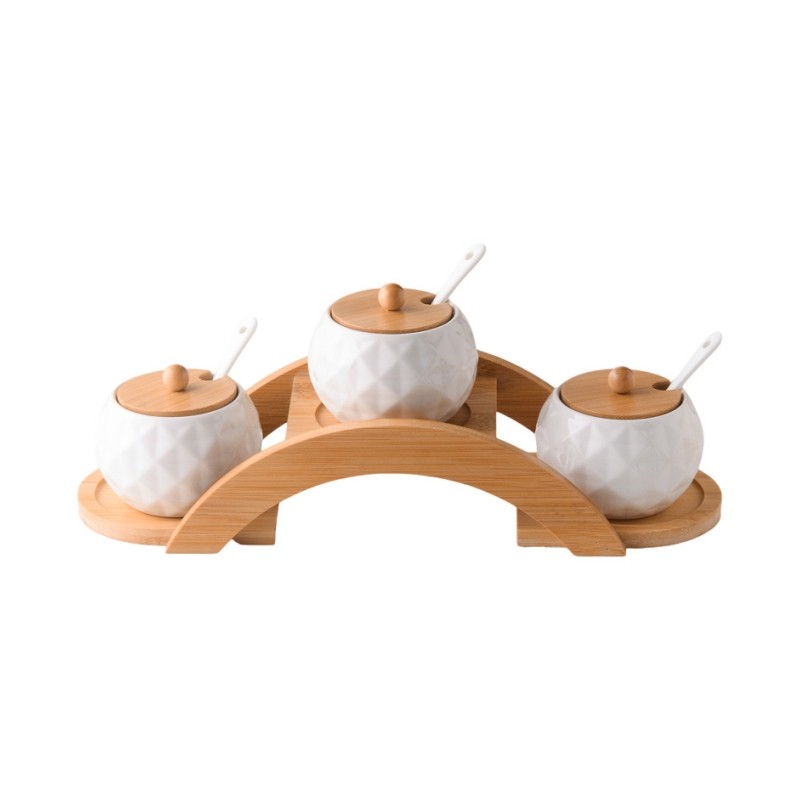
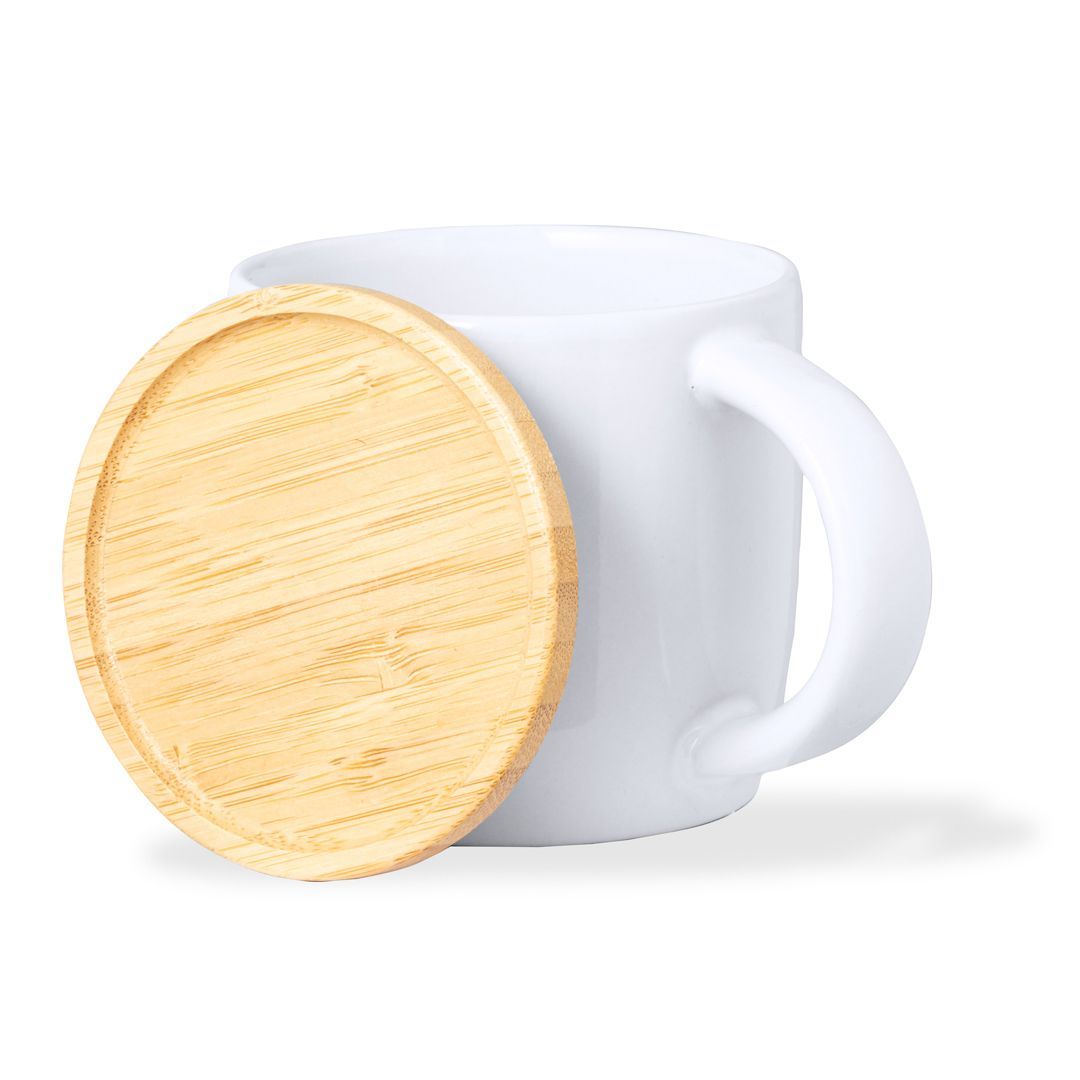
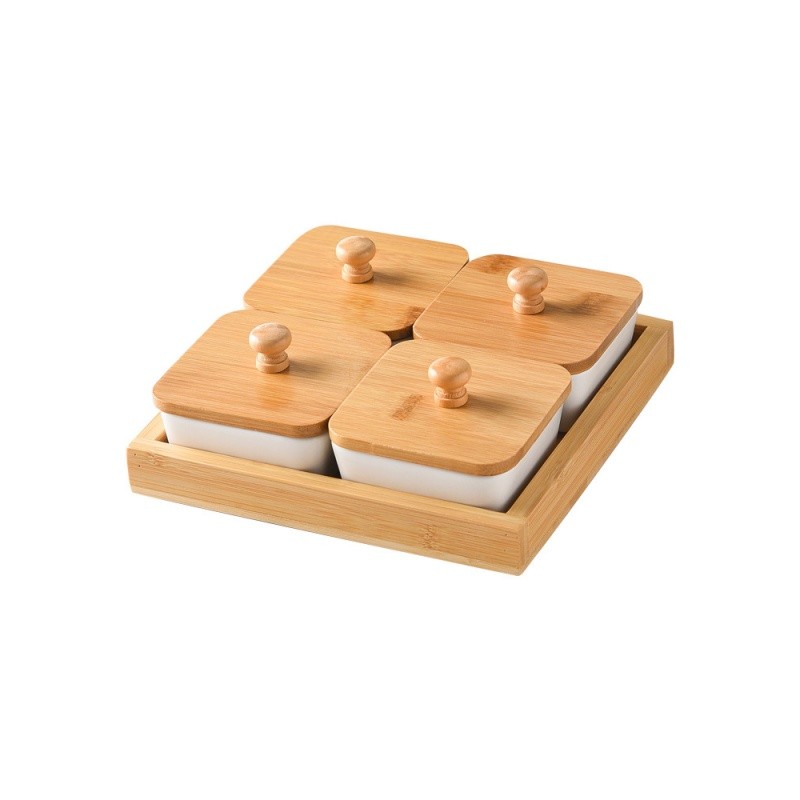
Products in this guide: Nordic Spice Jar Set with Bamboo Lids · Ceramic Mug with Bamboo Lid
It is neither a ceramic defect nor a packing defect. Bamboo is a second material sitting on top of one that does not move. Fired ceramic is dimensionally finished; it will not swell in July or shrink in a dry warehouse. Bamboo does both, by enough to change whether the lid closes.
So the lid is three decisions, not one: what it is made of, how much water it still holds when packed, and what happens at the joint when the two materials disagree. None is answered by the phrase bamboo lid, and none belongs to the supplier who makes the body.
What the Word Bamboo Covers
Bamboo is a trade word, not a specification. At least three constructions hide under it, and they behave differently in service:
- Solid bamboo, machined from the culm. Dense, the most stable along the grain, and the most expensive.
- Strip or side-glued board, where narrow strips are bonded into a panel and machined into a disc. This is the common construction for lids, and the adhesive line becomes part of the food-contact surface.
- Bamboo veneer over another substrate, which is lighter and cheaper and behaves like the substrate rather than like bamboo.
Two lids that look identical in a photograph can be any of the three, and the finish changes how visible a water mark becomes. The line worth writing names the construction, the adhesive and the finish, not the species alone.
Moisture Is the Variable That Decides the Rest
Wood and bamboo are hygroscopic. They hold water in equilibrium with surrounding air, swelling across the grain as humidity rises and shrinking as it dries. A lid machined for a dry inland workshop, then shipped for weeks in a container far more humid inside, arrives as a different object.
The direction of the change is predictable even when the degree is not. The disc grows slightly, so a lid that seated with a light push now jams. Flatness shifts, so a lid that sat flush rocks on the rim. And if moisture stays high long enough, mold joins in, usually on the underside where air does not move.
Three lines remove most of it: a moisture content figure measured at packing rather than assumed, a dried unit pack with desiccant where the route justifies it, and a rule that lids are conditioned in the same environment as the ware before packing. The number matters less than the record, which is what lets both sides discuss the same lid.
The Failures That Come Back as Complaints
Most lid claims fall into five groups, each with a different fix:
- Mold or mildew, a pale bloom or dark speckling on the underside and edge. The cause is moisture plus time.
- Warping, where the disc loses flatness and the lid no longer sits without pressure.
- Splitting at the edge or along a glue line, following repeated wetting and drying.
- Odour or taste transfer, where the adhesive or a finishing oil is the source rather than the ceramic.
- Loosening or jamming, where the gap between two materials has simply exceeded the clearance designed in.
Only the last is visible in a factory. The rest appear in the market, which is why they arrive as photographs rather than as inspection findings.
Fit Is a Tolerance Between Two Materials
A ceramic rim is a fixed dimension inside its firing tolerance. A bamboo lid is a moving dimension inside its moisture band. The fit that matters is therefore not the one measured on the approval sample in the sample room; it is the fit across the conditions the product will actually meet.
The workable approach is to specify fit as a behaviour rather than a millimetre figure. State how the lid seats once conditioned to market humidity, whether it drops in, needs a light push, or seals on a silicone ring, and how much movement is acceptable before it counts as tight or loose. Then approve the sample in the condition it will reach the customer in, not straight off the drying rack.
Food Contact, Finish and Who Holds the Paper
The lid touches the drink, so it is a food-contact article in its own right, and the paperwork follows the lid, not the mug. A ceramic report on lead and cadmium release says nothing about a bamboo disc, its adhesive or its finish.
Finish holds most of the ambiguity. An oiled or waxed surface is traditional and needs re-oiling to stay sealed; a lacquered one is more durable and raises its own migration questions; an untreated surface is the most honest and stains fastest. Whatever is chosen, ask what the finish is, what evidence supports its use in contact with food, and whether the supplier will state that the lid is not intended for dishwasher use. Not a limitation to hide. A lid expected to survive a dishwasher will fail, and printing the care line costs nothing.
What to Put in the Order
The clause does not need to be long, but it has to name the component:
- Construction and adhesive, not just the word bamboo.
- Moisture content at packing, with the test method and the recorded figure.
- Conditioning and unit packing, including desiccant where the route requires it.
- Fit described as a behaviour, tested after conditioning, with a definition of too tight and too loose.
- Finish type, food-contact evidence, and the care instruction that ships with the product.
- Who supplies replacement lids, and when.
The master sample guide explains how sealed references keep batches identical.
A lid is the cheapest part of a ceramic programme and the fastest route to a complaint that has nothing to do with ceramic. The body behaves as specified; the lid is the variable nobody wrote down. Naming its construction, its moisture figure and its fit behaviour takes an afternoon, and it turns a market-side argument into a line a factory can be measured against.
Where a programme runs across seasons and markets, that same discipline is what keeps a reorder identical to the first shipment. What matters here is simpler: the part the customer touches first deserves a specification, even when it is not made of clay.
Related Products
Explore products featured in this guide:

Have questions? See our Sizes & Finishes FAQ and Ordering & Certifications FAQ.
Need a custom quote? Send an inquiry or browse our full product catalog.

