From ODM to OEM: Choosing the Right Customisation Level for Your Ceramic Program
The Problem: "Custom" Is a Spectrum, Not a Switch
Buyers often arrive with one word — custom — and one expectation: their logo on a mug. But the industry's customisation levels differ enormously in what you control, what you pay and how long you wait. A buyer who only needs a logo but commissions a full OEM development pays for tooling and months of sampling they did not need. A buyer who needs a true proprietary shape but keeps ordering a stock body with a printed logo will find a competitor selling the identical mug within a season. Choosing the right level for your current stage — and knowing how to step up when the time comes — is one of the highest-leverage decisions in ceramic sourcing.
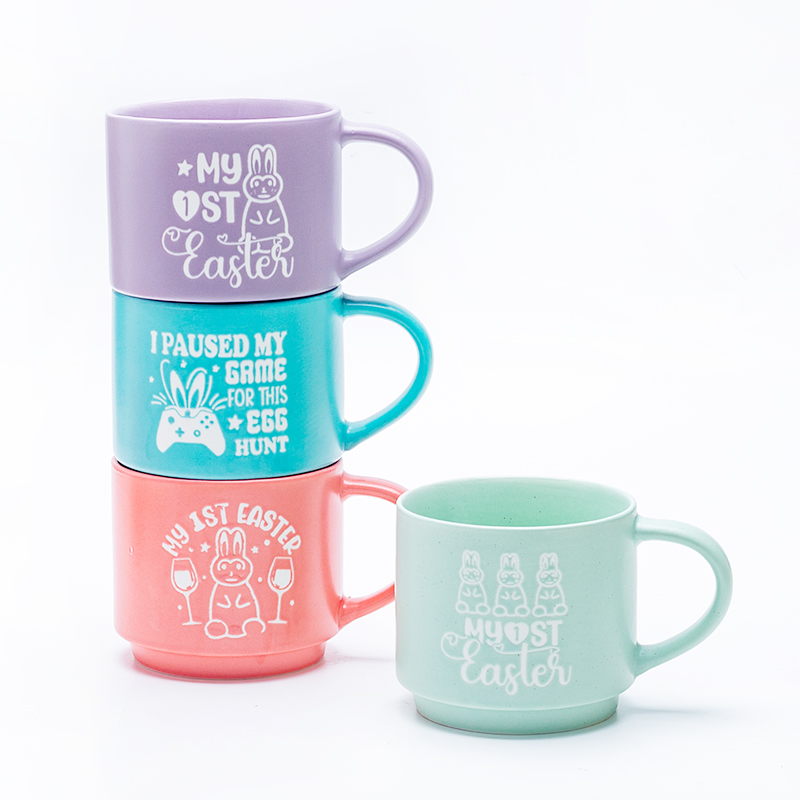
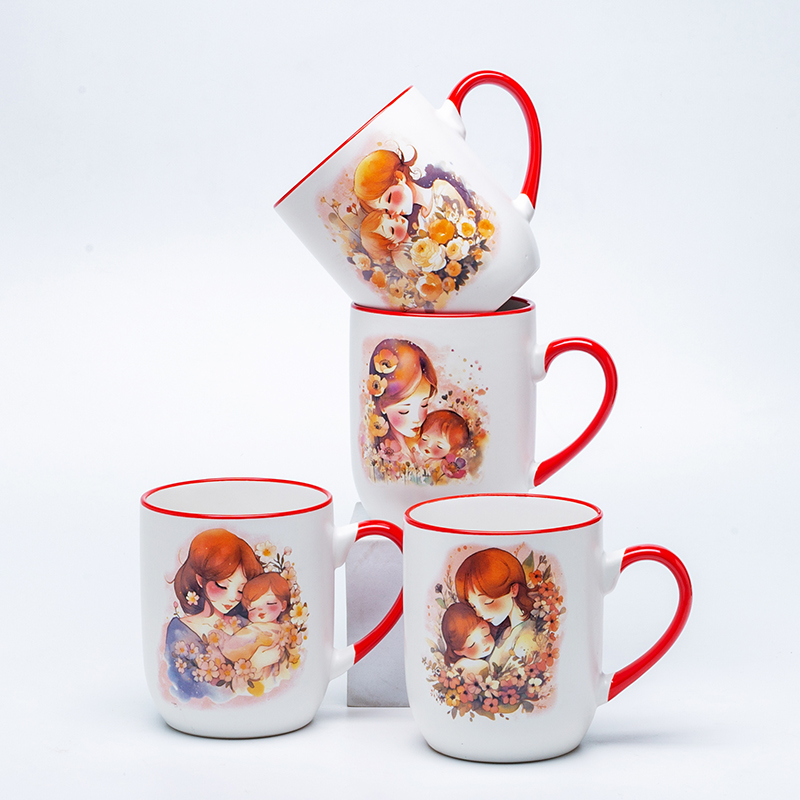
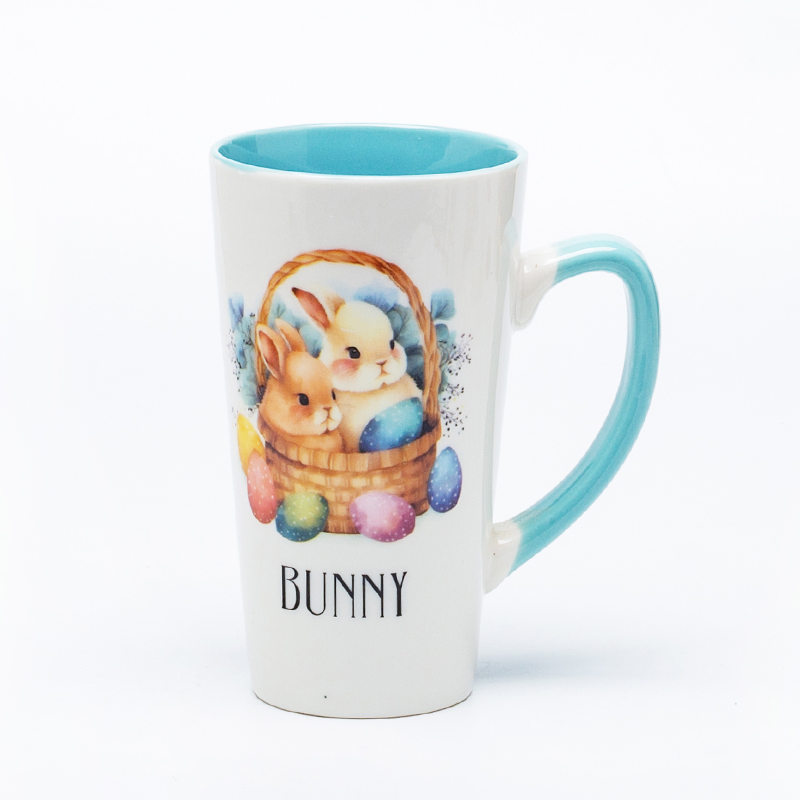
Products in this guide: Debossed Logo Easter Solid Color Stackable Ceramic M · Ceramic Decal Printed Mother's Day Ceramic Coffee Mu
Where This Fits in the Sourcing Chain
Whichever level you choose, the customisation you approve must be locked in writing before production — that is the spec freeze discipline every repeat buyer relies on. The spec freeze guide explains how to lock artwork and packing files between orders. And whatever level you operate at, the sealed master sample is what makes every batch match the one before it. The master sample guide explains how sealed references keep batches identical. The full journey from first inquiry to repeat program follows the standard sourcing map. See the full ceramic sourcing process map.
Level One: Stock Body + Your Logo (White-Label Territory)
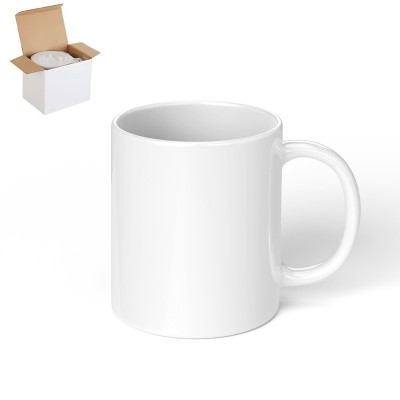
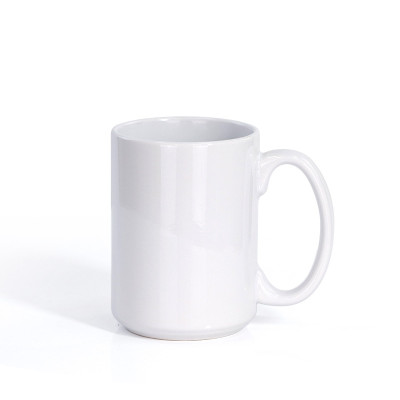
This is where most programs should start. The factory already makes the mug; you choose a body and glaze from its existing range and apply your decoration — a decal, a debossed logo, a printed band.
- What you control. Colours, logo placement, decoration method, packaging print.
- What you do not. The shape, the mould, the body recipe. Anyone can order the same mug; only your decoration distinguishes it.
- Cost and time. No tooling. Sampling is a printed pre-production sample, not a shape development. Lead time is ordinary production time plus decoration.
- When it is right. Testing a market, building a promotional line, or covering a price-sensitive tier of your assortment. A debossed logo on a stock stackable mug delivers brand presence at stock-body economics.
Level Two: Semi-Custom (Modified Stock)
Here you take an existing body and change something structural but bounded: a handle style from the factory's handle library, an internal glaze colour against an external one, a foot ring, a size adjustment within the mould family.
- What changes. The factory may reuse an existing mould with modifications or combine existing components in a new way. Development cost is far below full tooling, but it is not zero, and the result is at least partially exclusive for an agreed period.
- The key question to ask. Whether the modification creates a mould the factory can resell to others, and if so, what exclusivity window applies. This is a commercial term, not a technical one — settle it before development starts.
Level Three: Full OEM (Your Shape, Your Recipe)
Full OEM means the product is developed from your design: a new mould, your glaze specification, your packaging architecture.
- What you control. Everything — silhouette, capacity, wall thickness, handle geometry, glaze finish. Nobody else can order this mug.
- What it costs. Tooling, multiple sampling rounds, and a development timeline measured in months, not weeks. You also carry the risk if the market rejects the design.
- When it is right. When a shape has proven itself in semi-custom or stock form, or when the design is the brand. It is the endgame of a sourcing relationship, not the opening move — which is why brands usually arrive at it after years of annual OEM partnerships with the same factory. The artwork redesign guide explains how to change decoration on a proven shape.
How to Step Up Without Paying Twice
The three levels are a ladder, not separate doors. The practical route: prove demand on a stock body with your decoration; move the winning design to semi-custom once volume justifies partial exclusivity; and commission full OEM tooling only for the shapes whose sales data proves they deserve to be yours alone. At every step, what protects you is the same pair of disciplines — an agreed specification in writing, and a sealed sample that defines what "correct" looks like. Buyers who skip the ladder either overpay for tooling the market never validates, or under-protect a design that deserved ownership from day one.
The next step for most buyers is a quotation: our bulk order page starts with specification and target quantity.
Related Products
Explore products featured in this guide:

Have questions? See our Sizes & Finishes FAQ and Ordering & Certifications FAQ.
Need a custom quote? Send an inquiry or browse our full product catalog.