
Before the Mould: The Design Review That Decides What Your Ceramic Can Actually Be
Somewhere between the render and the first fired piece, a conversation has to happen about what the shape is willing to do. It rarely happens in a meeting. It happens quietly, in a workshop, after the drawing has been accepted and before the mould is cut.
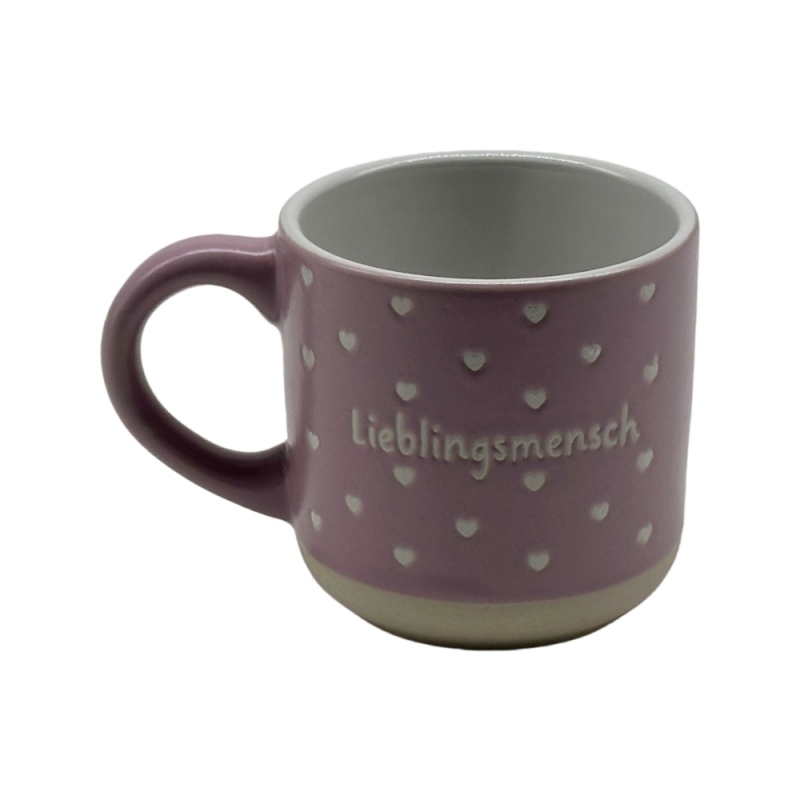
Products in this guide: Vintage Couple Illustration Ceramic Mug 365ml · Colorful Mini Ceramic Bowls
A rendering answers one question: does this look right. Production asks four more. Can the form be made, can it be dried without opening a crack, can it leave the mould without dragging, and can it come through the kiln with its geometry intact. A shape can pass the first question and fail all four.
This is not a story about factories cutting corners. Most redesign is well meant: a technician rounds a corner that would have chipped, thickens a rim that would have sagged, lowers a handle that would have drooped. The problem is that the change is made by the party with the least information about what the shape is for.
A render is a surface, not a sequence
Follow one mug through the plant: someone casts it, someone trims it, someone sets it in the kiln. Each sees a different object. The caster sees a cavity, the dryer operator sees where the water leaves last, the kiln loader sees where the piece touches a shelf.
A 3D model holds none of that. It holds the outer surface as an ideal: uniform, gravity-free, already fired, already the right size.
So the first question is not aesthetic. It is which step this geometry makes harder. The spec freeze guide explains how artwork and packing files are locked between orders.
Five constraints that decide whether a form can be made
- Wall continuity. A wall that steps from thin to thick over a short distance is where drying cracks begin. The thin section gives up its water first and pulls away from the thick one. A gradual transition costs nothing and removes most of that risk.
- Radius at internal corners. A sharp inside corner concentrates stress, traps glaze and fights release from the mould. A small fillet usually reads sharper than the drawing suggests.
- The handle junction. A handle is an unsupported mass hanging off a wall that is still soft. Contact area, taper and the support used during drying decide whether it sags, cracks at the joint, or survives.
- Depth and draft. Anything deep needs a taper so the piece can leave the mould without dragging. A straight-sided deep form is possible, simply slower, and slower means more handling per piece.
- Flatness at size. A large flat area is the hardest thing to keep flat, because shrinkage is not even across a plate and a kiln shelf is not a perfect plane. Ribbing, a foot ring or a shallow dish are the usual answers.
None of these are opinions about taste. They are the process describing itself.
Shrinkage rewrites the numbers you approved
The mould is not cut to the size of the finished piece. It is cut oversize by the measured shrinkage of the body, and that figure belongs to the clay, the water, the forming method and the firing curve. It is measured per body and per plant, not read off a table.
Which means the number on your drawing is a fired number, the tooling is built from a green number, and the conversion belongs to whoever owns the body. Two habits follow. State whether each dimension is measured before or after firing. And ask for the range the plant can hold rather than a promise of the nominal.
The redesign that happens without a decision
Then there is the quiet version. The first sample arrives. It is ninety-five percent the drawing: the wall is a little thicker, one corner is softer, the handle sits lower, and the piece weighs more than the brief said. It photographs beautifully. The buyer approves it, because it is close and the schedule is tight.
Three things happen at once. The sample becomes the standard. The change disappears from the file. And the party who decided what the product would be no longer owns the brand.
Sometimes the outcome is right. A very thin wall on a commercial mug is not a design choice, it is a breakage waiting for a dishwasher. But the buyer should be the one who decides that, on paper, before the tooling exists. Approving a photograph of a piece someone else already altered is not a decision, it is a ratification.
Three kinds of cannot
The sentence we cannot make this covers three different situations, and only one of them is about design.
The process cannot. The geometry fights physics: a sharp internal corner in a formed piece, an undercut that will not release, a wall thin enough to slump in the kiln. This is a real answer, and it arrives with a redesign proposal.
The tooling cannot. The plant can make the piece, but not with the mould it has, or not with a mould it is willing to cut at this order size. That is a tooling and quantity conversation, not a design failure.
The order cannot. The plant can make it at a different volume, a different rhythm or a different cost. That is a commercial answer and should be stated as one, not dressed up as a technical limit.
A supplier who gives the third answer while implying the first is avoiding a negotiation, not answering a question. A buyer who cannot tell the three apart will keep redesigning a product that was never the problem. The master sample guide explains how sealed references keep batches identical.
What the change note has to say
Whatever the reason, a change to the form should leave a trace. One page, five lines:
- What changed, in the drawing's own units: the radius, the wall, the height, the junction.
- Why it changed, in process terms rather than reassurance.
- What it does to the product: weight, capacity, decorated area, stacking, the feel in the hand.
- What it does to the order: sample round, tooling, schedule.
- Who approved it, and when.
The last line turns a favour into a decision. It also protects the factory: a documented agreement is easier to defend than a verbal one when a customer complains in month six that the mugs feel heavier than the sample.
Two minutes before the mould
None of this needs a technical department. It needs one conversation at the right moment, with the person who will set the mould, and one page kept with the specification pack.
The cheapest design change in the whole project is the one made with a pencil, before the tooling exists. Every change after that is a schedule decision wearing a design costume.
Related Products
Explore products featured in this guide:



Have questions? See our Sizes & Finishes FAQ and Ordering & Certifications FAQ.
Need a custom quote? Send an inquiry or browse our full product catalog.

