





Where the Glaze Goes Thin: Pale Rims, Sharp Edges and the Batch That Shows It
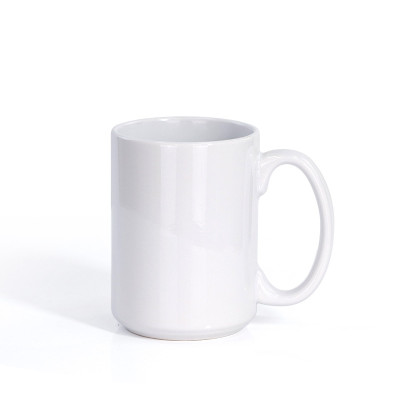
A hotel buyer opens a carton of dark-glazed mugs and sees a pale ring around every rim. The body is deep blue-grey; the edge is lighter, almost the colour of the biscuit underneath. The glaze may be at fault, or the edge may have been wiped on purpose. Usually it is neither, and the answer sits in a dimension nobody wrote into the order.
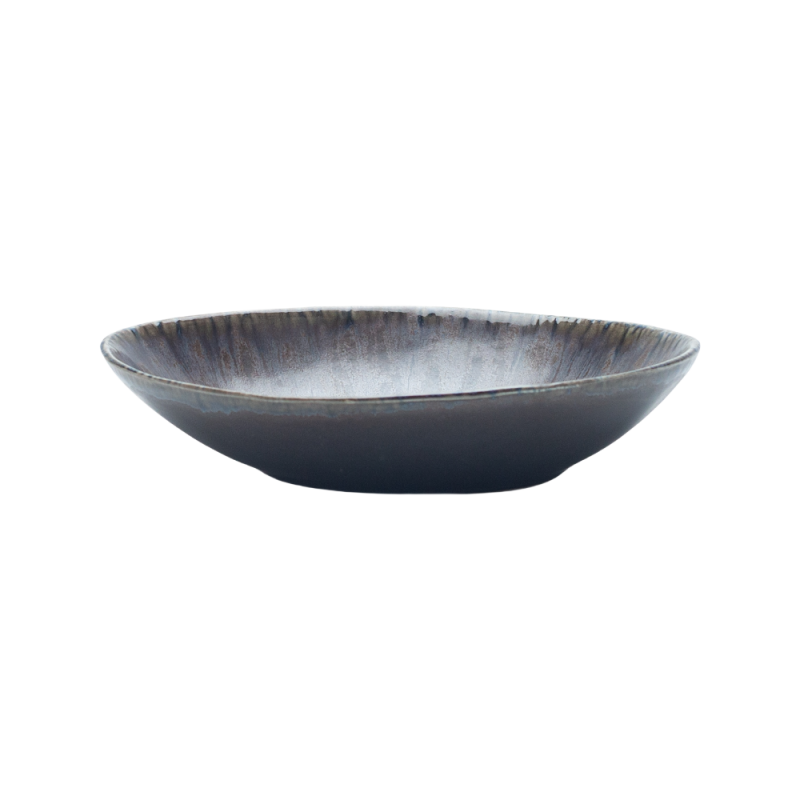
Products in this guide: Kiln-Varied Gradient Ceramic Mug 360ml · Reactive Glaze Stoneware Bowl
Glaze is applied as a liquid film, and it stays a film. Where it is thick, a dark glaze looks deep and holds its colour. Where it is thin, the same glaze reads pale, because part of what the eye sees is the light body behind it. The rim happens to be the thinnest part of almost every dipped mug, and it is thin for physical reasons rather than careless ones.
This guide walks through where glaze thickness goes on a form, why the edge is always the first place it goes missing, what separates a documented rim from a defect, and the lines that move the whole question from opinion into specification.
Glaze Is a Film, Not a Coat
A coat suggests something laid on at even depth. A dipped glaze is a film that forms while the piece is moving: it enters the slurry, waits a set time and is withdrawn, and as it rises the slurry drains off, leaving whatever the pickup and the drainage settle on together.
Three variables set that balance: how much solid the slurry carries, how freely it flows, and how fast and smoothly the piece leaves the bath. A fourth sits underneath: how thirsty the biscuit is. A dry, warm body pulls water from the film quickly and holds a heavier layer; one that has stood in humid air pulls less, and the same dip leaves less behind.
None of this is fixed by the glaze recipe, which is why two factories working from the same supplied glaze can ship two different edges.
The Rim Is the Hardest Place to Hold
At the rim the film has nowhere to rest. It is the highest point while the piece drains, the surface is small and convex, and gravity pulls the liquid down the wall, so what survives at the edge is thinner than the wall below it.
Firing finishes the job. At peak temperature the glaze is a viscous liquid, and surface tension pulls it off sharp edges and into hollows. A crisp rim, a ribbed wall, a moulded band: every raised feature ends up with less glaze than the flat field beside it, and every recess ends up with more.
On a white glaze none of this shows: a thin white film over a white body is still white. On a dark or reactive glaze it is the first thing anyone notices, the edge turning grey or chalky all the way around.
Where the Millimetres Actually Go
On an ordinary dipped mug, thickness is not a single number. It is a map, and the map has a shape:
- The rim and the outer lip: thinnest, the first place a dark glaze reads pale, and the point where a chip begins.
- The inside base and the foot: thickest, because the film pools while the piece is inverted and because the interior is often topped up with a second pass.
- Ribs and raised decoration: thin on the crest, filled in the groove, which is why a textured glaze looks striped.
- Handle junctions and shadowed corners: over-thick, and the usual origin of a run, a drip or a blister.
- The wall just above the foot: variable, because drainage slows there and because a dry patch is often touched up by hand.
Why Two Pieces From One Batch Differ
Thickness drifts through a shift too, by the mechanisms that make wall thickness drift.
A biscuit straight from a warm dryer drinks the film harder than one cooled overnight. Slurry thickens as water evaporates and glaze leaves on pieces; the operator adds water and density moves. A rhythm that speeds up at the end of a shift leaves a thinner film. A dry patch gets a second stroke of the brush, and one mug in twenty now carries a locally doubled layer.
Each of these is small on its own. Together they explain why the pale ring on one mug is a hairline and on the next is a band.
Defect, Design or Just the Glaze
A pale rim is a defect when the glaze has failed to cover: body showing through continuously, an edge that feels rough under a finger, a ring wide enough to read as another colour from a metre away. It is a design decision when the factory has deliberately wiped the rim, which is a real technique on dark glazes and produces a clean, even, intentional line.
Between them sits the ordinary case: a thin edge on a dark glaze, consistent around the piece and across the batch. That is neither good nor bad until someone writes down what is acceptable, and what settles it is a sealed reference with a marked limit.
What to Write in the Order
Four lines carry most of the weight. Name the glaze system and the approved colour reference. State whether the rim may show body and how wide a band is tolerable. Keep the approved piece as the arbitration reference, with a limit sample taken at the edge. And require the application method and slurry control to be recorded, so a change of method surfaces as a change, not a surprise.
The master sample guide explains how sealed references keep batches identical. is the discipline this rests on: a sealed reference that outlives the order, so the next batch is compared against a physical piece instead of a memory of one.
What a Photo Cannot Show
Thin glaze on a sharp edge is the least photographable defect in ceramics. A phone camera lifts contrast where the eye is most sensitive, and a screen renders every edge brighter than it is. Two buyers on two screens will disagree about whether a rim is pale, and both will be describing what their display did.
The usable evidence is a physical piece, under the light the customer uses, beside the reference. That is why claims about a pale rim are so often lost: the photograph that started the argument proves nothing.
None of this makes the rim thicker. It moves the question from taste to specification: which glaze, which edge, how much body may show, which piece decides. A supplier who can answer those four has the glazing area under control. A supplier who answers with a photo does not.
Related Products
Explore products featured in this guide:

Have questions? See our Sizes & Finishes FAQ and Ordering & Certifications FAQ.
Need a custom quote? Send an inquiry or browse our full product catalog.