


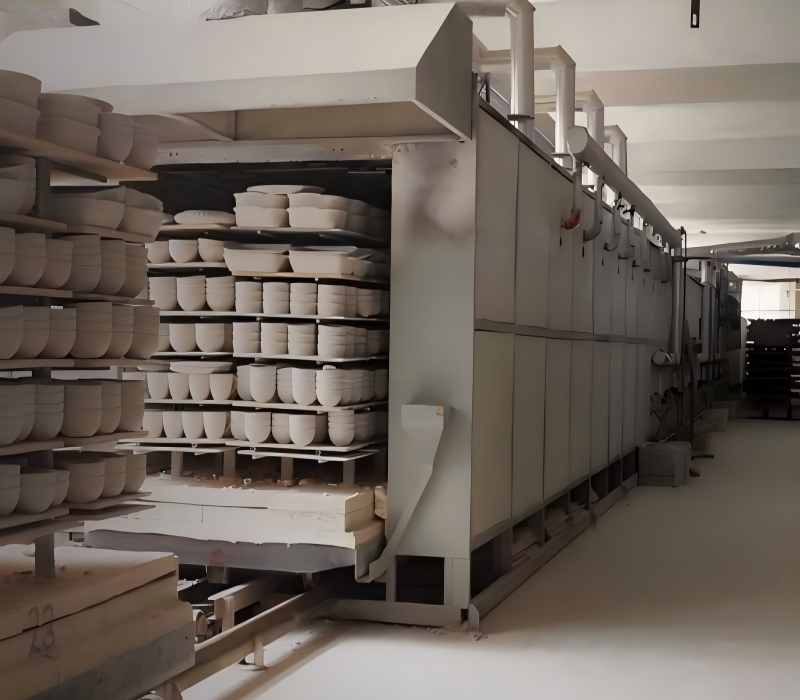


The Water Still in the Body: Why Thick Ceramic Explodes in the Kiln
A carton is opened at the customer's warehouse and three casseroles inside are in pieces. The outer box is unmarked, the dividers are in place, and nothing about the pallet suggests rough handling. The obvious conclusion is transit damage, and the claim goes to the forwarder.
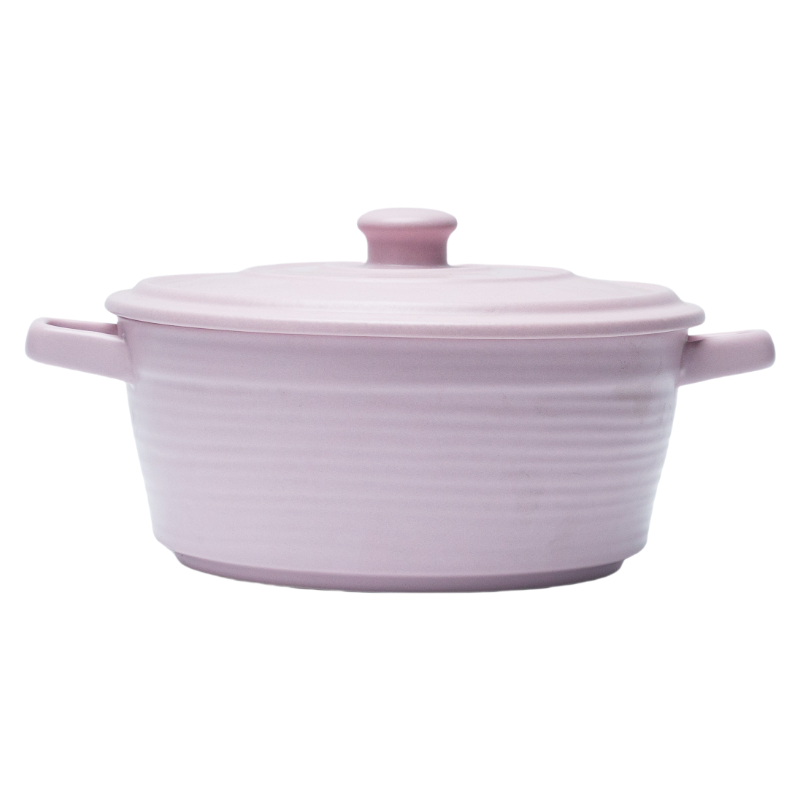
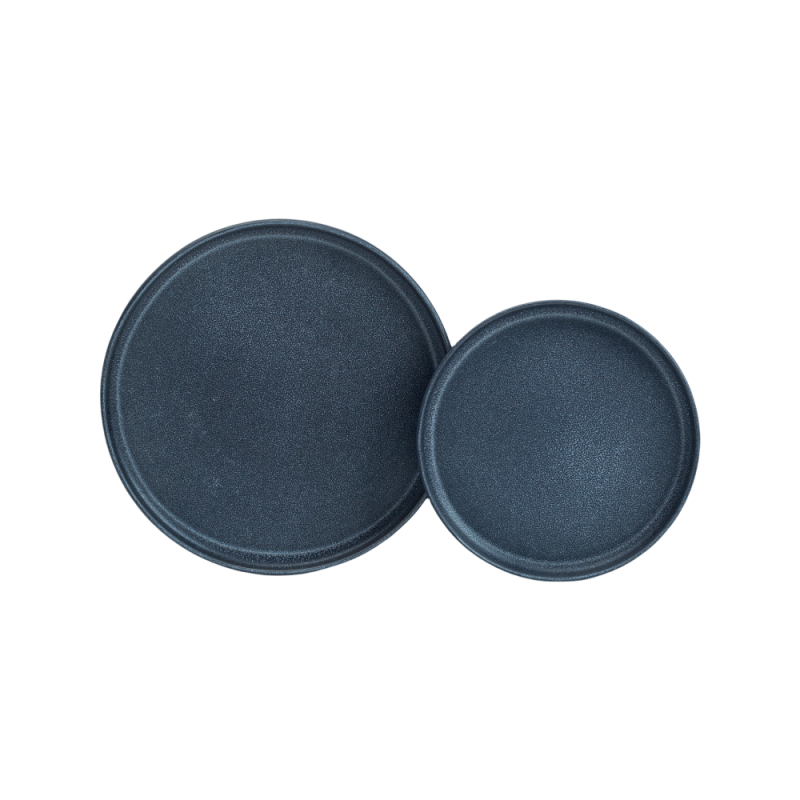
Products in this guide: Stoneware Casserole Dish · Ceramic Baking Bowl
Two weeks earlier the same pieces were in a kiln, and that is where they broke. What arrives as fragments is the end of a process that began with a body that was not dry enough, in a cycle heated faster than the water could leave. The two causes look identical to a buyer and carry different responsibilities, and getting the diagnosis wrong sends the claim to the wrong party.
Dry Is a Number, Not a Feeling
A formed body is not a solid with water on it. It is a mixture, and the forming moisture of a plastic body typically sits between roughly eighteen and twenty-two percent by weight. Before firing, that figure has to come down to around one percent or below. On a three hundred gram piece the water leaving between forming and firing is measured in single grams, and every gram has to travel from inside the wall to the surface and into the air.
Factories judge dryness by touch, colour and the sound of a tapped piece. These are real signals but not measurements, and where nobody weighs a sample, the only control on moisture is elapsed time, and elapsed time is what quietly gets cut when a schedule tightens.
Where the Water Actually Sits
Water leaves in three stages. Surface water goes in hours and is the least dangerous. Pore water between clay particles takes tens of hours and depends on the humidity of the air. The third fraction is bound in the clay structure and releases only above roughly five hundred degrees.
The dangerous fraction is the middle one. Pore water moves by diffusion from the core of a section to its surface, and diffusion is slow in a thick wall and slower in humid air. A piece can feel dry outside while the middle of a fifty millimetre foot still carries water nobody has measured.
The Thick Piece Goes First
It is tempting to assume the large piece is the risky one. The better rule is that the thick piece is the risky one, and the two are not the same.
As a body heats, its outer layer reaches temperature first. Clay begins to sinter and the pore structure closes at the surface while the core is still cooler and still wet. Steam generated inside the section now has to escape through a skin that is sealing itself. Pressure builds faster than the section can relieve it, and the piece fails in a few large fragments rather than a single crack.
This is why a heavy casserole, a thick handle root, a solid cast foot or a heavy restaurant plate fails more readily than a thin tea cup of greater overall size. It also explains why the same design can run for months and then fail on one load: a slightly thicker pour, a cooler day, or a shorter drying window moves a section from marginal to unsafe.
The Fragments Say Where It Happened
A burst produces a few large, chunky fragments with fresh granular surfaces and no impact point. Glaze may be intact, or may show a fused edge where it softened before the break. Pieces from one load tend to fail together, so breakage concentrates in a production batch rather than in one carton.
Transit damage looks different. There is a contact point, the break radiates from it, and the damage sits in one carton or one corner of a pallet. The packaging tells the story: a crushed corner, a compressed divider, a scuff on the outer wall.
The awkward part is that the evidence for a burst is not in the shipment. Burst pieces are swept out at the kiln and counted as plant scrap, so they never reach the buyer, who sees only the shortfall left after the loss was absorbed. That is why the useful request is not a photograph of a broken piece but the record of the load. Where a shipment does contain fragments, the packaging question is separate and worth settling on its own terms. The packaging guide explains how retail-ready and protective layers are specified together.
The Load Makes It Worse
A kiln is not a uniform box. The first rows, the pieces nearest the burners and the shelves that heat fastest all see the cycle earlier and harder than the middle of the stack.
Three things in setting decide how much margin a thick piece has. Position: a heavy section in the hottest part of the load has less tolerance than the same piece at the back. Density: a tightly packed load traps moisture in the kiln atmosphere early on. Cold start: the first load after a shutdown begins with cold kiln and cold furniture, and its early curve runs differently.
The Season Nobody Plans For
In a humid season the same body needs longer at every stage, and a factory working to a fixed drying time will load pieces wetter than in the dry months. A line stopped two days over a holiday leaves greenware in a humid shed, where it picks moisture back up rather than losing it.
Neither is negligence; both are physics meeting a schedule written in a different month, which argues for a delivery window in the humid season rather than a single promised date.
What to Write Into the Order
- A stated maximum moisture content at loading, with the method named: a weighed sample dried and reweighed is a two-minute check.
- Where the factory will not measure, a minimum drying interval from forming to loading, written in hours rather than as a judgement.
- An acknowledgement that heavy sections need a longer interval than thin ones, and that it sits inside the lead time rather than beside it.
- A notification obligation when a load loses more than an agreed proportion to kiln failure.
- A statement that bursts are a manufacturing loss and are not to be presented as transit damage on any document.
The last clause protects both sides. It keeps a freight claim honest, and it keeps a process problem visible long enough to be fixed. The spec freeze guide explains how artwork and packing files are locked between orders.
A buyer who has never asked what the moisture content was at loading is not unusual, and the question is not an accusation. It is the cheapest test of whether a factory measures the variable that decides whether a thick piece survives its own firing.
Related Products
Explore products featured in this guide:


Have questions? See our Sizes & Finishes FAQ and Ordering & Certifications FAQ.
Need a custom quote? Send an inquiry or browse our full product catalog.