





The Water Ring: Why a Cold Drink Sweats and What the Buyer Can Specify
Twenty minutes into an iced drink the table has a ring on it. The cup is dry above the fill line and wet below it, and the wood underneath has taken a mark that will still be visible next week. Nobody in the approval loop tested for this, because the reference sample was signed off with hot coffee in it.
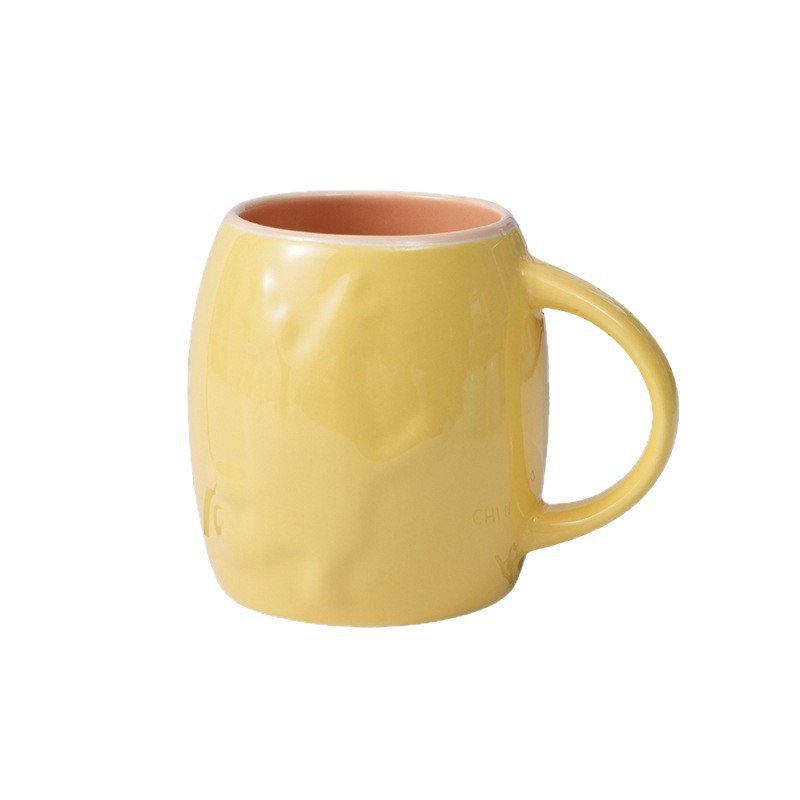
Products in this guide: 0.5L Ceramic Beer Stein Mug · 3D Embossed Barrel Beer Mug
The water did not come through the wall. It came out of the air. A surface colder than the room pulls moisture out of the surrounding air until that air reaches its dew point, and from then on the cup carries a film that runs down the body and pools where the piece meets the table. The ceramic is not leaking and the glaze has not failed; a glass and a steel tumbler do the same thing on the same table.
That leaves three things for a buyer to decide: how much cold mass sits above the table, what the base looks like where it touches, and what the supplier is willing to promise in writing. The first two are specification decisions. The third is the one that turns a summer into a claims file.
Where the Water Comes From
The controlling number is not the temperature of the drink but the gap between the outer surface of the cup and the dew point of the room. In a conditioned dining room at around 24 degrees and moderate humidity that gap is wide, and the film still forms; on a covered terrace in a humid market the dew point sits close to air temperature, and the same cup wets faster and drips harder.
Two consequences follow. The film appears below the liquid level, which is why the upper band of a tall cup stays dry. And the volume of water is set by the air rather than by the ware, so no change of supplier removes it.
Why a Heavy Body Buys Minutes, Not Exemption
A thick vitrified wall holds more heat capacity between the drink and the room, so its outer surface takes longer to fall under the dew point. That is where the claim that heavy mugs sweat less comes from. They do not sweat less; they start later and then carry on longer, because the same mass that slowed the cooling stores more cold and releases it after the drink is gone.
Read the difference in minutes rather than in adjectives. A dense porcelain body may hold a dry surface long enough to cover the walk from counter to table, and that is the whole of the gain.
The Foot Ring Decides Where the Water Ends Up
Once the film reaches the base, geometry takes over. A flat glazed base spreads the water across the full disc, so the cup stands on a thin layer of liquid and the mark underneath is the diameter of the piece. A recessed foot ring reduces contact to a narrow band, collects the water in the recess, and leaves a smaller mark that wipes clean.
The material at the contact point matters as much as the shape. An unglazed foot ring absorbs water, darkens as it does, and stays damp after the table has been wiped. A glazed foot with a rounded edge marks least. Where a supplier lists a flat unglazed base as standard, that is a specification gap rather than a design preference.
Where the Cost Actually Lands
The ring is a small event that repeats hundreds of times a day, and the cost rarely sits in the cup:
- Table finishes. Lacquered wood takes a white bloom from standing water, and refinishing a table costs more than the ware on it.
- Labour and slip. Wet bases travel onto trays and onto floors, and tables get wiped between covers.
- Stacked ware. Cups stacked while still damp stick to each other and to the shelf.
- Base labels. A paper label under a wet foot lifts and wrinkles, turning a ware issue into a packaging complaint.
A Test You Can Take in an Afternoon
The test needs no laboratory. Use the same drink, the same volume and the same table, run two candidate pieces side by side, and record room temperature and humidity before the first pour. Note two figures: the time until a drop appears at the base, and the width of the wet mark at twenty minutes.
Those two numbers separate candidates in a way adjectives cannot. Repeat the run on a second day before deciding, because a result without recorded conditions is a marketing claim rather than a measurement.
What to Write in the Order
The clause cannot remove condensation, but it can pin down everything around it:
- The service condition: iced drinks, indoor or terrace, and the climate of the market where the programme runs.
- The foot: glazed, recessed, rounded at the edge, with no unglazed surface touching the table.
- A test with conditions and a pass criterion based on time to first drop, not on the absence of water.
- What ships with the cup, if the format needs a saucer, coaster or sleeve.
The master sample guide explains how sealed references keep batches identical.
The Promise That Cannot Be Kept
Every season somebody offers a glaze that stops condensation. No glaze stops it, because the water comes out of the room and the room is not part of the order. What a coating can change is how the water behaves: a strongly water-repellent finish breaks the film into beads that run off instead of spreading, which can reduce the visible mark without removing a drop.
That is a legitimate claim with two questions attached. How many wash cycles does the effect survive, and what is the measured difference in the wet mark under stated conditions? A supplier who answers both has sold a property. One who answers neither has sold a sentence, and the sentence becomes yours the first time a customer photographs a ruined table.
Cold drinks put a film of water on any surface colder than the room, and the ring is the cost of serving them. Whether that cost lands on the table finish, on the staff or on the buyer was decided months earlier, in a specification that either named the foot, the body and the test, or left all three to the factory.
Related Products
Explore products featured in this guide:



Have questions? See our Sizes & Finishes FAQ and Ordering & Certifications FAQ.
Need a custom quote? Send an inquiry or browse our full product catalog.

