






The Opening Package: How a Hotel Buys Ceramics Before It Opens
A hotel buys its first thousand plates before a single guest has slept in the building. Nobody in the kitchen has decided where the plates will live, nobody knows which outlet will run a breakfast buffet, and the person placing the order may never see the property at all.
Products in this guide: Hotel Coffee Cup and Saucer 150 ml · Bone China Ceramic Mug
That first purchase is not a shop restocking. It is a line inside a project package assembled by a procurement agent, signed off against a brand standard written by an operator, and funded by an owner watching a construction budget. The ceramic portion is small next to the kitchen or the beds, but it is decoration-specific, breakage-prone and impossible to improvise late.
What follows is that structure: which budget the cups sit in, who decides, the four clocks, and where it comes apart. See the full ceramic sourcing process map.
Two Budgets, and Only One of Them Is Furniture
Hotel projects split into FF&E, covering furniture, fixtures and equipment, and OS&E, covering operating supplies and equipment. Beds and lobby seating belong to the first. China, glassware, cutlery, linen and small appliances belong to the second.
Ceramics almost always land in OS&E. FF&E is specified early and locked into construction contracts. OS&E is compiled later, often during fit-out, and is the natural place for value engineering when a project runs over budget.
The line is therefore bought once, at the size of the building: a property with three outlets and four hundred rooms compresses a year of restaurant purchasing into one order that must arrive before opening.
Three Parties, and the Decision Is Split Three Ways
The owner pays and signs the purchase order, but rarely chooses the pattern. The operator holds a brand standard naming the body, the colour and sometimes the piece count per cover. The procurement agent consolidates both into one package across dozens of suppliers.
A fourth party is present without being in the room. The interior designer selects the table-top look for each outlet so the plates match the scheme, and the brand standard is checked against that selection.
The person asking about decoration is not the person asking about capacity, and neither controls the delivery date. A factory should establish, before quoting, who holds each decision in writing; a package that starts with three briefs is re-specified twice before it ships.
Four Clocks That Have to Land Together
An opening date is a contractual commitment tied to a management agreement and to bookings already sold; everything upstream is scheduled backwards from it.
- The approval clock, held by the operator: samples or a mock-up table must be produced, shipped, reviewed and signed before production starts.
- The production clock, held by the factory: bodies, glaze runs and decoration, sequenced around whatever else is in the plant.
- The freight clock, held by geography: sailing schedules, port congestion and clearance, none of which either party controls.
- The site clock, held by construction: a dock that accepts pallets, a secured storage room, and a lift that works.
The failure mode is rarely one delay but a compression: approval slips three weeks, production absorbs one, freight absorbs none, and the goods land before the building is ready or after the opening.
The Ceramic Line Is Not One Purchase
Ceramics arrive as four briefs that look alike on a purchase order and behave nothing alike.
Banquet service carries the highest piece count and the plainest specification: stackable, chip-resistant, undecorated, replenished constantly. All-day dining carries the brand identity, which is where a logo or rim band appears. Bars buy small volumes of specific shapes for coffee, beer and cocktails. Guest rooms buy a cup, saucer or mug in the thousands, with a much shorter expected life because pieces leave with guests.
Back-of-house kitchenware is a fifth line and a different supply chain, best kept off the tableware order.
What the Factory Hands the Agent
A procurement agent is consolidating a hundred suppliers into one schedule. What it needs from a ceramics factory is not a catalogue but a document set it can paste into a package.
The core item is a per-SKU specification sheet: capacity in millilitres, rim diameter, height, stack height, carton configuration, pieces per carton and gross weight. Without stack height the warehouse cannot plan racking. Without carton configuration the forwarder cannot quote. Missing either, the agent substitutes a competing item that happens to have a complete sheet.
The second item is one consolidated approval set rather than one per size, so the operator signs a body and a glaze instead of forty individual pieces. The spec freeze guide explains how artwork and packing files are locked between orders.
The third is a written replacement basis: how spares are calculated at opening, how a reorder is handled in the first two years, and which body and glaze stay available for that period.
Where the Package Breaks
The most common failure is late value engineering. Three months before opening a cost review removes the rim band or shrinks a bowl, and the change reaches the factory as a message rather than a revised specification. Production runs to the old sheet, and the argument is settled by whoever holds the later document.
The second is substitution at agent level. A line item is unavailable, a similar one is offered, and similarity is judged on appearance rather than capacity, stack height or firing. The plates match the photograph and not the racking.
The third is an approved mock-up that never becomes a written specification. The room is struck, the samples disperse, production runs to a verbal description, and a second property inherits a range nobody can document.
What to Put in the Order
The package document should fix the following in writing, before the purchase order is issued:
- one specification sheet per SKU, with capacity, dimensions, stack height and carton configuration
- the body and glaze named exactly, with the decoration method and its placement
- the split between banquet, all-day dining, bar and guest-room lines, specified and scheduled separately
- a delivery sequence per area or floor, so goods do not arrive before there is somewhere to put them
- the replacement basis for the first two years, and the reorder minimum that applies to it
A pre-opening package is judged after the opening, when the first plate drops and the second order is placed. The ceramics that survive are rarely the most beautiful; they are the ones whose specification was written down while there was still time to write it.
Most delays that damage a package start before the factory is involved, in the gap between what the brand specified and what the site can receive. Closing that gap is a specification problem, not a production one.
Related Products
Explore products featured in this guide:
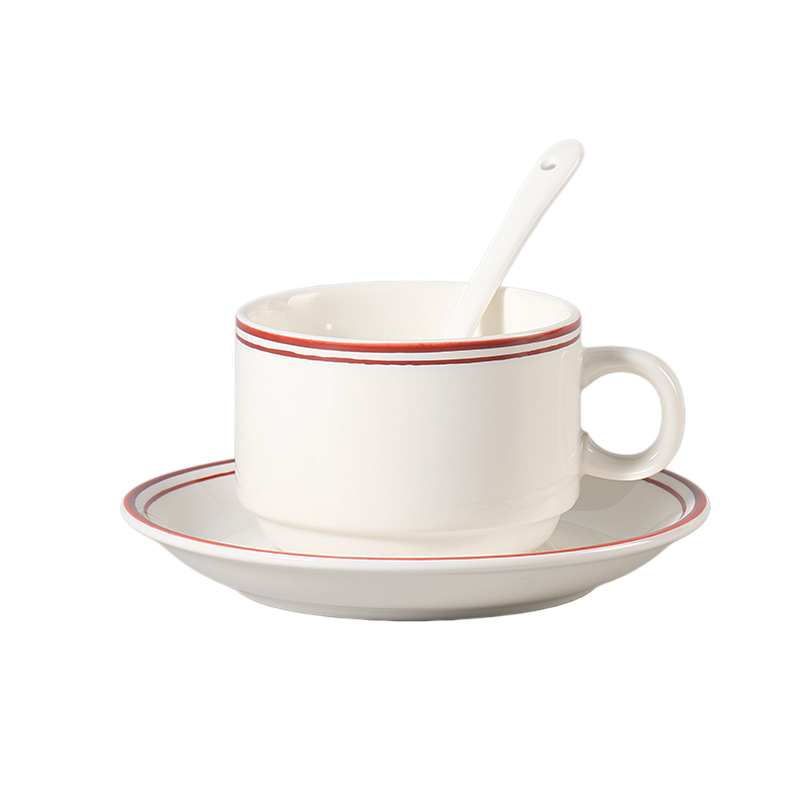


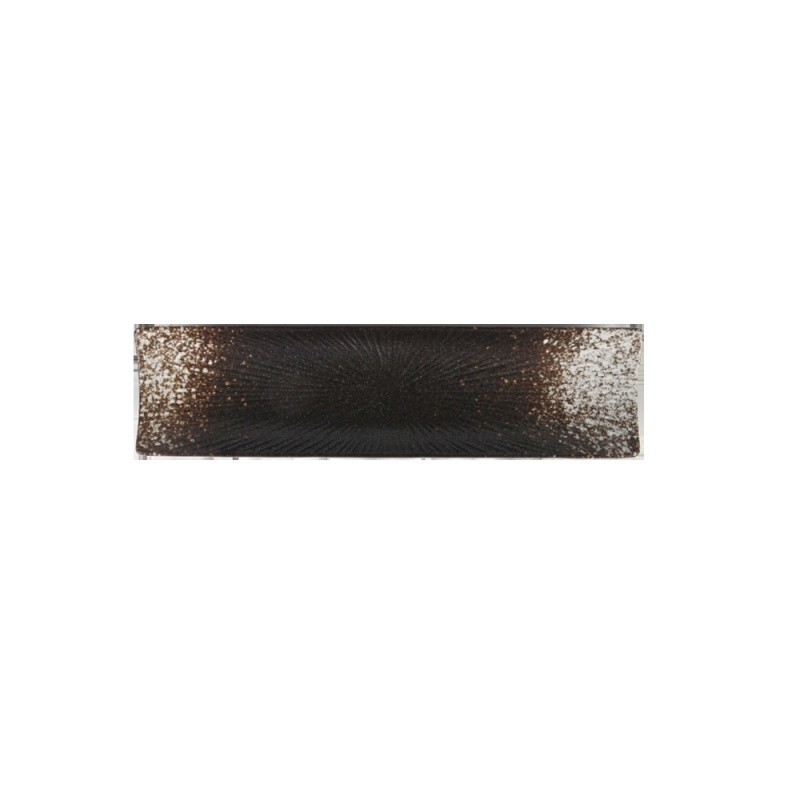
Have questions? See our Sizes & Finishes FAQ and Ordering & Certifications FAQ.
Need a custom quote? Send an inquiry or browse our full product catalog.

