The Distributor's Shelf: Building a Mug Assortment That Sells Across Good, Better, Best
The Problem: One Tier of Mugs Serves One Tier of Customers
Walk any successful ceramic distributor's warehouse and you will notice the same pattern: the stock is not one long list of similar mugs, it is clearly layered. There are plain, functional pieces that move in volume; there are mid-range decorated items that carry most of the margin; and there is a small, distinctive top range that makes the catalogue look worth browsing. Distributors who skip this structure usually discover it the hard way — they stock thirty variations of the same mid-price mug, compete on price with every other distributor holding the same items, and have nothing to offer when a retail chain or a gift buyer asks for something at a different level. This guide explains how to build the three-tier structure deliberately: what belongs in each tier, how many SKUs each tier deserves, how far apart the price points should sit, and how replenishment differs between the bottom and the top of the range.
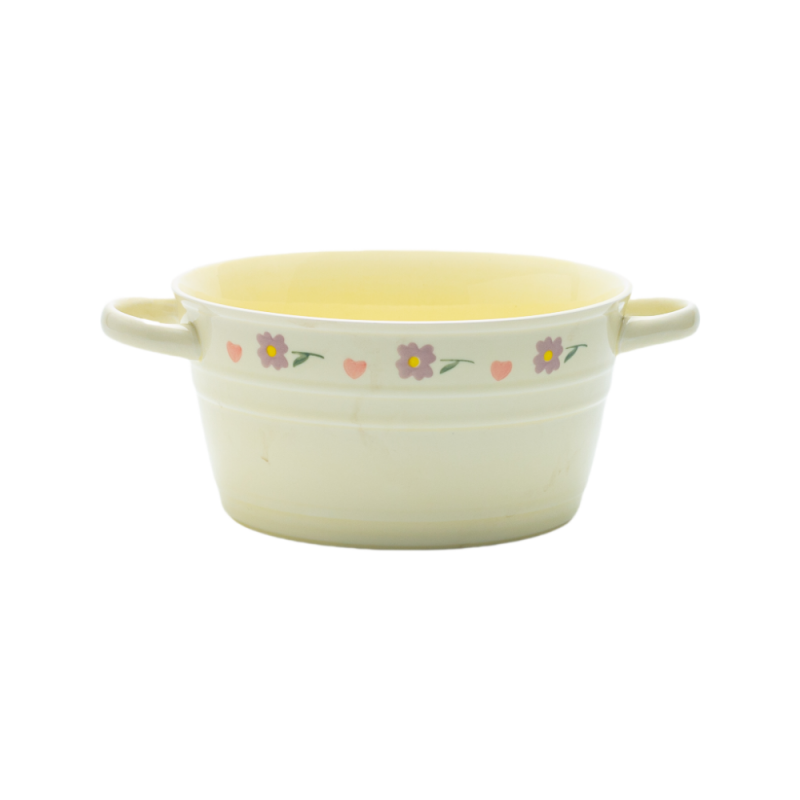
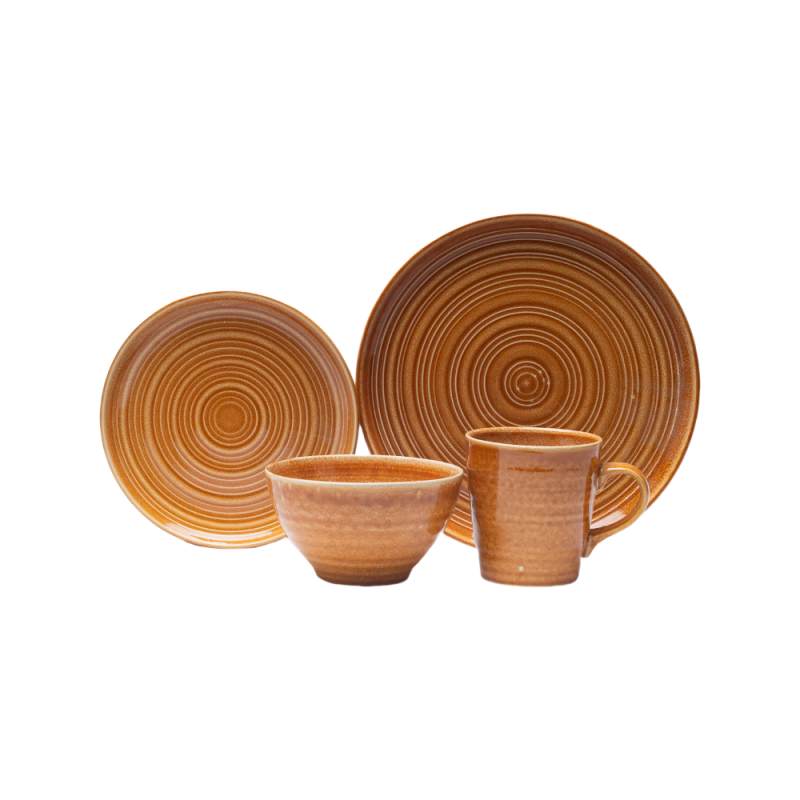
Products in this guide: Vintage Floral Yellow Glazed Stoneware Bowl & Plate · Reactive Glaze Stoneware Plate
Where This Fits in the Sourcing Chain
Everything in an assortment plan ultimately depends on what your first quotes told you about cost at different volumes and specifications. The container inquiry checklist shows how to get that first quote right. Once the tiers are set, the annual ordering rhythm that keeps them stocked is the same rolling forecast mechanism used by every long-term buyer. The blanket order and rolling forecast guide shows how to commit volume for the year. And the overall process — from factory selection to landed stock — follows the standard sourcing map. See the full ceramic sourcing process map.
Tier One: The Entry Level That Buys Traffic
The bottom tier exists to answer one question cheaply: can a customer get a usable, honest ceramic mug from you without thinking hard?
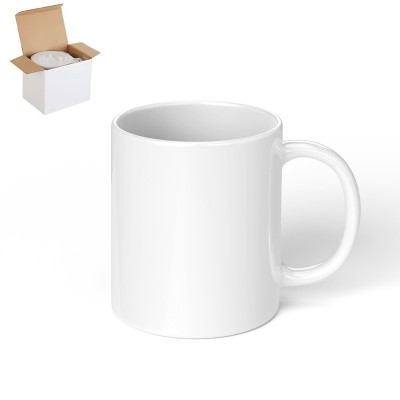
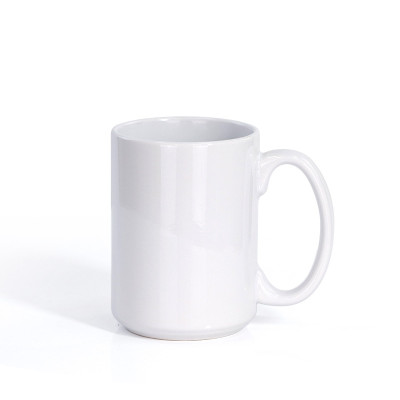
- What belongs here. Plain glazes, classic cylinder and barrel shapes, standard 10–12 oz sizes, decoration limited to one colour or a simple decal. Nothing fragile, nothing seasonal, nothing that needs explaining.
- How many SKUs. Fewer than most distributors expect. Three to five SKUs cover the entry tier — more than that and you are fragmenting your own volume into order quantities that no factory prices favourably.
- The pricing logic. Entry items are your price anchor. Their job is to be visibly reasonable, not to maximise margin. When a retail buyer compares you with another distributor, this tier is what they compare first.
- Replenishment. The entry tier should turn fastest. Because specs are stable and decoration is simple, these are also the easiest items to reorder — the factory keeps glazes and packaging setups in place, which is exactly why repeat orders on stable SKUs ship faster. The reorder lead time guide explains why second orders ship faster.
Tier Two: The Core Range That Pays the Bills
The middle tier is where most of your revenue and nearly all of your competitive difference lives.
- What belongs here. Stoneware bodies with reactive or two-tone glazes, printed patterns that follow general home décor directions, gift-boxed pairs, and shapes with some personality — tapered mugs, spoon-rest lids, stackable designs.
- How many SKUs. This tier can carry the most SKUs, but discipline still applies: group them into two or three colour families rather than thirty unrelated prints. A buyer who can present "the blue family" or "the earth-tone family" as a story sells more than one who offers scattered single items.
- The pricing logic. Price gaps inside the core tier should be small enough that a customer can trade up without hesitation, but the gap between entry and core should be unmistakable — otherwise the core range cannibalises the traffic tier.
- What to watch. Patterns date faster than shapes. Plan a yearly refresh of the core range's decoration while keeping successful body shapes alive for several seasons. Changing artwork on a proven shape is a normal, manageable request — it is the redesign discipline long-term buyers already use on reorders. The artwork redesign guide explains how to change decoration on a proven shape.
Tier Three: The Premium Range That Builds the Brand
The top tier is small, slow and disproportionately important.
- What belongs here. Distinctive glaze work — reactive, speckled, hand-finished looks — heavier stoneware bodies, complete gift sets, and pieces whose photography alone sells them. This is also where limited seasonal editions belong rather than in the core range.
- How many SKUs. Small by design. Five to eight SKUs is enough. Every premium item must earn its slot, because each one occupies capital and shelf attention out of proportion to its turnover.
- The pricing logic. The gap between core and premium should feel like a category change, not a price tweak. What justifies it is visible: weight, glaze depth, packaging, and the story a salesperson can tell about the piece.
- Replenishment. The premium tier turns slowest, and that is acceptable — its job is margin and image. Order it on a longer cycle, in quantities matched to actual sell-through, and resist the temptation to let a slow premium SKU quietly migrate into discount channels, which damages the pricing of everything above the entry tier.
The Two Questions That Keep the Structure Honest
First: can every tier justify its price gap in something the customer can see? If the only difference between two adjacent items is your margin, the structure will collapse into a discount conversation. Second: does each tier have its own replenishment rhythm? A single ordering calendar for all three tiers is the most common self-inflicted wound — it floods the warehouse with entry stock that was never the bottleneck and starves the core range that actually pays. Build the tiers, give each its own clock, and review the whole structure once a year against what actually sold, not what you hoped would sell.
Related Products
Explore products featured in this guide:


Have questions? See our Sizes & Finishes FAQ and Ordering & Certifications FAQ.
Need a custom quote? Send an inquiry or browse our full product catalog.