



The Cost of Stopping: What a Cancelled Ceramic Order Leaves Behind
Most buyers treat a cancelled order as one decision taken on one day. On the factory floor it is a position on a curve, and the curve starts moving the moment the order is confirmed.
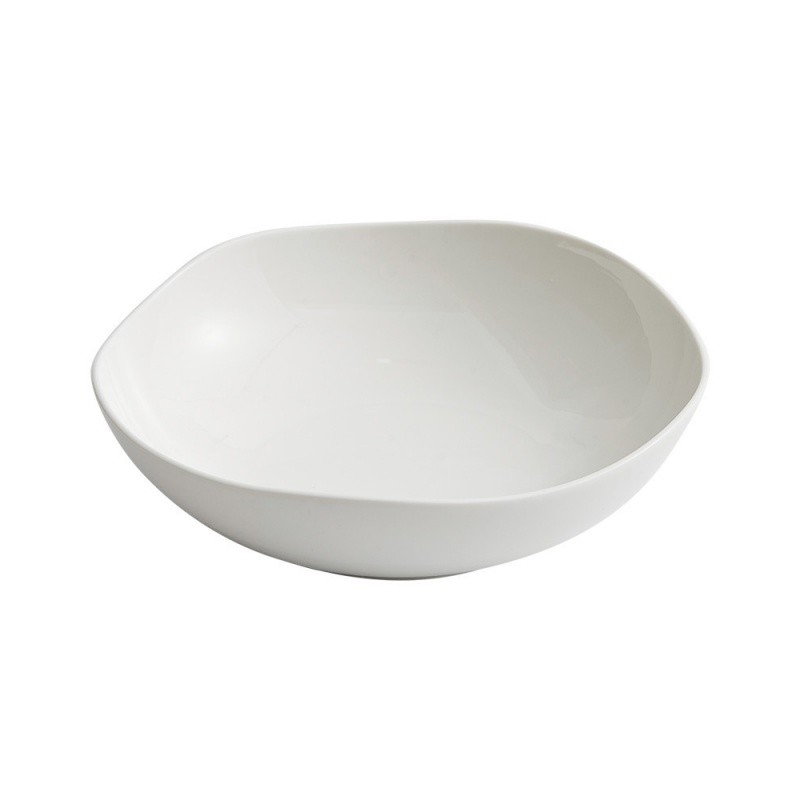
Products in this guide: Vintage Blue & White Porcelain Dinnerware Set · 16-Piece Reactive Glaze Stoneware Dinnerware Set
By the time anyone says stop, part of the money has already become material, part has become labour, and part has become things that cannot be unsold: a mixed body, a cut mould, a printed carton. The useful question is not whether stopping is allowed. It is how much of what has already been bought walks out of the building with you.
What follows is where the money sits at each stage, and what keeps a stop from becoming an argument. See the full ceramic sourcing process map.
Why Stopping Is a Curve, Not a Switch
Ceramic production is a sequence of one-way conversions. Clay and water can be reworked. Fired ware cannot. Glaze on a fired body cannot be separated from it. A carton printed with a customer artwork has no second buyer.
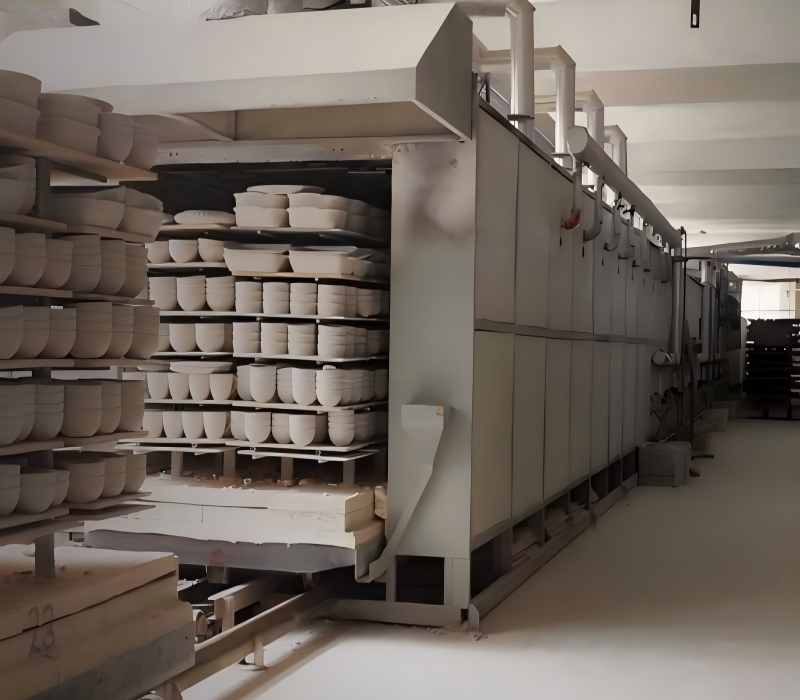
Each conversion moves value from a state that is recoverable to one that is not, and it does so at a specific point in the calendar. Two orders of identical value can carry very different exposure: one is mixed body in a warehouse, the other is standing on a kiln car.
Seven Points Along the Curve
The list below runs in production order. Read it as a map of what survives a stop.
- Body mixed, not yet formed. Coloured body is the one stage close to recoverable, provided the shade is standard. A custom colour mixed for this order cannot go back into the stock body.
- Formed and drying. Unfired ware can return to the pug mill in most plants, at a labour cost and with a limit on how many times. The mould has already been made, and a mould is not a deposit.
- Bisque fired. Value is now locked. Bisque can be held for a later order of the same shape, the cheapest outcome here and the one worth asking for in writing.
- Decorated. Decals, screens or pads for the artwork have been produced, and they are specific to one buyer. A stopped order leaves the factory holding a consumable nobody else will order.
- Glazed and fired. The product is finished but unsold, and moves on only if shape, colour and decoration are neutral enough to resell.
- Packed. Cartons, inserts and printed boxes are consumed. A private-label carton becomes scrap the moment the order stops.
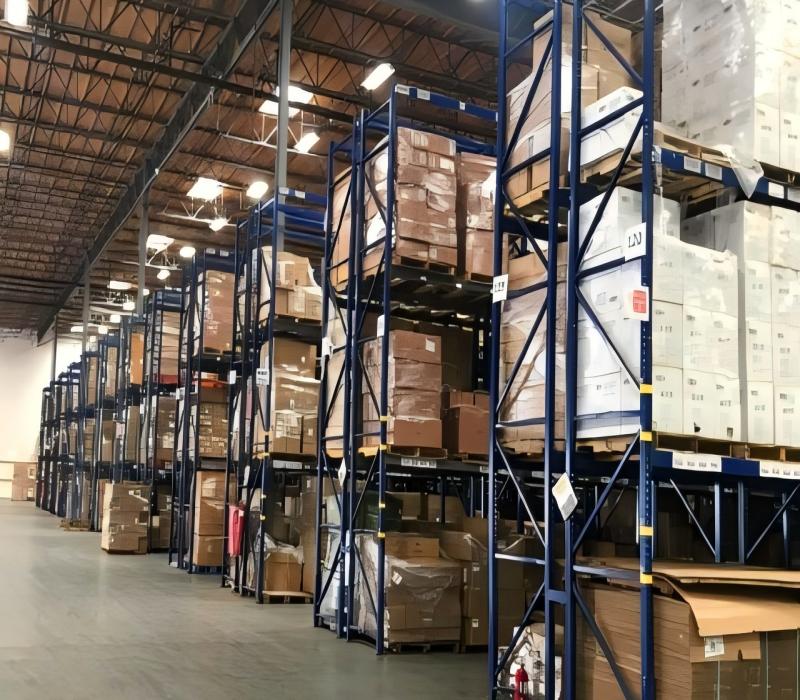
- Booked and loaded. Space and equipment have been reserved. Releasing them late carries its own charge, and the container may leave with unused volume.
The Two Costs That Never Reach an Invoice
The visible part of a cancellation is material and labour already spent. Two further costs stay invisible, and they explain why a supplier reacts more strongly than the arithmetic suggests.
The first is tooling and artwork. A mould, a screen set, a print cylinder or a decal batch is bought once for one design. If the order stops, that spend does not reverse, and the factory decides whether to carry it, write it off, or hold it against a future order that may never come. Buyers who assume tooling is free until production starts learn otherwise at the worst moment.
The second is schedule displacement. Capacity promised to this order was refused to another. When the order stops, the slot is filled late or left empty, and the empty slot is the factory loss. A cancellation near peak season also lands differently from one in a quiet month.
What the Deposit Actually Covers
A deposit is usually read as a penalty. It is closer to a claim against cost already incurred, sized in advance so nobody has to argue later. Where it is smaller than what has been spent, the supplier carries the gap and prices that risk into the next order. Where it is larger, the balance returns only if the order says so.
Release by Lot: Buying the Option to Stop
One commitment for the full quantity buys the lowest unit price and the largest exposure. Splitting the commitment into dated releases costs slightly more per unit and turns one large decision into several small ones.
The release schedule is the practical form of a cancellation right. Each release carries a date, a quantity and a deadline before which the next one can still be changed. A buyer who stops at a release boundary is stopping before the material is bought instead of after. Where demand is uncertain, that option is usually worth more than the price difference.
The schedule works only if the dates are real. A release date the kiln has already passed is a formality, not a boundary.
Roll Over Rather Than Cancel
Deferring an order is usually better than cancelling it, for both sides. Body, mould and artwork stay in place, and the factory keeps a future slot rather than losing one.
What a roll-over does not preserve is the clock. Glaze lots change, colour approvals age, and packaging print runs are economical only in certain quantities. A deferral of a few months can therefore require a re-approval that a clean cancellation would never have triggered. The spec freeze guide explains how artwork and packing files are locked between orders.
The useful wording is a roll-over clause with limits: how many times, how far, and what must be re-confirmed each time.
What to Write Into the Order
The clause that matters defines cost by stage rather than by one percentage.
- the cancellable window, stated as a stage of the process and a date, not as a count of days from signature
- what counts as incurred cost at each stage, and what evidence the supplier must produce to claim it
- the treatment of tooling and artwork: who owns it, who pays for it, and whether it can be reused on a later order
- release dates per lot, and what happens to quantity not released by its date
- notice in writing with a named recipient, because a phone call is not a stop
- what happens to material bought specifically for this order
A supplier who will not put these six lines in writing is telling you something about how the conversation will go if the order ever stops.
The cheapest cancellation is the one made before the body is mixed. The most expensive is the one discovered at the port. Between those two points sit five stages where the answer is still negotiable, each decided by what the order said before anything went wrong.
Related Products
Explore products featured in this guide:


Have questions? See our Sizes & Finishes FAQ and Ordering & Certifications FAQ.
Need a custom quote? Send an inquiry or browse our full product catalog.