


The Change of Shift: What the Incoming Team Knows About Your Order
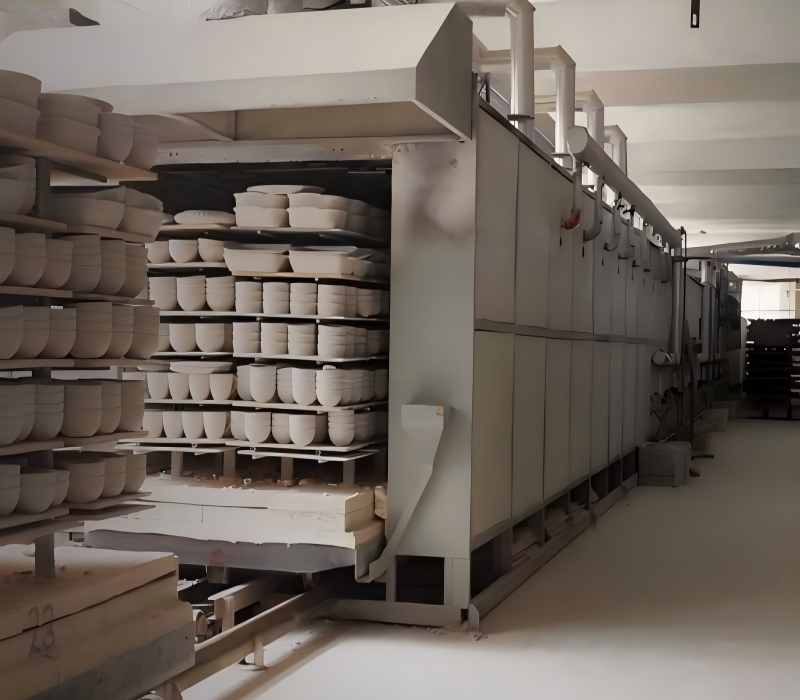
A mug loaded into the kiln at four can come out in front of people who were not in the building when it went in. The firing does not pause for the change of shift. Between those two events the plant passed your work from one team to another, and anything not travelling in writing had to be rebuilt from memory.
Products in this guide: 30ml Marble Ceramic Latte Mug · Portable Ceramic Cup with Silicone Lid
Buyers read a plant through documents: a specification, a sealed sample, an inspection report. Each describes a state, none describes continuity, and continuity is what decides whether Thursday's ware matches Wednesday's. It is made, or lost, in the twenty minutes when one team hands over to the next.
A handover is not a courtesy between colleagues. It is a short list of facts that must be re-established before the first piece of a new shift means anything: what is in the kiln, which glaze is in the tub, which print lot is on the press, what has been drying and for how long, what is waiting for a decision, how many pieces exist. Six items, and a plant that cannot answer all six is running on the memory of whoever is still awake.
Why the boundary is where drift enters
The end of a shift has a number attached: people finish the tray rather than the thought, because the tray is what gets counted. The start has settings somebody else established: squeegee pressure, registration stops, the path of a spray gun, the temperature of the decal water. Each is re-made from what the previous operator said, or from where the machine was left.
Neither end is a discipline failure in the ordinary sense. It is structural: output is counted by shift and quality is judged by order, so the two ledgers meet nowhere and a difference across a boundary has no owner in either.
Six things that have to cross the line
- The kiln. Which cycle is running, how far into the curve, and when it may be opened.
- The glaze. Which batch is in the tub, whether it is the approved one, and whether anything was topped up.
- The print. Which plate or decal lot is on the machine, and the offset dialled in for registration.
- The drying clock. Ware that must be decorated inside a window, and how much of it is spent.
- The held pieces. What was set aside, and the reason it was set aside.
- The count. Made, packed, held, scrapped, against the quantity on the order.
The first three tend to be written down, because they are physical and can be pointed at. The last three are usually spoken, because they feel obvious to the person who knows them, and that person is going home.
The kiln does not take a break at the bell
A firing cycle lasts far longer than a shift, so the kiln crosses the boundary without anyone deciding anything. What does not cross is the judgement around it: who set the damper, what changed when a thermocouple drifted, who decides the door may open.
Firing is also pushed into the hours when supervision is thinnest: off-peak tariffs make night firing cheaper, which places the cycle that matters most in the plant's quietest hours. Cooling is a decision rather than a process. A load opened early to make room for the next one is decided at two in the morning by whoever is on the floor.
What gets said instead of written
A spoken handover works in a stable plant, and can work for years. It fails on three occasions a buyer can predict: a change of shift pattern, where two shifts become three or a night line is added; a peak that fills the line with temporary staff; and ordinary leave.
The distinction that decides most arguments is between status and reason. A pallet tag records that the ware is held; it rarely records what the inspector saw at 18:20, in what light, against which limit. The next shift re-judges from the beginning, which means a second reading of the same defect. That is how a pallet gets released in the morning that would not have been released the night before.
The first piece of every shift
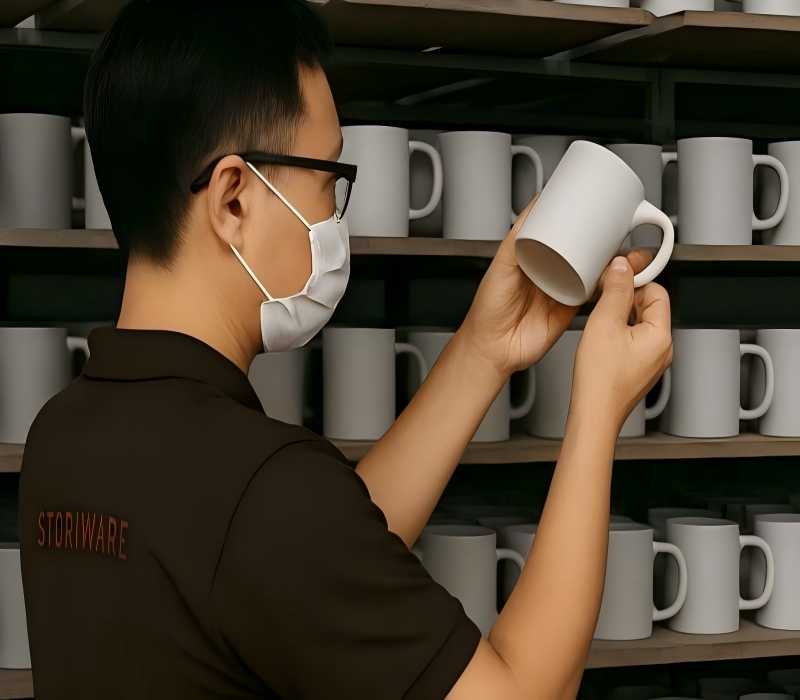
A first article at the start of a run is standard in most plants. A first piece at the start of every shift is not, and it is the cheaper version: one piece off the line, compared with the agreed reference under the agreed light, recorded and signed.
It catches what a boundary actually breaks. Registration re-set slightly wrong. A glaze tub topped up with a different batch. Decal water cooled overnight. A screen cleaned and not quite dried. It does not catch gradual drift inside a shift; that is what patrol inspection is for, and the two answer different questions.
One condition makes the check real rather than ceremonial: the person making it must be able to stop the line. Where stopping needs a supervisor who is not on the floor, the check becomes a form completed because the form exists.
Four lines for the order, four questions for a visit
Written into the order, the handover becomes verifiable without being present.
- A handover sheet with the six fields above, signed at each change of shift.
- A first-piece check every shift against the named reference, recorded, with copies held by both sides. The master sample guide explains how sealed references keep batches identical.
- Notice when the shift pattern changes. Adding a shift is a process change even when no material or artwork moves.
- The count reconciled at each boundary rather than only at pack-out.
On a visit, four questions do most of the work. How many shifts run the decoration line. Who checks the first pieces of each shift. Where the handover is written. What happens to a piece that fails at a station at ten at night. The answers matter less than whether they arrive quickly and agree.
The limit of this
None of this appears in an inspection report, and none of it replaces sampling or a test. It narrows the space an unexplained difference can come from, which is all any control does.
A plant with a written handover is not automatically better than one without. But when two batches differ and nothing in the file explains it, the change of shift is the first place worth looking: the one event that happens every day, involves everyone who touches the ware, and is almost never written down by anyone who has to answer for the result.
Related Products
Explore products featured in this guide:



Have questions? See our Sizes & Finishes FAQ and Ordering & Certifications FAQ.
Need a custom quote? Send an inquiry or browse our full product catalog.