





Sourcing Ceramics for Ireland: One Island, Two Customs Files
Ireland is a small market with an unusual geometry: one island, two customs territories. A distributor based in Dublin can deliver to a hotel in Donegal and to a wholesale customer in Newry in the same week, and those two consignments do not travel on the same file.
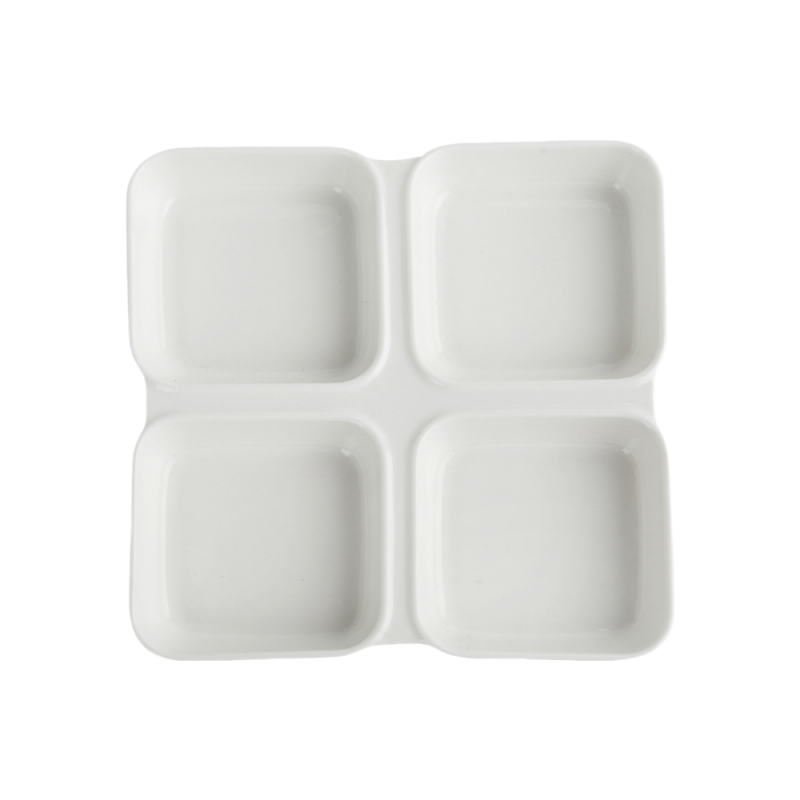
Products in this guide: Matte Speckled Gradient Ceramic Mug 380ml · White Ceramic 4-Section Dessert Plate 8.5 in
That reshapes the purchase before a shape is chosen. It decides the route, the duty position at release, who is named as importer, and how a 5,000-piece minimum is spent.
What follows is the sequence we work through with Irish distributors and contract caterers, from the factory side of the order. See the full ceramic sourcing process map.
Two Files, One Order
The Republic of Ireland is inside the European Union. Northern Ireland is not, although a large part of its product rulebook is aligned with the EU. For a ceramic order the difference is not the glaze or the standard; it is the customs movement and the trade defence position at release.
A buyer who says Ireland usually means the Republic. A buyer who says the island means two delivery addresses, and that is a different quotation. Ask for the delivery postcodes before the price is built. One order can carry two files; designing that in costs an email, unpicking it at the port costs a week.
The Route Is a Decision
Three routes reach an Irish warehouse.
A deep-sea vessel to a continental hub, then a feeder into Dublin. A direct call at Dublin or Cork, where the carrier offers one. Or discharge at a British port and a truck across Great Britain to an Irish Sea crossing: the land bridge.
Each carries a different exposure. The feeder adds a handover and a second chance of damage on a short sea leg. The direct call ties the shipment to fewer sailings. The land bridge adds a border in each direction, and it is the route that most often produces a surprise in the paperwork rather than the freight rate.
What a Transit Movement Requires
If goods cross Great Britain without being imported there, they move under a transit procedure. Ireland and the United Kingdom are both parties to the convention that allows it, so the mechanism exists; what fails is the detail around it.
- A transit declaration opened at the office of departure and closed at the office of destination, with the goods presented intact at both.
- A guarantee covering the duty at stake, arranged by the carrier or declarant before the movement starts.
- Sealed units, with the seal number written on the document, because a broken seal turns a transit movement into an import.
- One article description across the transit document, the commercial invoice and the packing list.
- A realistic route and transit time, since a movement that cannot be closed in time is closed with a claim.
Miss any one and the container clears into the United Kingdom. The Irish delivery then becomes a second import, with a second set of charges and a delay nobody scheduled. The paperwork that keeps landed cost predictable is worth reading before the first booking. The demurrage and customs delay guide explains how arrival costs stay predictable.
Why the Minimum Splits Badly
Our minimum is 5,000 pieces per item or per decoration. Two addresses do not double that figure, but they double the number of lines to reconcile.
One mug in one decoration, shipped to two warehouses, is still one run of 5,000. A mug, a side plate and a bowl, each with its own print, is three runs. What matters early is not total quantity but how many distinct articles and decorations the programme contains.
Two honest ways to shrink it. Share one body across two colours, so a HORECA line and a gift line come off the same mould. Or let the plate carry the branding and keep the cup plain, so the decoration count falls without changing the assortment. Neither reduces the minimum; both reduce how many minimums the order carries.
What Irish Service Does to the Specification
Pubs, hotel kitchens and contract caterers run dishwashers hard, and water varies from soft to quite hard across the country. Three failures appear first: the rim, the foot glaze, and the handle where it meets the body.
Rim chipping shows in a stack, where pieces knock together on every unload. Foot glaze wears where the base slides across a rack. Handle joints crack when a full mug is lifted by the handle from a hot cabinet rather than supported from below. The specification that survives this is unfashionable: a slightly thickened rim, a ground foot, and a handle section generous rather than elegant.
Capacity follows the habit. Tea is poured by the pot and drunk slowly, so 300 to 350 ml reads as a normal cup; under 250 ml reads as an espresso cup in a market that fills a mug at breakfast and again at four.
Documents Must Match the Address
The declaration of compliance describes the article and its decoration, not a family of similar items, and it does not stretch to a second jurisdiction by implication.
For a Republic delivery the file names a responsible person established in the European Union; that party is the importer placing the goods on the market. For a Northern Ireland delivery the party and the wording have to be confirmed for that specific movement. Assuming the Republic file covers it is the most common error we are asked to fix.
Language is the easy part, because English serves both sides. Consistency is not: the invoice, the transit document and the carrier booking must carry the same address. A distributor consolidating two customers into one container needs that split documented before sealing.
What to Put in the First Enquiry
- The delivery addresses, separated by jurisdiction, with the volume expected at each.
- A route preference, or a request to price two routes so the difference is visible.
- Article count and decoration count, so the minimum is calculated on lines rather than pieces.
- Capacity and shape for each article, and whether one body can serve two programmes.
- Whether the goods will be consolidated with other suppliers at destination.
- The party acting as importer on each side, and the responsible person for the EU file.
- Care requirements, and whether a printed care leaflet has to travel with the goods.
An Irish programme is simple once the island is treated as two destinations from the start. The order that goes wrong is quoted to one address and delivered to two. Design the file, the route and the minimum together, and the second container becomes a repeat instead of a repair. The master sample guide explains how sealed references keep batches identical.
Related Products
Explore products featured in this guide:

Have questions? See our Sizes & Finishes FAQ and Ordering & Certifications FAQ.
Need a custom quote? Send an inquiry or browse our full product catalog.