Packaging as Part of the Product: Retail-Ready and Unboxing Decisions for Ceramic Orders
The Problem: Packaging Treated as an Afterthought
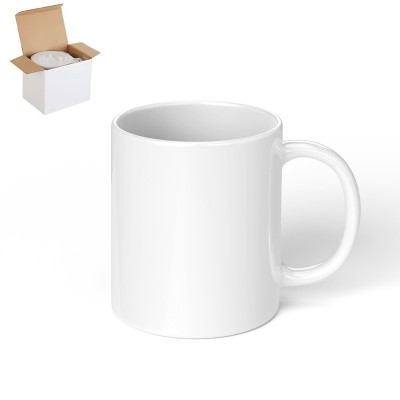
Ask what a ceramic order is made of and most buyers list the product. The warehouse lists something longer: the mug, the inner box, the insert, the master carton, the tray it stands on, the label that says what it is. Packaging is not around the product; in bulk tableware it is half the product's fate. A glaze can be flawless and a print perfect, and the program still disappoints if the goods arrive as a pallet of unmarked brown boxes nobody can shelve, or if the gift set looks like a hardware spare part when unwrapped. The good news is that packaging is decided at the quoting stage, where changes are free — which means the buyer who thinks about it early buys options, and the buyer who thinks about it late buys apologies.
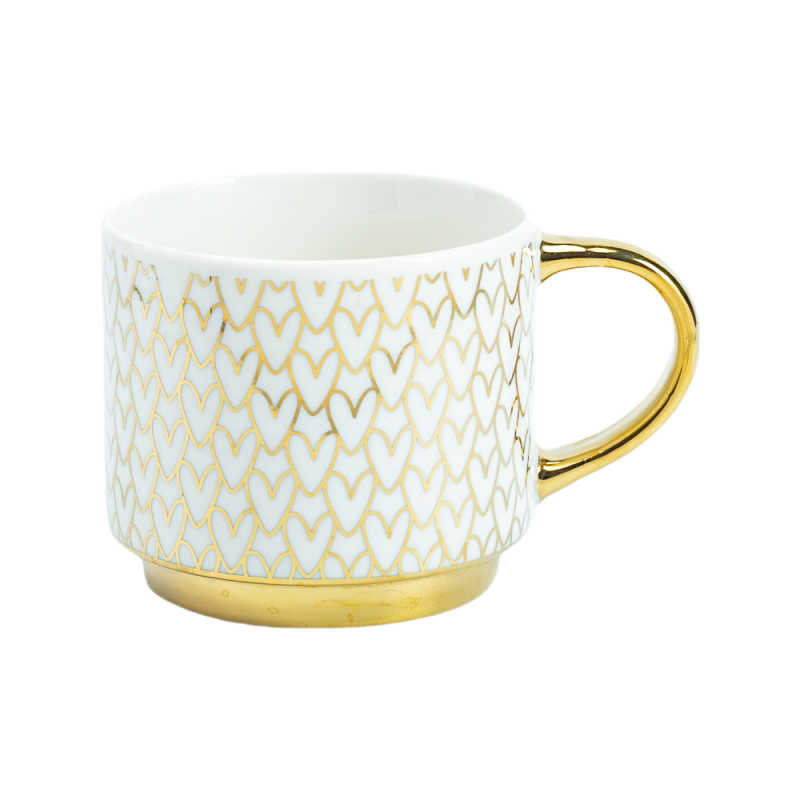
Products in this guide: Gold Handle Ceramic Mug · Japanese Style Ceramic Pedestal Dish for Appetizers & Desserts
Where This Fits in the Sourcing Chain
Packaging decisions belong to the frozen specification: box graphics, insert design, and carton data are part of the file that gets locked between orders. The spec freeze guide explains how to lock artwork and packing files between orders. They end their journey at the receiving dock, where good packaging proves itself by scanning, shelving and counting quickly. The dock-to-shelf guide explains how receiving closes the bulk order properly. The full chain follows the standard sourcing map. See the full ceramic sourcing process map.
The Three Layers Around a Ceramic Mug
The freight layer is the one factories default to: single-face protection, dividers, master cartons engineered for stacking. Its job is boring and absolute — the mug arrives whole. The retail layer is where the product meets the shelf: does the retail unit carry a scannable barcode, does it front-face properly, does it stack on the fixture without a proprietary stand, can a stock clerk open a master and fill the bay in one motion. The experience layer is the wrapper the end customer sees: the inner box print, the insert colour, the tissue, the card that says who made this. Gift and promotional programs live or die here. The three layers have different owners and different budgets, and writing them down separately is the first step — because the commonest packaging failure is solving layer one and ignoring layers two and three.
Decisions That Are Cheap Now and Expensive Later
A short list of choices that cost almost nothing at quotation and a great deal afterwards. Inner box print: a one-colour logo on the inner box turns a generic product into a branded one for a margin-level cost — but only if it is in the artwork file before tooling, not requested after firing. Insert colour and material: the same kraft insert that protects fine porcelain can read cheap; a coloured or textured insert shifts perception at nearly the same price. Master carton quantity: the count per carton decides how the product breaks down at the distribution centre — a count chosen only to fill a container creates half-empty shelf cartons for the buyer's team to live with. Barcode placement: printed on the retail unit versus on a looser label is a thirty-second conversation at quotation and a reprint crisis at receiving if missed.
Retail-Ready Mechanics for Chain and Distributor Buyers
Buyers supplying chains or distributing widely have one more job: making the carton work at the back door of a store. Shelf-ready means the master opens into a display or slides into the fixture without repacking; the carton carries the product name, count and barcode where a scanner can reach them; and the stack height matches how the channel actually builds pallets. None of this is exotic — it is a checklist — but it must be written into the specification and proved on a physical sample carton, filled with product, before the container books. The sample that matters here is not the mug; it is the packed case, dropped, stacked and opened the way a stockroom will do it.
When Unboxing Is the Point
For promotional, corporate-gift and creator merchandise programs, the unboxing is not the last layer — it is the campaign. The creator merchandise guide explains how audiences become orders. The wrapper is the first physical touch the audience has with the brand, and ceramic earns it well: weight, sound, the reveal. What changes on the factory side is modest — printed inner boxes, shaped inserts, a sleeve or a card — but the sequence matters: the unboxing concept must arrive as artwork with the order, go through the same proofing as the product print, and survive a transit test, because a beautiful box with a broken mug inside is a video no brand wants filmed.
The Habit That Ties It Together
The habit is to review packaging in the same meeting as the product, on the same table, with a physical packed sample next to the sealed product sample. Programs that do this stop discovering packaging costs late and start using packaging as the cheapest upgrade in the catalog — a layer that protects the goods, respects the stockroom, and hands the end customer a reason to photograph the box before the cup.
Related Products
Explore products featured in this guide:


Have questions? See our Sizes & Finishes FAQ and Ordering & Certifications FAQ.
Need a custom quote? Send an inquiry or browse our full product catalog.