



Kitchen Packages: Who Specifies the Cups in a Hospitality Project
A kitchen house wins the turnkey package for a 180-room hotel: combi ovens, dishwashers, extraction, refrigeration and the stainless steel under all of it. On the last tab of the schedule sits smallwares, with tableware and glassware bundled into a single allowance and a single delivery date. That tab is where the project will argue.
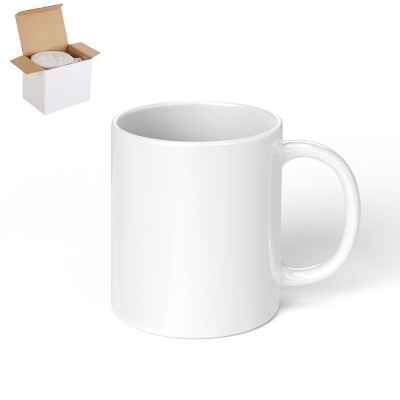
Products in this guide: 500ml Stoneware Ceramic Mug · Ceramic Rice Bowl
The cups are rarely the expensive line and almost never the technical one. They are the line that must be decided before the information exists. The machine is already fixed, the cover count is a calculation somebody has to defend, and the brand standard is still being negotiated on another floor.
This guide looks at the project from the dealer side: how the equipment decides the cup, why the quantity is arithmetic that gets disputed, what a design minimum does to one property, and the terms that keep the schedule from breaking at handover.
The Dishwasher Writes the Dimension
A rack is a fixed grid, roughly half a metre square, divided into compartments with a footprint a cup either clears or does not. A mug two millimetres too wide costs a compartment in every rack, and the rack is the unit the machine is rated in.
So the person specifying the dishwasher is specifying the cup. Machines are bought on racks per hour, and that only becomes cups per hour if the rack is full. A mug whose handle projects past the compartment line turns an efficient machine into a slower one, and the dealer sold both.
Height clearance works the same way. Tall latte cups reduce the usable racks in a pass-through machine. Stackable shapes recover the space, but only if the foot sits inside the rim below, a mould decision rather than a purchasing one. None of it appears in a catalogue, only in the equipment schedule.
The Count Is Arithmetic, and Everyone Uses a Different One
Four numbers decide how many cups a property needs, and four different people own them. Guest rooms times occupancy gives the in-room set, usually two cups per room plus a spare. Food and beverage seats times turns gives the restaurant peak. Banquet capacity gives a third, because a 300-cover function does not draw on the restaurant's stock. Replacement gives the fourth, usually left as a percentage with no basis.
Then comes the number nobody writes down: the shortfall on opening day. Ware arrives dirty, some breaks in transit, some is held back as a sample, and the first week loses pieces faster than any steady ratio predicts. A package sized to the steady number arrives short. The argument at handover is almost never about quality; it is about which of the four counts the contract meant.
The Allowance Makes the Cup a Compromise
Most packages carry tableware as an allowance, a fixed sum per cover or per room. The dealer is not paid for the cup; the dealer is paid for the package, and the cup is where the difference between a good and a mediocre package is absorbed.
An allowance pushes toward fewer shapes, standard colours, plain bodies and no bespoke decoration, because each adds cost or lead time. The designer's intent and the dealer's allowance meet in a specification meeting, and the specification that survives is the one that can be bought from stock. That is the structure of the channel, and a factory that understands it is useful in that meeting.
The Design Minimum and the Property That Falls Short
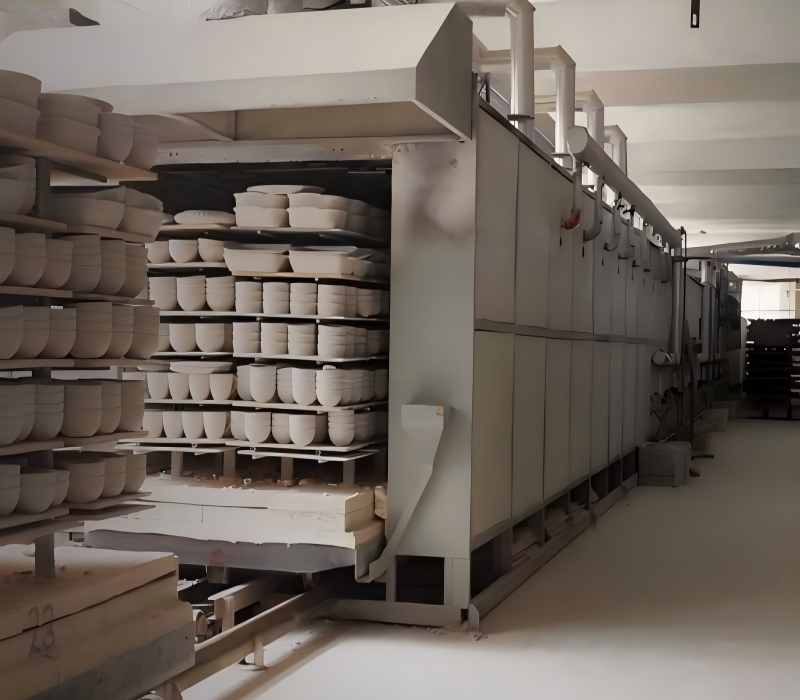
Ceramic production runs on a minimum per design and per decoration, and in this category that minimum is 5,000 pieces. A 180-room hotel with a restaurant and a banquet floor might genuinely need 1,100 to 1,400 cups in total. The property needs a fraction of what one design costs to run.
There are three honest routes. Aggregate its venues onto one body and one glaze so the volume lands in a single design. Take a stock line and give up the decoration. Or split the package deliberately, opening with plain stock and adding a branded wave once the operator knows what it uses.
Each costs something: aggregation narrows the design, a stock line removes the brand, a second wave buys flexibility with another lead time. All three beat discovering the minimum after the schedule is frozen.
The Order Has to Be Placed First and Arrive Last
The tableware is the smallest line in the package and the one with the longest clock. Ceramic production plus sea freight is measured in months, while the kitchen goes in over weeks once the equipment lands. Backwards from commissioning, the cup order is the first thing to release, even though it is the last thing anybody wants to decide.
It also cannot arrive early. There is no secure storage on a site full of contractors, and cartons that sit in a dusty room for two months need a wash before counting. The window has to be written as a window with a named receiver, not a date.
The replenishment calendar maps the ordering windows for the whole year.
Where the Package Breaks at Handover
The failures are consistent and rarely about the ceramic.
- A substitution approved as equivalent turns out to be a different rim thickness, and the brand team rejects it after installation.
- Transit breakage exceeds the spare ratio, and the shortfall lands on the opening week.
- The logo is approved after the schedule freezes, so branded pieces arrive for the second month of operation.
- Spare stock is consumed by the contractor during commissioning and never replaced.
Each one is a contract and logistics problem that reads as a product problem to the person holding the chipped cup.
What to Put in the Request
A request a factory can answer without a meeting needs the schedule attached to it.
- The rack or machine reference being installed, with compartment dimensions if known.
- The four counts separately, as numbers rather than ranges, with the spare ratio named.
- The allowance basis, so the specification is written to what the package can carry.
- The delivery window and the receiving party, not a single requested date.
- Whether the opening is plain stock and branding a later wave, stated as a decision.
- The substitution rule, and who signs it.
The spec freeze guide explains how artwork and packing files are locked between orders.
A cup is a small item to argue about, and it is the item that arrives last with the least time left to fix. The dealer who writes the schedule down, attaches the machine reference and separates the four counts is not being pedantic. That separates a package that closes at handover from one that stays open for a quarter.
Related Products
Explore products featured in this guide:



Have questions? See our Sizes & Finishes FAQ and Ordering & Certifications FAQ.
Need a custom quote? Send an inquiry or browse our full product catalog.