Five Streams, One Start Date: What Has to Land Before the Line Can Run
A purchase order reads like one instruction: make five thousand mugs, pack them, ship them. On the factory floor it behaves like five instructions that have to finish at the same moment. The body has to exist, the glaze has to be mixed, the decoration printed, the cartons printed, and the reference the order will be judged against signed. Until the last of those lands, the line cannot start.
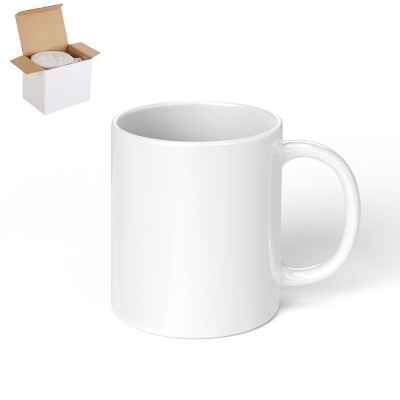
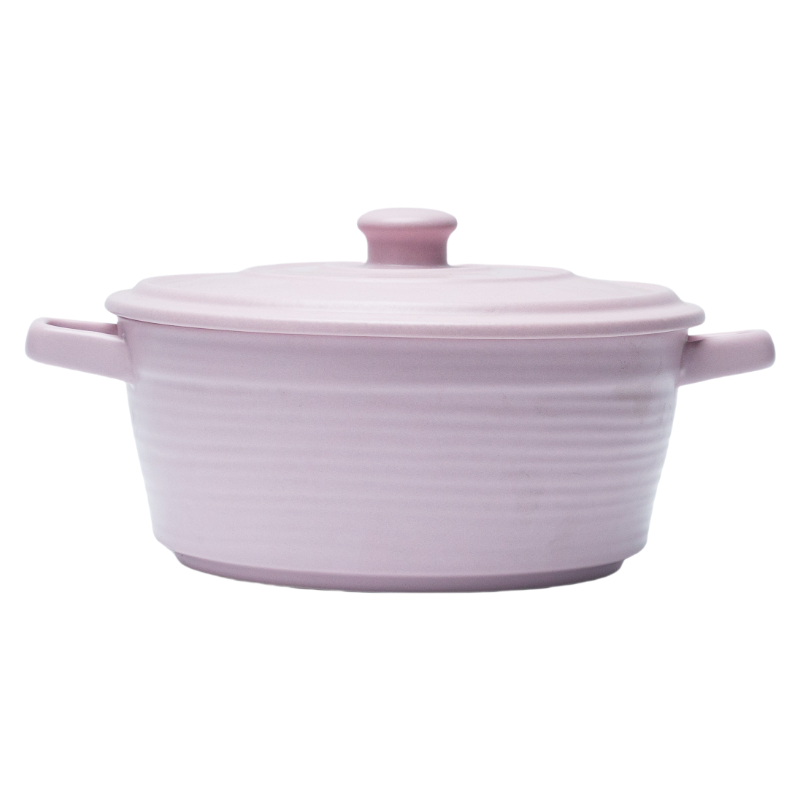
Products in this guide: Valentine Hearts Ceramic Mug 560ml · Porcelain Kids Bowl
Two orders of the same size and the same specification can therefore take different lengths of time without anyone being slow. The line did not change. The arrival dates did.
The start date is a maximum, not a choice
Every planner works with the same arithmetic. Five things have to be present, so the earliest possible start is the latest arrival among them. If the body is ready in week one, the glaze in week two, the decals in week four and the cartons in week five, the order starts in week five, and the four weeks of preparation behind it are invisible in the schedule.
Running the streams in parallel does not compress them into one date; it only removes the waits that were avoidable. What remains is set by the slowest stream, and the only way to shorten the gap is to shorten that one. When artwork triggers a print run, a seven-day delay at the front can become a two-week delay at the line, because the print run now lands in a different slot.
The first two streams are made, not ordered
Body and glaze appear on an invoice as purchased materials. In the plant they are recipes with a settling period.
A body is blended from several clays, and the blend is not identical between deliveries even when the specification is. It needs to rest before it forms well, and a body used before it has settled behaves differently in the mould and in the dryer. A new delivery is a new starting point rather than a replacement for the old one.
Glaze behaves the same way with an added constraint: it is mixed in a vat, and a vat has a working volume. A small order either waits for a vat to be scheduled or receives a mix made for it: the second costs more per piece, the first takes longer. Either way a glaze is proven on tiles before it goes near production ware, and that proof is one of the approvals in the chain rather than a formality after it.
The third stream is a print job
Decoration is where buyers most often assume the file is the product. A decal is manufactured: a screen or plate set is prepared, ink is matched, and a print run is scheduled in a quantity that makes setting up worthwhile. The file starts the process; it does not replace it.
Two consequences follow. The first is timing: decal printing has its own queue, and it is rarely the fastest item in the chain when a colour has to be matched against a physical reference. The second is versioning. A reprint is a new decoration even when the artwork file is unchanged, because a second print run carries its own ink batch and its own registration. An order that spans a reprint spans two decorations, whether or not anyone writes that down.
The fourth stream is also a print job
Cartons repeat the pattern with a structural step in front: a dieline has to be frozen and a cutting die made before printing makes sense. The die is the part that cannot be hurried. The packaging guide explains how retail-ready and protective layers are specified together.
The detail that catches programmes is that a carton carries two separate approvals: the artwork, and the copy. Barcodes, allergen and care text, the languages required at retail, the recycling marks, the country of origin line. These are not decoration decisions, and they are often settled by a different person, weeks later, than the design was.
When cartons land after the ware is finished, nothing is broken and nothing ships: finished goods sit in the packing area waiting for a box, a cost that appears in no quotation and in no capacity plan.
The fifth stream is a reference
The last item is not a material. It is the sealed sample and the written specification that say what the order is judged against. Without it, ready has no meaning: a first-article check compares a piece to something, and when that something is a photograph and a memory, the check produces opinions instead of a verdict. The spec freeze guide explains how artwork and packing files are locked between orders.
It is the cheapest stream to complete and the most deferred, because it feels like paperwork while the other four feel like work.
The release checklist
Seven lines, written before the order is placed, remove most of the ambiguity:
- Name the five streams in the purchase order, with an owner for each.
- State which streams the buyer releases and which the factory releases.
- Fix the artwork approval as a date, not as a vague target.
- Treat carton copy as a separate approval, with its own date and signer.
- Record the sealed reference, including the glaze tile and decoration version.
- Require the factory to confirm in writing which stream lands last.
- Agree what happens when a stream slips: the order waits, or it starts on part of the quantity and the rest follows.
That line separates a plan with a queue inside it from one that quietly becomes a partial shipment.
Two failure patterns, and the question that avoids both
The first is starting with a substitute. A previous decal version is still in the drawer, a similar glaze is still in the vat, and the line is free today. Production runs, the ware looks close, and the order now contains pieces that resemble the approved article without being it. Nobody decides this. It happens because the alternative was an idle line.
The second is starting the body and holding the decoration. This is more defensible and more expensive than it looks. Undecorated ware accumulates in a corner, gets counted into whichever lot is open when it is finally decorated, and is exposed to damage and dust for the whole wait. The order is late either way, and it is now harder to judge.
Before the first production meeting, ask one question: of the five streams, which arrives last, and on what date. A factory that answers in one sentence is planning. A factory that answers with a total number of days is quoting, and the difference becomes visible about three weeks later.
Related Products
Explore products featured in this guide:



Have questions? See our Sizes & Finishes FAQ and Ordering & Certifications FAQ.
Need a custom quote? Send an inquiry or browse our full product catalog.