
Event and Mobile Catering: Ceramics That Travel, Set Up and Survive
The Problem: A Kitchen That Folds Into a Van
Event and mobile catering is a logistics business that happens to serve food. The kitchen arrives in a van, is set up in a field, a hall or a marquee, serves several hundred covers and is packed away the same day — often by the same small team. Tableware in this channel is loaded and unloaded twice per event, handled by staff with no time, and washed either on site or back at base. Three specifications decide whether the programme survives a season.
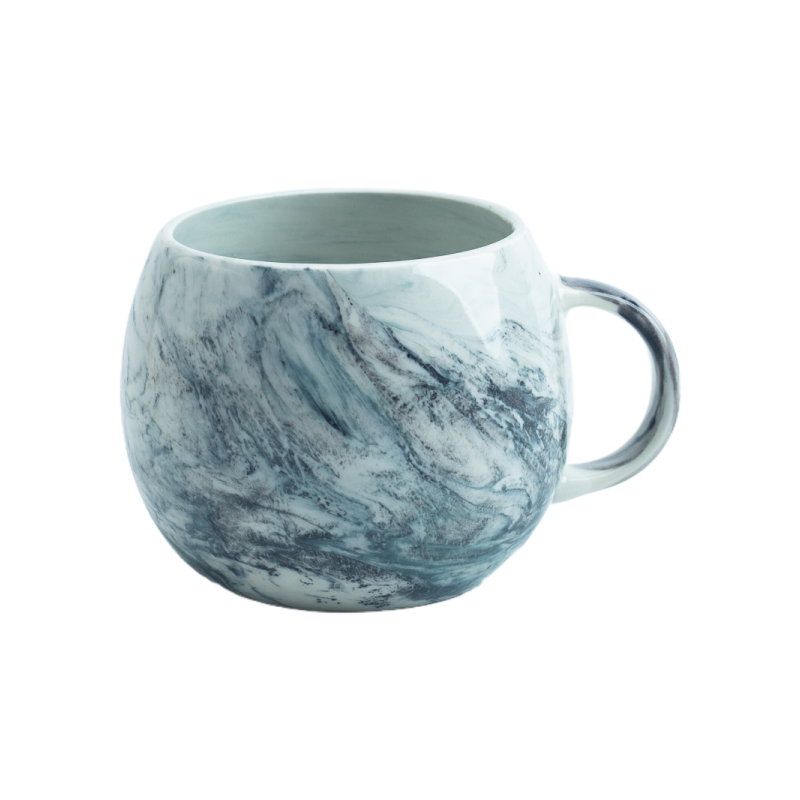
Products in this guide: Japanese Style Ceramic Ramen Bowl · 455ml Marble Ceramic Mug
Three Specifications
Crate and trolley systems, not loose pieces. The unit of work is the crate, not the plate. Pieces must stack predictably into a crate that fits the van's racking, and the crate must be carriable by one person when full. Where the venue has a service corridor or a ramp, a trolley system is part of the specification. This is the same logic as a stadium, applied to a smaller operation with less storage.
Impact on the surfaces that actually exist. An event floor can be grass, gravel, tarmac or a wooden hall floor; pieces go down hard and often. A drop test onto a hard, uneven surface from the height at which a tray is put down is the relevant measure, and a slightly heavier body with a stout rim is what passes it. Thin, elegant profiles that look right in a photograph are the ones that break in the first week.
On-site washing, or a plan that avoids it. Where there is water and power, pieces are washed on site in a temporary setup — which means thermal cycling is repeated and the detergent may be stronger than expected, and pieces must be stackable while wet. Where there is no washing, the programme is either compostable single-use or a reusable deposit system; both are decided by the venue's policy rather than by the caterer.
The Sustainability Policy Decides the Material
Festivals, public venues and corporate events increasingly require documented reusable or compostable service. That makes the tableware a compliance item, and three questions follow:
- Does the piece qualify under the venue's reusable definition (material, washable, counted)?
- Is there a marking and counting system, so returned pieces can be reconciled?
- What is the loss rate per event, because a deposit system's economics depend on it?
A caterer that can answer those three with figures wins the contract; one that answers with adjectives does not.
Decoration, Volume and Turnaround
Event work is often branded — the client's mark on the cup is part of what they are paying for — which makes fired decoration a requirement rather than a preference: an event is a compressed high-wear window, and a surface print will look worn after a weekend. Volume planning should assume a higher breakage rate than a fixed restaurant, and the programme needs a single-piece replacement price plus a reorder path short enough to cover a season of events rather than a year of one.
Questions to Ask a Supplier
- What crate dimensions do these pieces fit, and how many fit in one crate?
- What drop test has the piece passed on a hard, uneven surface?
- What thermal-cycle testing has been run, assuming on-site washing?
- Can the pieces be marked and counted for a reusable or deposit programme?
- Is the decoration fired, and how does it wear over a weekend of continuous use?
- What is the single-piece replacement price, and how fast can a crate be replenished mid-season?
The spec freeze guide explains how artwork and packing files are locked between orders.
What to Put in the Order
- Crate dimensions and count, matched to the van's racking.
- A drop test on a hard surface, with a figure.
- Thermal-cycle requirement for on-site washing.
- Marking and counting for reusable programmes.
- Fired decoration, with the event branding applied.
- Single-piece replacement pricing and a season-length reorder lead time.
The packaging guide explains how retail-ready and protective layers are specified together.
The Habit That Ties It Together
The habit is to buy the crate, the van and the venue's policy rather than the table on the day. Caterers that do this lose fewer pieces per event and stop turning down contracts that require documented reuse.
Related Products
Explore products featured in this guide:



Have questions? See our Sizes & Finishes FAQ and Ordering & Certifications FAQ.
Need a custom quote? Send an inquiry or browse our full product catalog.