Carton & Pallet Basics: What Every Bulk Buyer Should Specify in Writing
Why Packing Specs Come Before the Freight Quote
Ask ten buyers how many mugs fit in their container and most can answer. Ask them for the carton's exact outer dimensions and the answer slows down. That gap is where money leaks: carton size decides the freight calculation, the pallet count decides how the load survives the voyage, and the packing list decides whether customs clears it in a day or a week. This guide covers the four packing details a bulk ceramic buyer should put in writing — before booking anything.
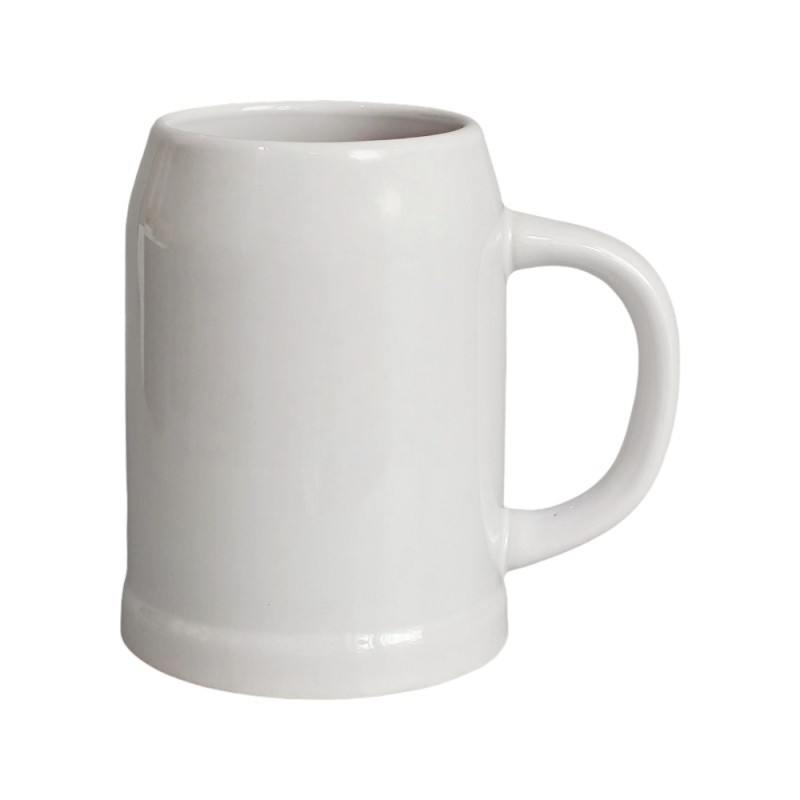
Products in this guide: New Bone China Espresso Cup Set · 0.5L Ceramic Beer Stein Mug
Where This Fits in the Sourcing Chain
Carton and pallet specs sit between production and the loading plan. See the full ceramic sourcing process map. They are the last data your factory confirms before your goods become a freight bill, so a wrong spec found late is expensive to correct.
The Four Carton Details to Put in Writing
A carton spec is four numbers plus one sentence. The four numbers are:
- Outer dimensions (length × width × height) in the unit your freight forwarder uses — centimeters or millimeters, stated explicitly. This number feeds every CBM calculation downstream.
- Units per carton — how many mugs, sets or packs sit inside one carton. Combined with dimensions, this gives you the per-unit volume and, from there, the loading math.
- Gross and net weight per carton — net is the goods alone; gross includes the carton and inner packaging. Freight lines bill on the higher of actual weight and volumetric weight, so both numbers matter.
- Carton quantity — the total number of cartons the order will ship, which should reconcile with the units per carton.
The one sentence is the carton mark: buyer initials or PO number, destination, and any handling note such as "FRAGILE" or "THIS SIDE UP." Marks look like trivia until a carton is opened at the wrong warehouse.
Pallet Basics: The Second Layer of the Plan
Few ceramic shipments travel floor-loaded; most move on pallets. Pallet standards differ by region, with common footprints around 1200 × 1000 mm and 1200 × 800 mm, so confirm which footprint your destination warehouse and freight line expect. The details to agree with the factory are:
- Cartons per layer and layers per pallet — the two numbers that define a pallet's height and stability.
- Stack height limit — ceramic is fragile; a taller pallet saves floor space but raises breakage risk in transit and may exceed warehouse rack limits.
- Protection spec — stretch wrap, corner boards and whether each layer is separated by cardboard. This is not decoration; it is the difference between arriving intact and arriving as a claim.
Ask for a simple pallet plan drawing: cartons per layer, layers per pallet, total pallets for the order. One drawing replaces an hour of back-and-forth.
How Specs Move Freight, Inspection and Shelf Costs
The same three numbers ripple through everything after the factory gate:
- Freight. Ocean quotes are built on container volume, and container volume is built on carton CBM. A carton that is five centimeters deeper than expected across thousands of cartons changes the pallet count — and can turn a planned 40HQ into a second shipment.
- Customs and inspection. When carton dimensions, weight and quantities match the packing list, and the packing list matches the commercial invoice, clearance is mechanical. Discrepancies invite sampling and delay. Keep descriptions consistent line by line.
- Retail readiness. If your cartons go to store shelves or e-commerce fulfillment, shelf and rack dimensions, case counts for promotions, and easy-open cartons are all part of the spec conversation — not afterthoughts.
Common Mistakes Buyers Make
- Leaving dimensions to "standard export cartons" without a written number, then discovering the CBM assumed in the quote was wrong.
- Ignoring gross weight and later facing a volumetric-weight surcharge that the freight line never mentioned.
- Accepting a verbal pallet height, then finding the pallet does not fit the warehouse rack or the container door.
- Copying a packing list template from a previous supplier whose carton sizes were different.
Working With Storiware on Carton & Pallet Data
Storiware issues a packing list and a pallet plan as standard documents for bulk ceramic orders. When your carton spec is confirmed, the factory can model cartons per pallet and total pallets for your order, so the numbers on your freight quote and the numbers on the packing list are the same numbers. Ask for both documents in writing, and every downstream calculation — freight, insurance, storage — stands on verified data instead of assumptions.
Buyer Checklist Before You Confirm Packing Specs
- Carton outer dimensions stated in one explicit unit
- Units per carton and total carton count reconciled
- Gross and net weight per carton confirmed
- Pallet footprint agreed with your forwarder and warehouse
- Cartons per layer and layers per pallet in writing
- Pallet plan drawing requested before booking
- Carton marks and handling notes specified
With these details in writing, your container quote, your customs clearance and your warehouse plan all start from the same set of facts.
Related Products
Explore products featured in this guide:

Have questions? See our Sizes & Finishes FAQ and Ordering & Certifications FAQ.
Need a custom quote? Send an inquiry or browse our full product catalog.