Container Math: How Many Mugs Fit in a 20GP / 40HQ
Why Container Math Comes Before the Quote
When an importer or distributor first contacts a ceramic mug factory, one question arrives faster than any other: "How many units can you load into a 20GP or a 40HQ?" It looks like a single number, but it is the output of several decisions — cup size, carton dimensions, pallet layout, and whether the goods ship finished or knocked-down. Estimating it correctly, early, protects both your freight budget and your delivery window.
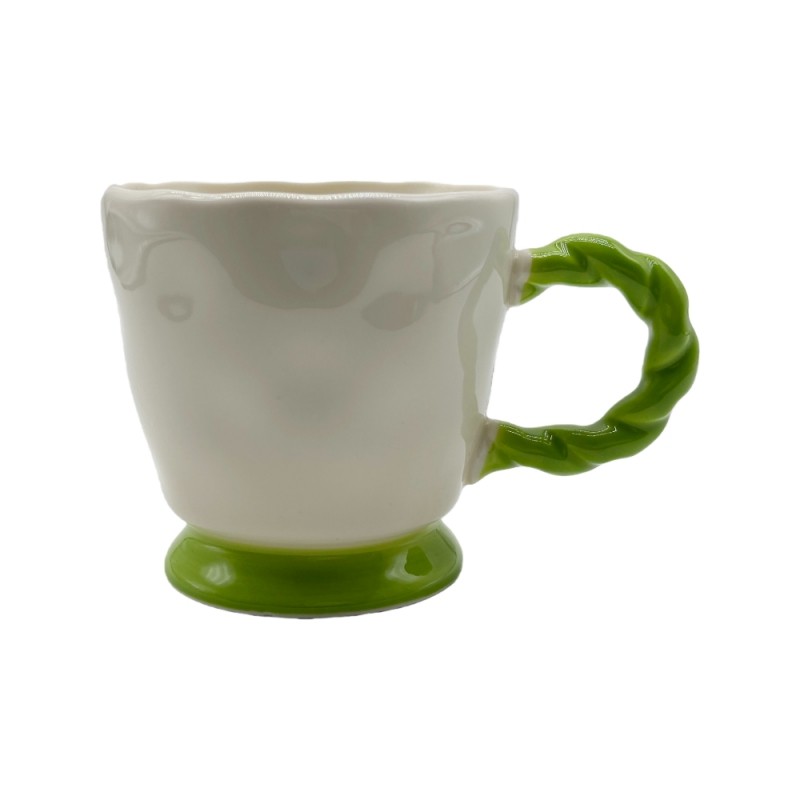
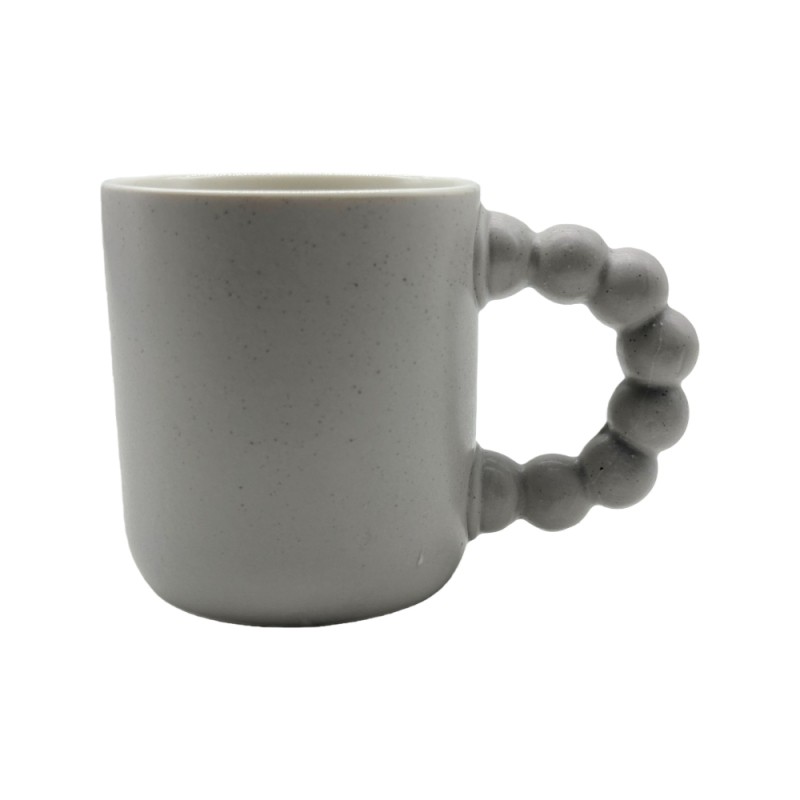
Products in this guide: Custom Design Ceramic Mug with Twisted Handle · New Bone China Ceramic Mug
Where This Fits in the Sourcing Chain
Container planning is the final physical step before goods leave the factory. See the full ceramic sourcing process map. Once sampling, production, and inspection are complete, loading efficiency is the only variable left. Buyers who understand the math can brief their supplier with a complete inquiry and avoid a surprise partial container.
The CBM Method Buyers Actually Use
CBM (cubic meters) is the shared language of ocean freight. The steps are straightforward:
- Measure one carton: length × width × height, in meters, gives the carton CBM.
- Divide the container's usable capacity by the carton CBM to get a theoretical carton count.
- Apply a realistic load factor — most buyers plan around 80 to 90 percent of the theoretical maximum to leave handling room.
A 20GP offers roughly 28 to 33 CBM of usable space; a 40HQ offers roughly 68 to 76 CBM. These are ranges, not guarantees — the exact figure depends on carton shape and how tightly pallets stack.
Pallet Utilization: The Detail That Moves the Count
Pallets standardize loading but cost space. A standard pallet with goods is about 1.0 to 1.2 CBM, and a 20GP typically holds 10 to 11 pallets while a 40HQ holds 22 to 24. Two things shift the number:
- Carton footprint versus pallet footprint — a mismatch leaves dead corners.
- Stack-height limits — fragile ceramic needs lower, safer stacks than sturdy goods.
Ask your factory for the carton's exact outer dimensions and how many cartons fit per pallet layer; that one data point beats any generic estimate.
Finished Goods vs. Knocked-Down (KD)
Some mug programs ship finished; others ship knocked-down or in slimmer packs. KD can raise units per container because the same mug occupies less height, but it moves labor to your end. For a standard ceramic mug, the gap between a finished carton and a slim pack can decide whether a 20GP is tight or a 40HQ is comfortable. Choose KD on your local labor cost, not only the freight line.
What to Request From the Factory
Do not accept a verbal "about X units." Ask for, in writing:
- The packing list: carton dimensions, gross and net weight, units per carton.
- The pallet plan: layers per pallet, cartons per layer, total pallets per container.
- The declared load method: floor-loaded or palletized — this affects both the count and destination-handling fees.
With those three documents you can verify any quote instead of trusting it.
Common Mistakes Buyers Make
- Planning at 100 percent of the theoretical load, then finding the last pallet does not fit.
- Mixing carton sizes in one container without a stacking plan, which leads to unstable, rejected loads.
- Ignoring carton net weight — overweight cartons cause handling and safety problems at the port.
- Forgetting that 40HQ height, not just volume, decides whether tall displays ship.
Working With Storiware on Loading
Storiware supplies the packing list and pallet plan as standard documents for every bulk mug order, and can model a 20GP versus 40HQ comparison once your carton spec is fixed. The aim is a load you can defend line by line, not a round number.
Buyer Checklist Before You Send the Inquiry
- Cup model and capacity confirmed
- Carton outer dimensions and units per carton known
- Preference stated: palletized or floor-loaded
- Target port and container type (20GP / 40HQ)
- Packing list and pallet plan requested in writing
With these in hand, you are ready to send a complete container inquiry.
Why mug container maths goes wrong first
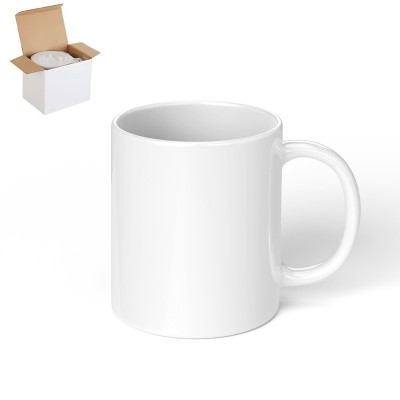
Mugs are the category where buyers most often mis-estimate a container, because a mug is not a solid block: it is a hollow shape with a handle, and how it nests inside a carton changes the packed density more than the mug’s own dimensions do. Two 11oz mugs of the same size can differ by a third in packed volume depending on how they are laid in the carton and whether a lid or gift box is added.
The four numbers to get from the factory
- Cartons per item and CBM per carton — never per piece; ceramics are bulky relative to value, so volume binds before weight for mugs.
- Pieces per carton, and whether mugs are separated by a partition or nested handle-to-body.
- Weight per carton, to check the payload limit on a plate-heavy mixed load.
- Cartons per pallet or the stacking height, which decides whether the container is palletised or floor-loaded.
What changes the number, and by how much
- Partitioned cartons protect mugs but consume volume; nested cartons pack more tightly and are more common for blanks.
- Gift boxes are the least dense thing in a mug container — they can reduce pieces per container by a quarter or more, and they should be computed, not assumed.
- Palletised versus floor-loaded is a deliberate choice: floor loading fits more in the same container but costs more handling at destination and offers less protection.
- Handle orientation — aligning handles is a packing instruction, and it is the difference between a stable stack and a collapse.
The arithmetic in one line
Pieces per container = (usable CBM of the container) ÷ (CBM per carton) × (pieces per carton). Ask for that number for your actual item and packaging, in both loading modes — it is the figure that converts a unit price into a delivered cost, and it is also the number that tells you whether a second partial shipment is cheaper than waiting for a full container.
For the general loading logic across plates and bowls as well as mugs, see mixed containers: the loading arithmetic. Our ceramic mugs and cups range is quoted with the loading plan, and the bulk order programme explains how MOQ, decoration and sampling fit together. If you want the container maths for a specific item, send the specification.
Related Products
Explore products featured in this guide:
Have questions? See our Sizes & Finishes FAQ and Ordering & Certifications FAQ.
Need a custom quote? Send an inquiry or browse our full product catalog.