
Why Ceramic Orders Fail: Five Patterns That Show Up Before the First Kiln
When a bulk ceramic order goes wrong, the post-mortem usually points at the factory: the kiln, the glaze batch, the packing line. Those are where the visible damage appears. They are rarely where the failure started.
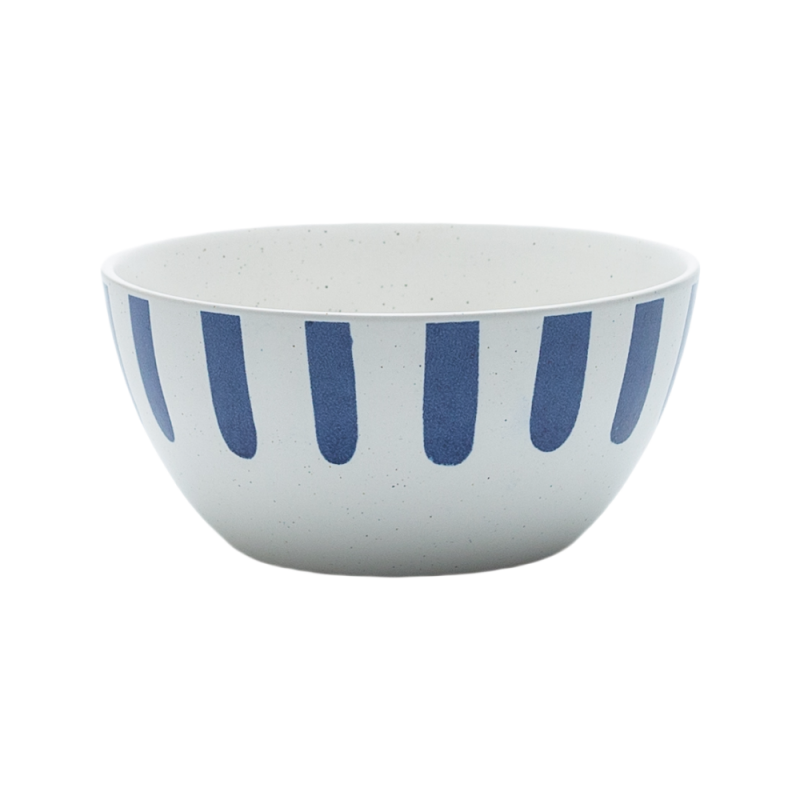
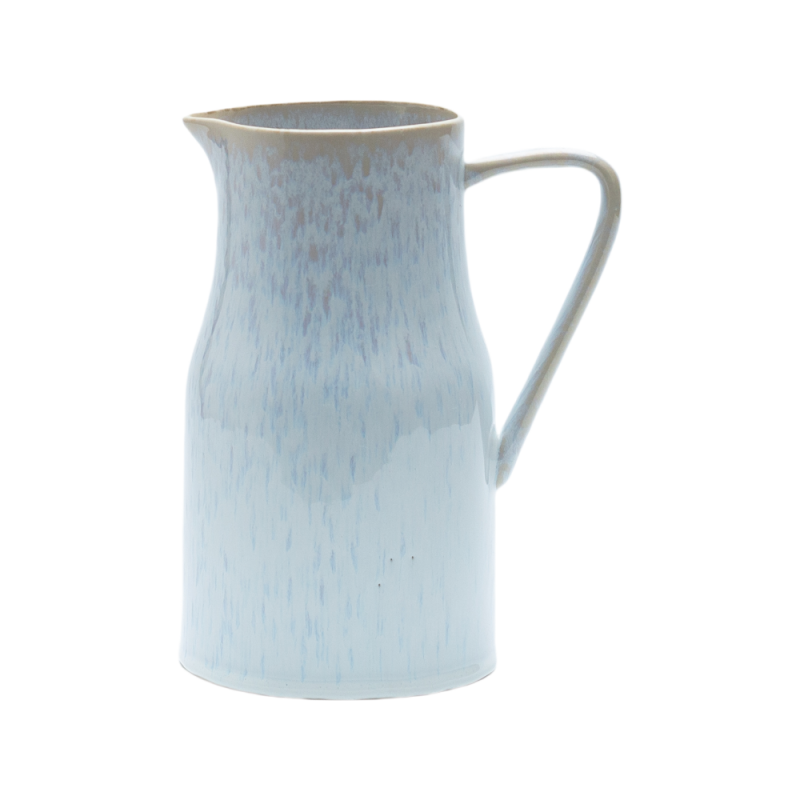
Products in this guide: Nordic Blue Brushstroke Ceramic Bowl · Handcrafted Reactive Glaze Ceramic Pitcher
Across enough orders a different shape emerges. The failures cluster into five patterns, and every one of them is visible weeks before the first piece enters the kiln. None requires special expertise to spot. Each requires somebody to ask an uncomfortable question early, when the answer is still free to act on.
Pattern one: the specification drifts in good faith
Someone improves something. A handle gets slightly thicker for a better grip. A rim is eased because the sample looked sharp. A colour is nudged two steps warmer because it photographs better. Each change is small, each is defensible, and none is recorded.
By the fourth month the delivered mug no longer matches the approved sample, and nobody can say at which point it changed. The argument that follows is not about quality. It is about which version was ordered.
The mechanism is worth naming: verbal approvals and small kindnesses accumulate into a specification that exists only in the supplier's memory. Prevented by one habit, which is that every accepted change is written into a dated document and accompanied by a new reference sample.
Pattern two: the calendar assumed capacity instead of scheduling
A delivery date is agreed in a conversation about capability. The factory confirms it can produce forty thousand pieces a month, which is true, and the buyer hears that forty thousand pieces will be produced in the month he needs them.
Capability and availability are different quantities. A factory making forty thousand pieces a month for four existing customers has no free capacity in a peak month, however impressive its total output. The date was never a commitment; it was an inference.
The signal appears in the sample stage: a factory that is genuinely scheduled will give a date for the sample and hit it. One that is quoting from capability will give a date and move it once, then again.
Pattern three: the price rested on an assumption nobody froze
Every quotation contains assumptions that are not printed on it: a clay price, a glaze cost, a packing specification, an exchange rate, a freight level. These are stable most of the time, which is why they go unexamined.
When one moves, the price moves, and the conversation turns into a dispute about who accepted what. The buyer believed a price was fixed. The supplier believed a quotation was an estimate of a moving cost.
The fix is procedural and cheap: name the assumptions on the quotation itself, state how long the price holds, and state what happens when an input moves beyond a threshold. A price without a validity period is an opinion.
Pattern four: acceptance criteria were first discussed at inspection
The inspection report arrives with a list of findings, and the argument begins about whether those findings matter. Nobody had previously said what would count as acceptable: which defect types, at what size, on which surface, at what rate.
This is the most expensive of the five, because by the time it surfaces the goods exist. Either the buyer accepts a batch he did not want, or the supplier reworks at a cost that has to be recovered somewhere.
The useful discipline is to write the acceptance standard into the order before production: a defect classification, a sampling approach, and the name of the person entitled to sign the result. Where a third-party inspection is used, its scope belongs in the same document.
Pattern five: single points of dependency
One decorator. One transfer paper supplier. One kiln. One person in the factory who knows how to set the printing machine for this artwork.
Single points are invisible while they work and catastrophic when they stop, and ceramics has more of them than most categories because decoration is often subcontracted and firing capacity is physically finite.
The question to ask is not whether the factory has a backup. It is which specific step in this order has only one path, and what the plan is if that path closes for two weeks.
What the five have in common
Each pattern is a gap between what one party believed and what the other party recorded. In every case, the gap was cheap to close at the start and expensive to close at the end.
The early signals are consistent enough to be used as a checklist.
- A change accepted in conversation but not in a document.
- A delivery date given without a production start date attached to it.
- A quotation with no stated validity period and no named assumptions.
- No written acceptance standard, or one that has never been read by the person inspecting.
- A production plan in which one workshop, one material or one machine appears only once.
Five questions map onto the five signals, and they can all be asked in a single email before the deposit: which document records the last change, when does production start, how long does the price hold, what is the acceptance standard, and which steps have only one path.
The master sample guide explains how sealed references keep batches identical.
The part that is within the buyer's control
Four of the five patterns are documentation problems, and documentation belongs to whoever is willing to own it. That is usually the buyer, because the buyer is the party with the most to lose and the least visibility.
A supplier can make this easier or harder. One that issues dated change notes, quotes with stated validity, and asks for the acceptance standard before production is doing the work that prevents four of these five. That behaviour is visible in the first exchange, long before any money moves.
The order that fails is rarely the one that hit a bad factory. It is the one where nobody wrote down what everyone assumed.
Related Products
Explore products featured in this guide:
Have questions? See our Sizes & Finishes FAQ and Ordering & Certifications FAQ.
Need a custom quote? Send an inquiry or browse our full product catalog.

