
When the Buyer Changes: Handing Over a Ceramic Program Without Losing It
Buyers change roles. It happens every two or three years in most organisations, and it is treated as an administrative event: an email announcing a new contact, a forwarded mailbox, a calendar invitation.
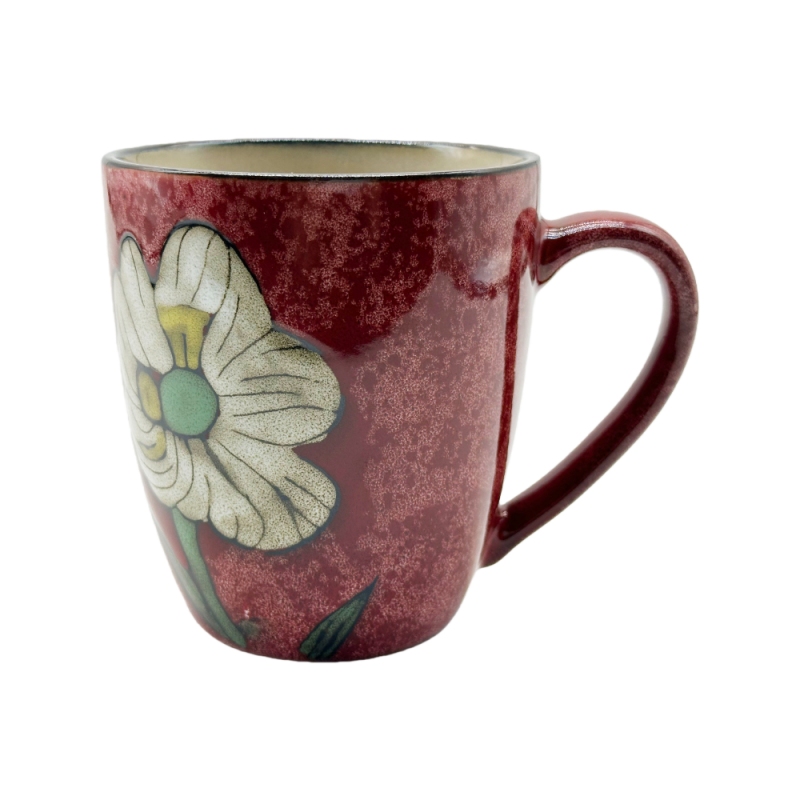
Products in this guide: Reactive Glaze Ceramic Mug 390-400ml · 11oz Sublimation Color Handle Mug
The cost of that assumption surfaces six to twelve months later, in the form of a specification nobody can explain, a sample that gets remade because a decision was reversed, or a price that quietly rises because the new owner accepted a revision the previous one had refused. None of these is anyone's fault. They are the predictable result of a programme that lived in one person's memory and a mailbox.
What actually gets lost
Five categories, and only the first is usually handled.
The taught specification. The written document survives; the reasons behind it do not. Why the rim is 3.5 mm and not 4, why this glaze and not the cheaper one, why the handle was moved 6 mm two years ago after a complaint. Without the reasons, the first cost-reduction exercise reverses decisions that were made for good cause.
The unwritten agreements. The factory tolerates a 5 mm variation on this dimension. This colour is accepted at a slightly lower gloss. These pieces are packed with an extra divider that is not in the specification. Every programme accumulates these, and every one of them is a future dispute when the new owner reads the documents and finds them incomplete.
The identity of reference samples. Which physical mug on the shelf is the approved one, and which is a rejected earlier version. Retained samples without labels are archaeology, not references.
The assumptions inside the price. Which validity period applied, which cost was excluded, which volume band the price belonged to. A new owner negotiating from a price whose assumptions are unknown will negotiate badly, in one direction or the other.
The credit in the relationship. What the supplier has already fixed at their own cost, what was conceded in the last negotiation, how many times the buyer has changed their mind. This is the least documentable and the most expensive to rebuild.
The file that survives a person
A handover file is not a folder dump. It is a small set of documents assembled so that a competent stranger could run the programme next week.
- The current specification for every active SKU, with revision dates and a one-line reason for each revision.
- The approved reference sample inventory: location, label, photograph, and the date it was sealed.
- The open order list with stage, quantity and promised date for each.
- The price file per SKU, with volume bands, currency, validity period and stated exclusions.
- The list of known deviations the supplier is permitted, with the reason each was permitted.
- The contact map: who signs specifications, who signs inspection reports, who is called when a container is stuck.
Only the last item is social. Everything else is documentation that a factory can be held to.
The conversation, not the memo
A handover email informs. A handover conversation transfers. The difference matters because a supplier will behave differently with an owner they have never spoken to.
The most effective format is a single three-way call or meeting inside the first two weeks, with the outgoing owner, the incoming owner and the supplier's account contact in the same conversation. Three things should be covered explicitly.
What is in progress and what is fixed. The incoming owner hears the supplier state the commitments, not the departing owner's summary of them. Discrepancies surface immediately, while both parties are present to resolve them.
What has been agreed informally. This is the moment to convert verbal tolerances into writing, or to withdraw them. A tolerance that survives only as a habit will be tested by the next cost review.
What the new owner is authorised to decide. Suppliers calibrate to perceived authority. Stating clearly whether the new owner can commit to volume, price or schedule changes prevents months of cautious circling.
What the supplier should be asked to confirm in writing
Three confirmations, sent by the supplier rather than the buyer, close the loop:
The specification they are currently producing to, version and date. If it differs from the buyer's copy, that is the single most valuable finding of the whole exercise.
The reference sample they are holding, with its date and photograph.
The commercial terms in force: price, validity, payment terms, and any concession granted verbally.
A supplier who cannot produce these three within a week is telling you something about how the programme has been run.
The first thirty days
- Re-issue the specification with a version number and a date, even if nothing changed. It creates a starting point that belongs to the new owner.
- Photograph the retained samples in place, with labels.
- Reconcile the open order list against the supplier's records.
- Read the last three complaints and the last three change notes. They describe the programme's real weaknesses faster than any audit.
- Meet the supplier once, with a technical topic on the agenda rather than a courtesy one.
The spec freeze guide explains how artwork and packing files are locked between orders.
Why this is a supplier-selection criterion
A supplier that maintains its own versioned documentation makes a buyer change almost free. A supplier that keeps everything in a chat thread makes it expensive, and the cost lands on whoever arrives next.
That is worth knowing before the change happens. When evaluating a new supplier, one useful question is simply: if your contact here left tomorrow, what would the next person have? The quality of the answer predicts the quality of the relationship more reliably than any factory tour.
A programme that depends on a person is not a programme. It is a relationship with a memory problem.
Related Products
Explore products featured in this guide:


Have questions? See our Sizes & Finishes FAQ and Ordering & Certifications FAQ.
Need a custom quote? Send an inquiry or browse our full product catalog.

