
Travel Lids and Sip Compatibility: Making a Mug Work Away From a Table
The Problem: The Lid Is a Different Product
A ceramic body and a lid are made by different processes, to different tolerances. The consequence is practical: a mug that works perfectly on a table may leak in a bag, or the lid may fit one batch but not the next. Buyers who treat the lid as an accessory discover this after the first complaint cycle; buyers who treat it as a specification avoid it.
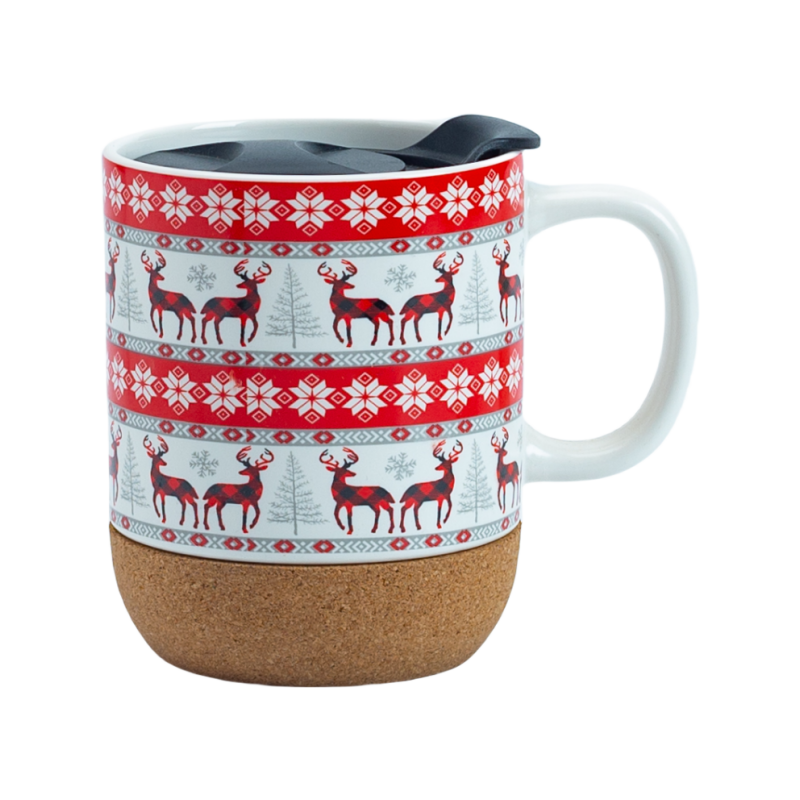
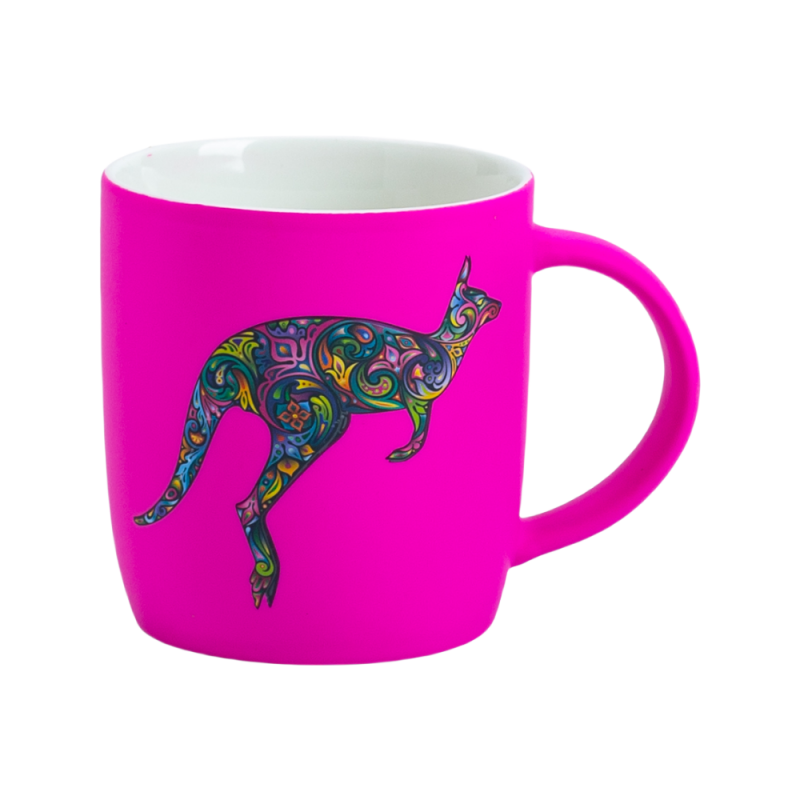
Products in this guide: 14oz Christmas Ceramic Mug with Cork Base · Soft Touch Promotional Mug
What Decides Whether a Lid Works
Rim geometry, before lid design. Two numbers matter: the rim outside diameter and its flatness. A lid seals on a flat band of the rim, so a rim that is slightly oval, or that varies in diameter between pieces, cannot seal consistently. This is why lid compatibility should be specified with the body, and why a tolerance should be stated — not assumed.
Lid type, chosen against use. A press-in lid is the simplest and relies on gasket compression; a screw lid resists pressure better and takes longer to open; a slider or flip sip lid adds a drinking aperture and a second sealing surface. Each adds parts and failure modes, and each should be chosen against the actual use: commuting, a car, a hospital tray.
Gasket material and fit. Silicone is the usual choice where the lid is washed repeatedly; the questions that matter are food-contact compliance for the destination market, hardness (a softer gasket seals with less force but deforms faster) and whether the gasket is replaceable or bonded into the lid.
Sealing force versus usability. A lid that seals extremely well can be hard to open — a real problem for older users or in a care setting. Sealing and opening effort should be specified as a pair, not optimised separately.
Testing and What to Ask For
A leak test, described. The useful specification is a defined test: lid fitted, filled to a stated level, inverted or shaken for a stated time, at a stated temperature, with any leakage measured. A claim of "leak proof" without a test is a claim about one sample.
Wash performance. Commercial washing attacks gaskets first: they harden, shrink or deform. Ask for a cycle count for the lid assembly, and whether the gasket is designed to be replaced at that point — because a lid whose gasket cannot be replaced turns a cheap part into a short-lived product.
Compatibility across the range. Where a programme has several body sizes, the useful question is whether one lid fits several bodies, or whether each size needs its own tooling. This single answer changes the spare-parts economics of a whole programme.
The Practical Details Buyers Forget
Spare lids, priced. Lids are lost more often than mugs are broken. A programme should carry a single-lid replacement price and a stock path, especially for channels where the mug is used daily.
Colour and marking. A lid in a contrasting colour is easier to find in a bag and easier to code by user; printed lids need a decoration method that survives washing, which is a different question from printing a ceramic body.
Retail and gift presentation. Where the mug is sold with a lid, the packaged unit has to survive handling without the lid pressing on the body — a packing detail that belongs in the specification, not in the artwork conversation.
Our <a href="https://www.storiwareceramicmugs.com/products2147420/Custom-Ceramic-Mugs-Cups.htm">ceramic mugs and cups</a> range can be specified with lid-compatible rims, and <a href="https://www.storiwareceramicmugs.com/oid1757203/The-Custom-Mug-Programme-Buyer-Guides-by-Decision.htm">the custom mug programme guides</a> collect the related decisions. To work through a travel programme, <a href="/contact-us.htm">send the body, the lid type and the intended use</a>, and see the <a href="https://www.storiwareceramicmugs.com/oid1756307/Custom-Ceramic-Mugs-Bulk-Order-Factory-Direct-from-China.htm">bulk order programme</a> for the commercial structure.
The spec freeze guide explains how artwork and packing files are locked between orders.
What to Put in the Order
- Rim diameter and flatness tolerance, stated with the body.
- Lid type chosen against the actual use, with its parts list.
- Gasket material, hardness and food-contact evidence, and whether it is replaceable.
- A defined leak test, with the conditions and pass level.
- A lid wash cycle count, and the gasket replacement point.
- One-lid-fits-many confirmation, plus a priced spare-lid path.
The packaging guide explains how retail-ready and protective layers are specified together.
The Habit That Ties It Together
The habit is to specify the lid with the body, test the pair, and price the spare. Buyers who do this sell a mug that survives a bag rather than one that survives a table.
Related Products
Explore products featured in this guide:

Have questions? See our Sizes & Finishes FAQ and Ordering & Certifications FAQ.
Need a custom quote? Send an inquiry or browse our full product catalog.

