
Tiering: Why Some Orders Move Faster and How a Buyer Gets Priority
Every buyer who has placed a second or third order has had the same experience. A competitor, or a colleague in another division, places an order and it ships in five weeks. Yours takes nine. Nothing in either purchase order explains the difference.
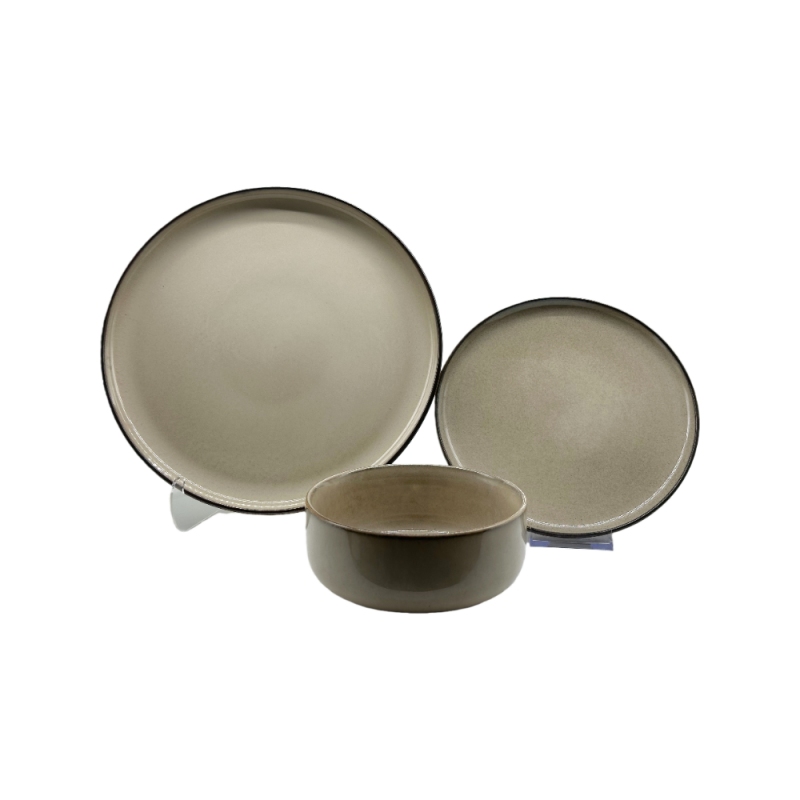
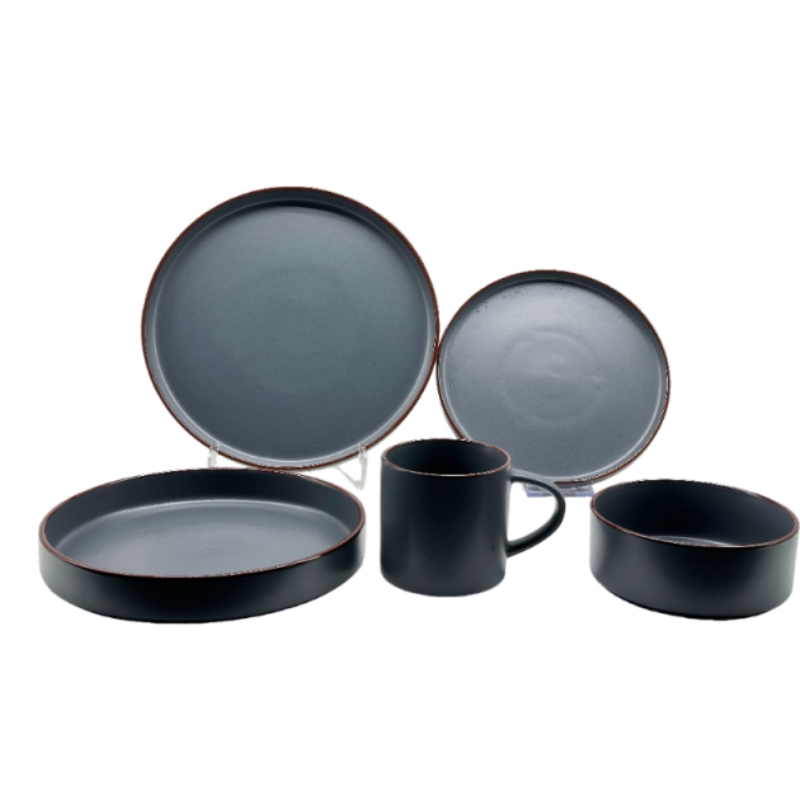
Products in this guide: 3-Piece Reactive Glaze Stoneware Dinner Set – Modern Ceramic Tableware for Everyday Dining · 5-Piece Matte Stoneware Dinnerware Set – Modern Black & Grey Plates
The explanation is usually not favouritism. It is that the supplier is making a scheduling decision, and scheduling decisions are made against a set of signals that have very little to do with how pleasant the buyer is and quite a lot to do with how predictable the order is.
What tiering actually is
The word suggests a list. Suppliers rarely keep one in any formal sense. What they keep is a working sense of which orders can be placed on the calendar with confidence and which ones need to be held back until something is confirmed.
That is the real distinction. A supplier with a full order book is not choosing between customers on the basis of revenue. It is choosing between orders on the basis of how much of the production plan each one puts at risk.
An order that is fully specified, fully paid against its deposit, and matches a shape the factory has run before can be scheduled immediately. An order with an unresolved artwork approval, a payment still in transit, and a capacity question hangs in a separate queue until those items clear. Both buyers may be equally valued. Only one can be scheduled today.
The four signals that decide it
In practice, four things move an order up or down.
Forecast reliability. This is the strongest signal and the least discussed. A buyer who said in June that they would need 40,000 units in October, and who confirms in August, is a different scheduling proposition from one who appears in September with an urgent request. The first can be planned into a kiln load. The second has to fit around loads already set.
Order structure. Orders that repeat a known shape, known decoration, and known packing are cheaper to schedule than orders that introduce a new combination. This is not about size. A regular 20,000-unit order in a proven specification can move faster than a 60,000-unit order in a new shape with new artwork, because the second one carries development work that has no fixed duration.
Payment and documentation. A deposit that clears in two days is a different instrument from one that clears in two weeks. So is a complete specification pack versus one that arrives in pieces over a month. Suppliers schedule against confirmed facts, and every unconfirmed item is a reason to hold.
Communication cost. This one is rarely stated and always felt. An order that generates fifteen clarification emails is more expensive to run than one that generates three, and not because of the emails themselves but because each open question is a decision deferred. Buyers who send consolidated questions get consolidated answers, and consolidated answers schedule faster.
The spec freeze guide explains how artwork and packing files are locked between orders.
Three things buyers usually get wrong
That volume is the same as priority. It is not, once the order book is full. Volume matters when capacity is available. When capacity is scarce, the constraint is not size but certainty. A supplier will take a smaller order it can run cleanly over a larger one it cannot.
That chasing accelerates. Frequent status requests do not move an order forward; they consume the attention of the person who would otherwise be resolving the blockage. If a buyer wants acceleration, the productive move is to identify what is actually holding the order and clear that, not to ask for updates more often.
That the relationship is the mechanism. Relationships help at the margin, and they help most in the sense that a supplier will tell a known buyer the truth about a delay earlier. They do not override a kiln schedule. Believing otherwise leads buyers to invest in social contact when they should be investing in specification quality.
What a buyer can actually do
Six actions, in order of effect.
- Give a rolling forecast, not a single order. Even a rough twelve-month view changes how the supplier holds capacity. State the assumption behind it so the supplier can tell you when the assumption breaks.
- Freeze specifications before the order, not during it. Artwork, dimensions, packing, and labelling settled at PO stage remove the largest category of scheduling uncertainty. Every item left open is a reason the order sits in the holding queue.
- Pay the deposit against a defined trigger. Agree what the deposit is against, and pay it when that condition is met rather than when the invoice is convenient. The clock on the production slot usually starts at cleared funds, not at PO date.
- Consolidate questions. One structured message with numbered items, sent at a predictable time each week, is worth more than a stream of separate messages. It also produces a written record you can hold the supplier to.
- Accept a defined substitution before you need it. If the supplier knows in advance that a shade variation within a stated tolerance is acceptable, a kiln load does not have to be held for a re-decision. Buyers who pre-approve tolerances get scheduled sooner, and they are not being generous, they are being predictable.
- Ask what the slot depends on. A direct question, asked early: what has to be true for this order to start on the date quoted. The answer tells you exactly which item to protect.
The replenishment calendar maps the ordering windows for the whole year.
The honest limit
None of this creates capacity. When a factory is running at its ceiling, a well-prepared order still waits, and a supplier who promises otherwise is promising something they cannot deliver. What preparation does is put the order at the front of the queue it is already in, and it removes the risk of the order sliding because of something the buyer could have settled months earlier.
This is also why the question to ask is not whether you are a priority customer. It is which specific conditions, if unmet, would delay your order, and who is responsible for meeting each one.
What to write down
Priority is not a word that belongs in a contract on its own. What belongs in a contract is a set of commitments that can be checked. A deposit-clearing date that starts the clock. A specification-freeze date. A confirmed production start window. A notification obligation if the start window slips. And a definition of what counts as a complete specification pack.
Four dated commitments do more for scheduling than any amount of relationship building, because they convert an informal sense of who matters into a plan the factory can actually run.
Related Products
Explore products featured in this guide:


Have questions? See our Sizes & Finishes FAQ and Ordering & Certifications FAQ.
Need a custom quote? Send an inquiry or browse our full product catalog.

