The Supply Chain Contingency Plan: How Ceramic Buyers Survive Disruption
The Question No Buyer Wants to Ask Late
Supply chain disruption in ceramics is not rare — it is recurring: a factory stops a line for a kiln repair, a port backs up for weeks, a raw material price jumps, a tariff lands overnight. The buyers who survive are not the ones who never got hit; they are the ones who answered "what do we do if..." before the phone rang. This guide covers the four scenarios that matter, the risk-response matrix, and the alternatives that keep a program running when the factory cannot.
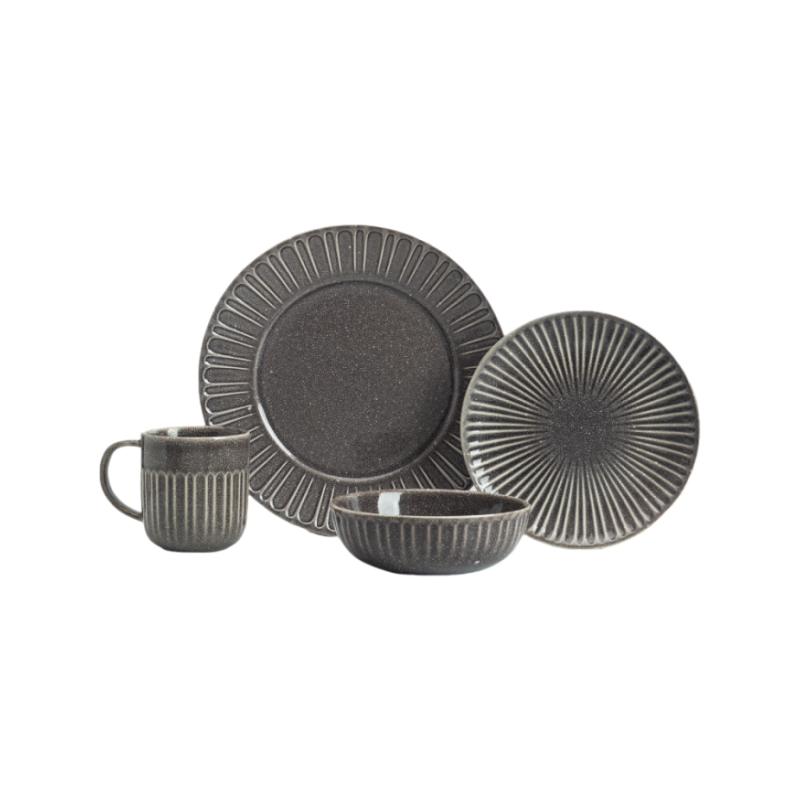
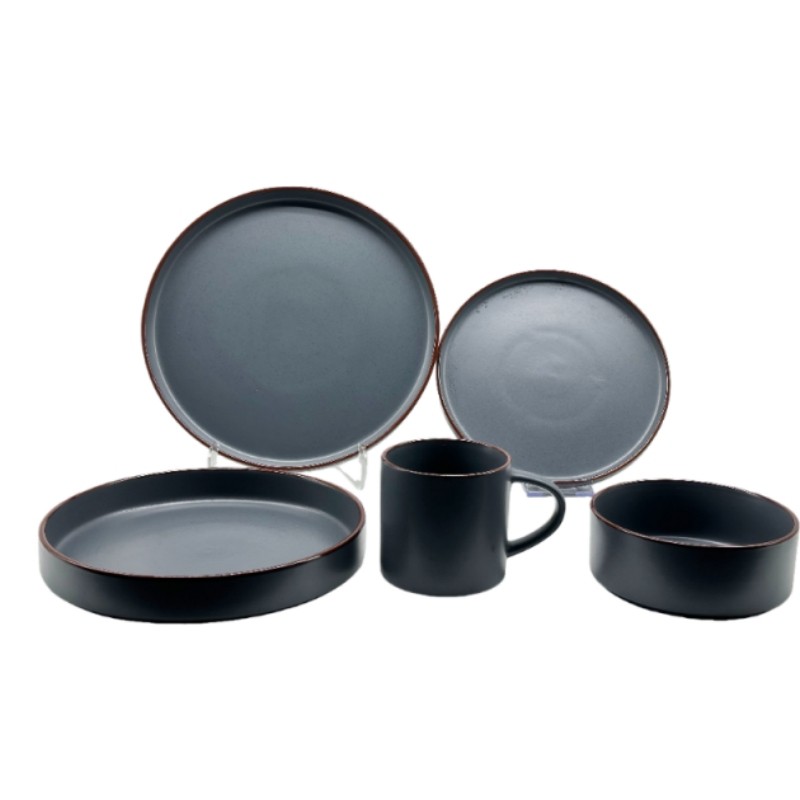
Products in this guide: Grey Reactive Glaze Stoneware 4-Piece Dinnerware Set · 5-Piece Matte Stoneware Dinnerware Set
The Four Disruption Scenarios
1. Factory stoppage. Kiln failure, raw material shortage, local power or labor issues — production stops, and lead times stretch from weeks to months. The response: a qualified alternate factory (see our new-factory and multi-supplier guides) that can reproduce the SKU without re-developing it, and a contract that states notification and recovery terms.
2. Port and logistics congestion. Congestion at origin or destination ports, container shortages, freight spikes. The response: modal flexibility (see our shipping guide) — the ability to switch from sea to rail or air for a critical SKU — and buffer stock calculated for the worst-case transit, not the average.
3. Material and cost spikes. Clay, glaze components or energy costs jump, and quotes start moving. The response: price clauses that define how and when prices can move (see our negotiation guide), and forward visibility — a factory that flags material cost changes early gives the buyer time to adjust rather than surprises at shipment.
4. Sudden regulatory or tariff events. A new duty, a new compliance rule (see our GPSR and tariff guides). The response: documented compliance dossiers per destination so a new rule never becomes a customs stop, and contract terms that share the burden of sudden tariff changes fairly.
The Risk-Response Matrix
Build the matrix by severity and probability:
- High probability, high impact (peak-season port delays, material spikes): build in structural buffers — safety stock, modal alternates, price clauses. These are expected, so plan them into the costing.
- High probability, low impact (small delays, minor cost moves): absorb with slack in the schedule; do not buy insurance for what the buffer already covers.
- Low probability, high impact (factory shutdown, sudden tariff): this is where the formal plan pays — the qualified alternate, the force majeure clause, the inventory rule of thumb (see our inventory guide) that carries the gap.
- Low probability, low impact: accept and ignore; attention spent here is attention lost from the real risks.
The Alternates That Keep Shelves Stocked
Four measures, in order of what to build first:
- The qualified alternate factory. Not a backup name on a list — a factory that has been pre-qualified (see our scorecard guide), has the tooling or the ability to match it, and has agreed on how a transfer order works. The transfer test: a small transfer order before a crisis, not during one.
- Safety stock with the worst case in mind. Reorder points are usually set to average lead time; contingency stock should cover the worst-case lead time. The cost of one extra month of stock on a hot SKU is cheaper than one empty shelf.
- Modal switching agreements. Know the sea-rail-air cost and time ladder for the lane before the crisis (see our shipping guide), so switching is a decision, not a negotiation.
- The contract's disruption clauses. Force majeure, price adjustment, and notification terms — written while relationships are good, so they are never argued about when the relationship is stressed.
The Review Rhythm
The plan is only as good as its last review. Run it twice a year at minimum: before the peak season and after the annual supplier review. The review questions are few: is the alternate factory still qualified? Is the safety stock still sized to the worst case? Do the contracts still name the disruption terms? Did any new risk appear since the last review? The buyers who treat contingency as a living document — reviewed, tested, adjusted — are the ones who treat disruption as a cost, not a crisis.
"Contingency-Ready Ceramic Supply"
Explore products featured in this guide:
Have questions? See our Sizes & Finishes FAQ and Ordering & Certifications FAQ.
Need a custom quote? Send an inquiry or browse our full product catalog.