The Manufacturing File: What a Factory Needs Before It Can Quote Honestly
When two quotations for the same mug come back thirty percent apart, buyers usually conclude that one factory is expensive. More often the two factories were answering different questions, because the information they received was different. One had a specification. The other had a photograph and a sentence.
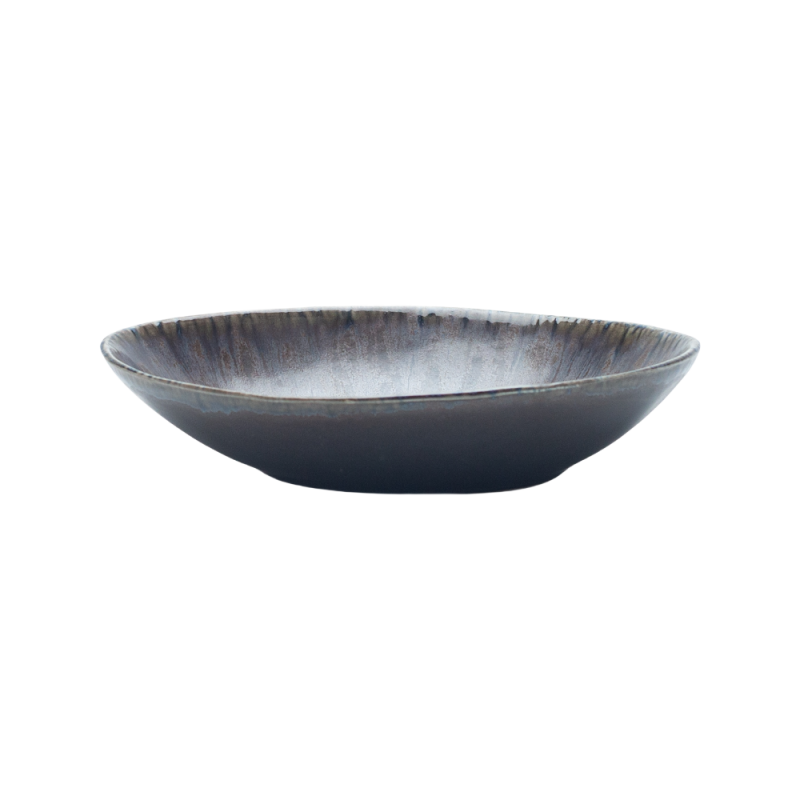
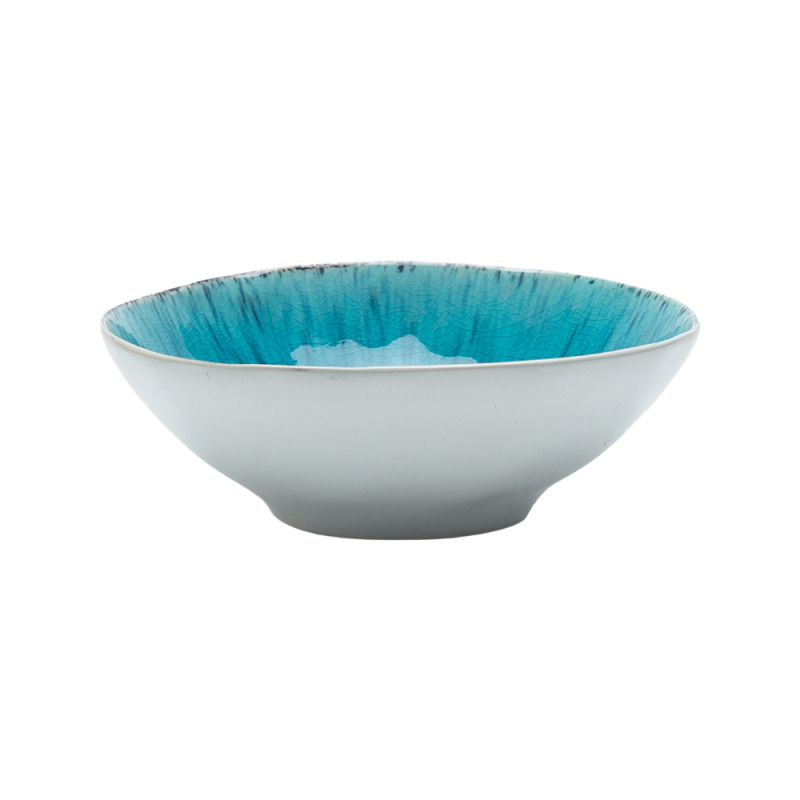
Products in this guide: Reactive Glaze Stoneware Bowl · Crackle Glaze Ceramic Bowl
This is the least discussed cost in sourcing and the easiest to remove. A complete manufacturing file takes perhaps a day to assemble and removes a large share of the ambiguity that factories price defensively.
Five documents, not one
A file that can be quoted against, sampled from and inspected to contains five parts.
The specification sheet, which states what the product is in numbers.
The drawing, which shows what the numbers cannot: profile, radii, handle section, base form, wall transition.
The decoration file, which defines what goes on the surface and how.
The packaging specification, which defines the container the product ships in.
The acceptance standard, which defines what will be considered acceptable at inspection.
Most files contain the first three in some form and omit the last two. That asymmetry is why packaging surprises and inspection disputes are so common: both were left to be resolved by conversation at the worst possible moment.
The specification sheet carries the numbers
A usable sheet is short and unfriendly to interpretation. It states, at minimum:
- Capacity in millilitres, with the fill level defined, since capacity without a fill line is not a number.
- Diameter at rim, height overall, base diameter, and the tolerance for each.
- Body weight, because weight correlates with wall thickness and with freight.
- Material and body type, stated in terms the factory uses for its own clay bodies.
- Glaze, interior and exterior, including whether it is reactive, matte, satin or gloss.
- Decoration method: in-glaze, on-glaze, decal, pad print, laser, or none.
- Firing temperature range for the body and for the decoration.
- Handle attachment method and pull strength expectation, if a handle exists.
- Care claims the product must support: dishwasher, microwave, oven, freezer.
Two habits make a sheet far more useful. First, state tolerances rather than nominal values alone: a 90 mm diameter with no tolerance will be produced at 90 mm plus or minus whatever the process does. Second, mark which properties are critical and which are negotiable, so a factory knows where to spend effort.
Drawings answer the questions numbers cannot
A factory does not need a rendering. It needs a dimensioned section.
What earns its place on the drawing: the wall thickness at the rim versus the body, the radius where the wall meets the base, the handle section and its attachment points, the foot ring, and the draft angles that allow the piece to be demoulded.
A photorealistic image is useful for a buyer's internal approval and close to useless for tooling. Where a 3D file exists, it should be handed over in a neutral format and not treated as a substitute for a dimensioned drawing: the model shows the intent, the drawing states the tolerance.
Decoration files are not artwork files
The most frequent mismatch in the whole file. A designer delivers a beautiful vector logo in a subtractive colour space; the factory needs a separation that can be printed, registered and fired.
What has to be settled: the colour reference and its acceptable deviation, the print position with a tolerance, the number of colours, whether the decoration goes under or over the glaze, and how the artwork maps onto a curved surface. A flat logo placed on a tapered mug will distort; the file should show the distortion applied, not leave it to the printer.
Where a decal is used, the file must define the decal size on the flat sheet, not the size on the finished curve.
Packaging and acceptance: the two that get left out
The packaging specification is a document with dimensions in it: outer carton internal dimensions, board grade, unit count per carton, fitment type and material, marking content and position. Without it, packaging is priced on an assumption and produced on a habit.
The acceptance standard defines the defect classification, the sampling approach, and the person entitled to sign the result. Without it, the first inspection becomes the first conversation about what acceptable means.
What an incomplete file actually costs
- Quotations that cannot be compared, because each supplier filled the gaps differently.
- Samples that come back wrong for reasons that were never written down.
- A price that later rises because an assumption the buyer never stated turns out to be expensive.
- Inspection disputes that are really specification disputes in disguise.
- Reorders that differ from first orders, because the reference was a sample rather than a document.
None of these is a factory failure. All five are file failures.
The spec freeze guide explains how artwork and packing files are locked between orders.
The file is the relationship
A complete file does something beyond reducing errors: it changes the nature of the conversation. A supplier holding a proper specification can quote with confidence, propose alternatives with reasons, and be held to something specific. A supplier holding a photograph is guessing, and guessing suppliers pad their prices to cover the guessing.
The practical standard is this: if the file were handed to a different factory next year, could that factory produce an identical product without calling you? If the answer is yes, the file is finished. If it depends on a phone call, it is not a file yet, it is a set of notes.
Related Products
Explore products featured in this guide:


Have questions? See our Sizes & Finishes FAQ and Ordering & Certifications FAQ.
Need a custom quote? Send an inquiry or browse our full product catalog.