
The Insert: How Packaging Fitments Decide Breakage Rates
The Part That Decides Whether They Arrive
A fired mug is a hard, brittle object. A container journey is a series of shocks, vibrations and compressions. Between the two sits the insert — the fitment that holds each piece in place — and it, rather than the carton's printing or the pallet's height, decides how many arrive intact.
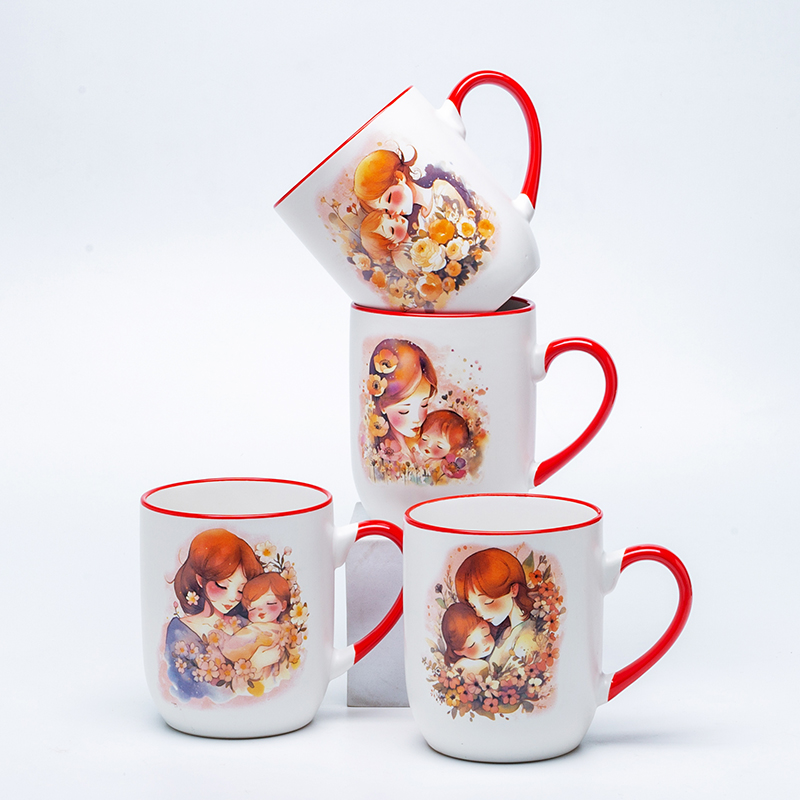
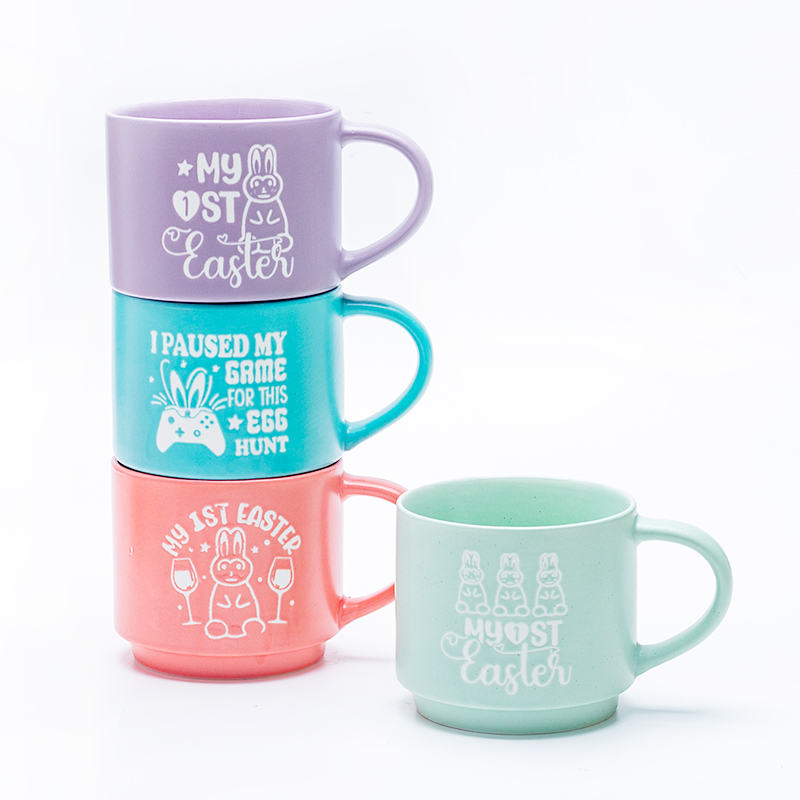
Products in this guide: Ceramic Decal Printed Mother's Day Ceramic Coffee Mugs - Parent & Child Warm Red Pattern · Debossed Logo Easter Solid Color Stackable Ceramic Mugs - Stackable Design
Breakage is the most expensive kind of quality failure: the goods were made, paid for, packed and shipped before they were lost.
What an Insert Actually Does
Four jobs, and different materials do them differently:
- Locate each piece so it cannot move within the carton.
- Separate pieces from each other, so rim does not hit rim.
- Absorb the energy of a shock, spreading it over time and area rather than letting it concentrate.
- Protect the vulnerable features — rims, handles, spouts and lids — which is a design decision, not a material one.
The Materials, and What Each Trades Away
- Moulded pulp — recycled fibre formed into a shape that cradles each piece. Recyclable, widely accepted, good shock absorption, and it holds its shape well around a rim. It absorbs moisture itself, which matters on humid routes.
- Foam, EPE or EVA — the highest protection per gram, and the easiest to mould around awkward shapes such as handles and lids. The trade-offs are cost, volume in the carton, and disposal: some markets restrict or penalise plastic packaging.
- Corrugated fitments — die-cut dividers and grids. Cheap, widely recyclable, and effective against pieces moving and touching. Weaker against a drop at a corner, because they offer little cushioning.
- Combinations — pulp or corrugated for separation, plus a foam layer at the top and base, is the common answer where breakage matters most.
The Decision That Matters Most: Clearance
Clearance is the gap between the piece and the insert, and it is the single most common mistake in fitment design:
- Too tight, and the insert itself becomes a stress point. A piece pressed into a cavity arrives with damage that looks like a manufacturing defect — often a crack or a chipped rim with no impact mark.
- Too loose, and the piece moves inside the cavity. Movement means repeated small impacts during the journey, and it also means the printed decoration wears against the cavity wall before the carton is even opened.
- Correct clearance holds without pressure and leaves the piece unable to move. It is verified by shaking a packed carton, not by reading a drawing.
Protecting the Vulnerable Features
Breakage is not evenly distributed around a mug, so protection should not be either:
- The rim is thin, exposed and almost always the first thing to chip. The insert should contact the body, not the rim.
- The handle is the most likely feature to be loaded by a neighbouring piece or by the carton wall. It needs a cavity that accommodates it, not one that presses against it.
- Lids and gaskets are separate components with their own damage modes and should be secured rather than left loose in the carton.
Testing It, and the Interactions to Watch
- Drop and compression testing is what validates a design. The insert is the variable; the test is how you find out whether it works, and the results belong with the packing specification rather than in a drawer.
- Moisture interacts with both the insert and the carton. A fibre insert takes up moisture on a humid route; a foam insert does not but can trap condensation against the glaze. The moisture control decisions and the fitment design are chosen together, not separately.
- Carton count and volume. More protection usually means more volume, which means fewer pieces per container. That is a real cost, and it belongs in the landed-cost calculation rather than in a debate at loading.
- Recyclability rules vary by market. Where packaging regulation charges by material or bans certain plastics, the cheapest insert on landing may not be the cheapest to sell.
For the surrounding decisions, see <a href="https://www.storiwareceramicmugs.com/oid1757203/The-Custom-Mug-Programme-Buyer-Guides-by-Decision.htm">the custom mug programme guides</a> and the <a href="https://www.storiwareceramicmugs.com/oid1757097/Ceramic-Packaging-Container-Freight-Hub.htm">packaging, container and freight hub</a>, which set out how packing and loading decisions are made together. Our <a href="https://www.storiwareceramicmugs.com/products2147420/Custom-Ceramic-Mugs-Cups.htm">ceramic mugs and cups</a> range is packed to a written configuration per item, and the <a href="https://www.storiwareceramicmugs.com/oid1756307/Custom-Ceramic-Mugs-Bulk-Order-Factory-Direct-from-China.htm">bulk order programme</a> explains how packing protection and the loading plan are agreed before production. To design protection for a route, <a href="/contact-us.htm">send the item, the carton count and the transit conditions</a>.
The spec freeze guide explains how artwork and packing files are locked between orders.
What to Put in the Order
- The insert type named, per item, not described as "safe packing".
- The clearance defined, and verified by shaking a packed carton.
- The vulnerable features protected — rim, handle, lid — each with its own arrangement.
- The test standard named for drop and compression, with results retained.
- The moisture interaction stated, with the insert chosen alongside the moisture control.
- The recyclability requirement for the destination market, decided at specification stage.
The packaging guide explains how retail-ready and protective layers are specified together.
The Habit That Ties It Together
The habit is to shake a packed carton before approving it. If the piece moves, the design is not finished.
Related Products
Explore products featured in this guide:
Have questions? See our Sizes & Finishes FAQ and Ordering & Certifications FAQ.
Need a custom quote? Send an inquiry or browse our full product catalog.

