The Complete Sublimation Mug Guide: Blank, Coated, Heat Press & OEM
The Complete Sublimation Mug Guide: Blank, Coated, Heat Press & OEM
Sublimation mugs are the most popular personalized mug format in the world, and for one reason: they produce a full-color, photographic wrap that no other printing method matches, at a price that works for volume programs. The process is elegant in theory, a solid ink that turns into gas and bonds with a coated surface, and demanding in practice, because every variable, the blank, the coating, the heat, the time, and the pressure, affects the final print. This guide covers the complete sublimation mug workflow for buyers: how the process works, the blank mug types and coatings, the heat press parameters, the printing preparation, the OEM options, and the quality and sourcing decisions that separate a profitable sublimation program from a frustrating one.
How Sublimation Actually Works
Sublimation is the process where a solid turns directly into a gas without passing through a liquid state, and in mug printing it is the mechanism that carries ink from a printed paper into the surface of the mug. The design is printed with special sublimation ink onto transfer paper, the paper is wrapped tightly around the mug, and the mug is placed in a heat press. Under heat and pressure, the ink sublimates, becomes a gas, and bonds with the polymer coating on the mug, becoming part of the surface rather than a layer on top of it.
This mechanism explains the strengths and the limits of the process. Because the ink becomes part of the surface, the print is smooth, durable, and impossible to feel by touch, which is why sublimation wraps feel premium. Because the ink bonds only with the polymer coating, sublimation requires a specially coated white mug; it cannot print on uncoated dark bodies or on warm-toned stoneware. And because the design is applied in one transfer, full-color photographic wraps are as easy as single-color logos, which is the process's biggest advantage over screen printing.
Blank Mug Types and Coatings
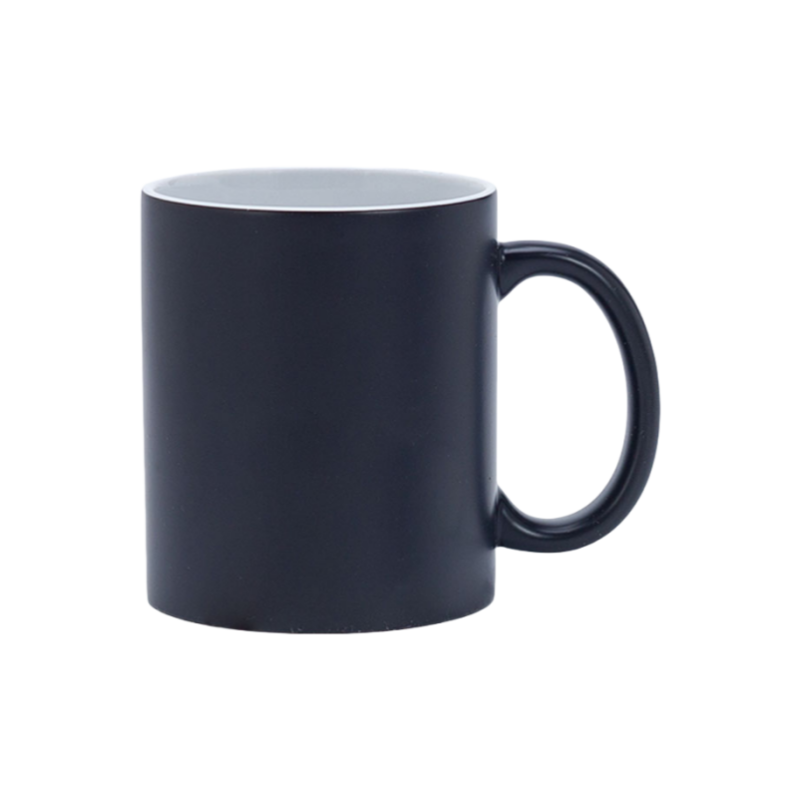
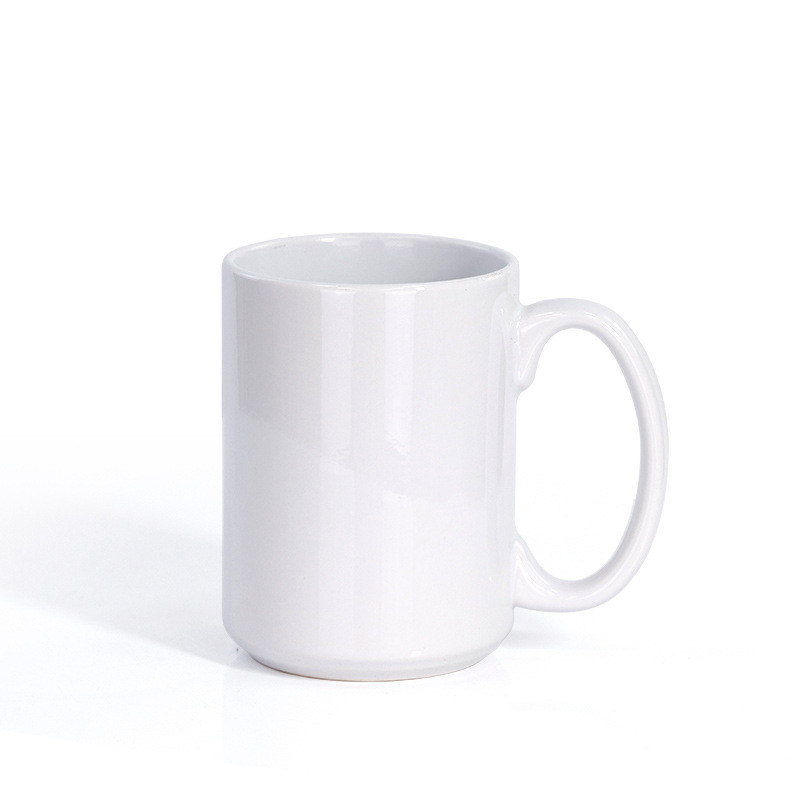
The blank is the foundation of the sublimation result, and the coating is the part most buyers never inspect. The standard blank is a white ceramic mug with a polyester coating, available in the classic shapes and sizes: 11oz, 15oz, latte mugs, and specialty shapes. The coating quality determines how vivid and durable the print is, and a poor coating produces washed-out colors, patchy coverage, and prints that fade or scratch. When you evaluate blanks, ask the supplier about the coating composition and the coating consistency, because the coating is the difference between a premium wrap and a reject.
The blank also determines the shape-specific behavior of the print. A standard cylindrical mug is the easiest to press, because the wrap sits evenly on a flat-curve surface. A tapered mug needs a tapered heat press or careful wrap handling, because the paper must hug the taper without creasing. A latte mug with a wider bowl and a handle is pressed with the handle area handled specially, because the press shoe must not crush the handle. For every shape, the blank's curve, the wall thickness, and the handle geometry affect the press setup, and the blank should be matched to the heat press equipment.
Heat Press Parameters: Heat, Time, and Pressure
The heat press is where the sublimation result is won or lost, and the parameters follow the blank and the ink. The standard settings for a ceramic mug are a platen temperature around 200 degrees Celsius, a press time of 180 to 240 seconds, and firm, even pressure, but the exact values depend on the mug shape, the wall thickness, the coating, and the ink, so the settings should be validated with a test press on the exact blank before production. The tape and wrap tension matter as much as the press settings: the transfer paper must be held tight against the mug with heat-resistant tape, with no gaps or wrinkles, because any gap creates a faded spot and any wrinkle creates a crease line in the print.
The press setup also explains why sublimation programs are better run in volume. Each mug needs the same careful wrap, the same press cycle, and the same quality check, and the process scales with equipment and staffing, not with speed. A factory with dedicated sublimation lines, calibrated presses, and trained operators produces consistent wraps, while a generalist factory pressing a few mugs between other jobs produces variable results. When you source sublimation mugs, the equipment and the process are part of the product, and they deserve as much attention as the blank.
Preparing the Artwork for Sublimation
Sublimation rewards prepared artwork, and the preparation rules are specific to the process. The design must be printed in high resolution with a wide gamut, because the wrap covers the full surface and any pixelation or color loss is visible across the whole mug. The artwork must be mirrored for the wrap, so that the image reads correctly on the outside of the mug. And the wrap geometry must match the mug's curve and height, because a wrap that is too tall for the mug or too wide for the circumference leaves unprinted bands or overlaps at the seam.
The color management deserves attention because sublimation ink has a specific color behavior. The printed transfer paper looks different from the final pressed result, because the colors shift during sublimation, and a professional setup uses calibrated profiles to preview the final colors. For brand colors, the match must be validated with a physical press test, because digital previews cannot reproduce the coating's effect on the final print. The approved pressed sample becomes the color standard for the whole production run, exactly as it does for any other decoration method.
OEM Sublimation Mugs: Custom Shapes and Private Label
The OEM side of sublimation covers everything beyond the standard blanks: custom shapes, custom handles, private-label packaging, and blank supply to businesses that press in-house. A buyer who needs a custom sublimation mug shape works with the factory on the mold, the tooling cost, and the production MOQ, and the same mold economics apply as for any custom shape. A buyer who needs private-label packaging works with the factory on branded boxes, sleeves, and inserts, so the mugs arrive ready for the retail shelf or the gift program.
The OEM choice that matters most is the buying model. Some buyers order finished printed mugs from the factory, which is the turnkey model where the factory prints, presses, and packs. Other buyers order blanks and press in-house, which is the blank-supply model where the buyer controls the printing and only the coated blank comes from the factory. Both models are legitimate, and the right one depends on the buyer's volume, equipment, and control needs. When you source, be explicit about the model you want, because the quote, the quality responsibility, and the timeline are different for each.
Quality Control for Sublimation Mugs
Sublimation quality control is visual, and the inspection points are specific to the process. Check the print for even color across the whole wrap, because patches of lighter or faded color indicate coating defects or uneven pressure. Check the seam, because the wrap seam is the point where the two edges of the transfer meet, and a visible seam or a white line at the join is a common reject. Check the areas near the handle and the base, because these are the zones where the wrap tends to lift or crease during pressing. And check the print durability, because a sublimation print should be smooth and scratch-resistant, and a print that feels raised or rubs off has not bonded properly.
The inspection plan for a sublimation order should cover the sample approval, a pre-production check of the blank and the coating batch, and a pre-shipment inspection of the pressed mugs against the approved sample. Keep the approved pressed sample as the reference for the entire run, because color drift and coating variation are the two risks that accumulate across a large production run. A factory that documents its sublimation process, its press parameters, and its inspection records is a factory you can hold accountable; a factory that treats sublimation as a black box is a risk on every order.
Choosing a Sublimation Mug Supplier
The supplier decision for sublimation mugs follows the process, not just the price. Ask the supplier which blanks they stock, whether they coat in-house or buy pre-coated blanks, and whether they can share the coating specification. Ask about their heat press capacity and their press calibration, and request a pressed sample before committing to volume. Ask about the OEM options, the custom shapes, the private-label packaging, and the blank-supply model, and confirm which model fits your order. And check the quality documentation, because the coating and the process are exactly the parts that cannot be seen in a catalog photo.
The volume and the timeline should be planned the same way as any custom order: design, sampling, production, and shipping, with the lead time built in. Sublimation blanks are a standard product, so repeat orders can be fast, but custom shapes, custom packaging, and printed programs follow the full custom timeline. For a branded sublimation program, the approved pressed sample is the anchor that keeps every reorder consistent, and the supplier relationship that protects the coating quality and the color match is worth more over time than any saving on the first order.
Conclusion: Sublimation Rewards the Process
Sublimation mugs are a premium full-color format that rewards discipline at every step: a quality coated blank, calibrated heat and pressure, prepared artwork, and a factory that treats the process as part of the product. Understand how sublimation works, choose the blank and the coating with care, validate the press parameters and the colors with physical samples, decide the OEM model that fits your business, and inspect the wraps against an approved sample. A sublimation program built this way produces mugs that look photographic, feel premium, and sell consistently, order after order.
Looking for sublimation mugs that print beautifully? Storiware Ceramic Mugs supplies coated sublimation blanks, custom sublimation mug shapes, and turnkey printed programs, with calibrated heat press lines, coating specifications, and pressed samples before production. The featured mugs below are a great starting point, and our team will help you build the sublimation program that fits your brand.
Buyers ready to move from planning to a production run can start with our custom ceramic mugs bulk order page, which sets out the factory-direct route end to end.
Featured Sublimation Mugs from Storiware Ceramic Mugs
Explore products featured in this guide: