
The Chain Standard Sheet: How Multi-Unit Buyers Lock Ceramic Specs Across Every Location
Brand Consistency Is a Document, Not a Hope
A chain with forty locations cannot inspect forty kitchens — and it should not have to. When the same mug or plate looks different across locations, the brand looks different. The chain standard sheet is the document that makes consistency enforceable: every location orders the same spec, every replacement matches the original, and the buyer's leverage with the factory is a written standard instead of a memory of how the first samples looked.
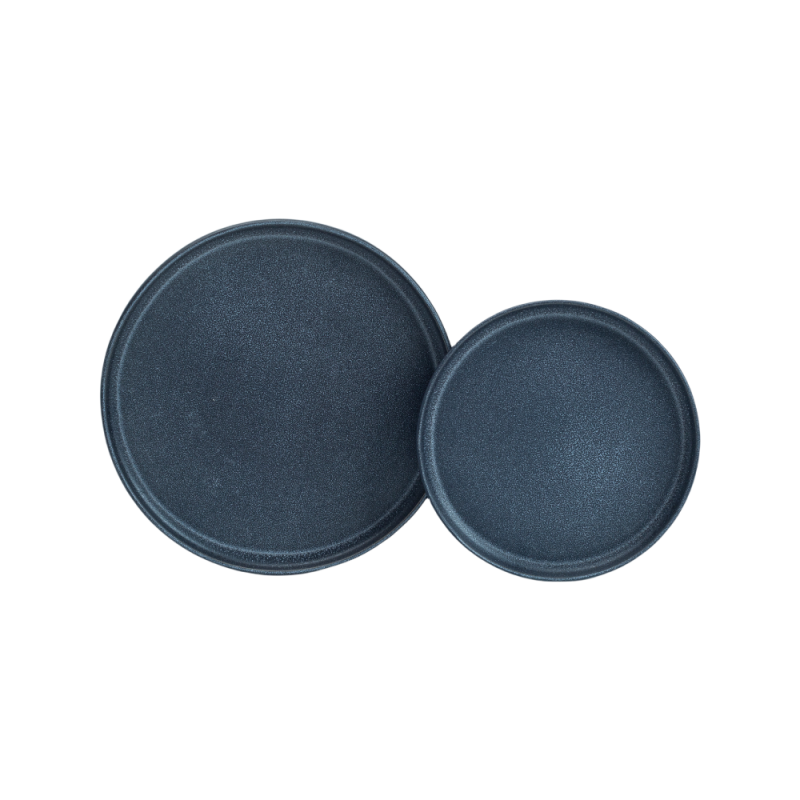
Products in this guide: Reactive Glaze Dinner Plate · Reactive Glaze Stoneware Bowl
This guide covers the eight fields of a ceramic chain standard sheet, why each one matters, and how to enforce the standard.
Field 1: Shape and Capacity
The shape reference (factory catalog number or your own SKU) and the capacity or dimension with tolerance. For mugs, state the full capacity in ml and the usable fill line; for plates and bowls, the diameter and depth. The tolerance — typically ±2% on capacity and ±1.5% on diameter — is what makes "the same plate" measurable. Without a tolerance, a slightly different batch is a matter of opinion.
Field 2: Glaze and Color Reference
The glaze name, the Pantone or RAL reference, and the acceptable shade deviation. Reactive and artisan glazes are the exception — they vary piece to piece by design, and the standard should state the intended variation range so the buyer accepts the beauty instead of rejecting the difference. For solid colors, reference a physical sample (the approved lab-dip or production sample) and state that the shipment must fall within the sample's range.
Field 3: Wall and Weight
The wall thickness and the piece weight. Thickness affects heat retention and durability; weight affects freight cost and handling. State the range (e.g., wall 4–5 mm, weight 280–320 g) rather than a single number — ceramics vary slightly in the kiln, and the range is what is enforceable.
Field 4: Handle and Stacking
For handled ware: the handle geometry (position, opening size) and the pull strength expectation. For stackable ware: the stack height and stability — a stack of 10 plates should be stable without sticking. These are the fields where a chain discovers problems at volume: a handle that fits a large hand badly is a complaint repeated forty times.
Field 5: Surface Finish and Durability
The glaze finish (gloss, matte, reactive), the scratch and dishwasher durability expectation, and the microwave-safe statement. The durability fields are the ones to tie to test reports: glaze hardness, thermal shock resistance (e.g., 20°C to boiling without cracking), and dishwasher cycles without crazing. The factory's test report is the evidence the standard is being met.
Field 6: Food-Safety Compliance
The migration standard applicable to the market — LFGB for Germany and much of the EU, FDA for the US, the EU directive for the rest of Europe, plus any local standard for the chain's operating countries. The standard sheet lists the required certificates and the renewal cadence. For a chain, one shared compliance file per product is better than forty locations asking the factory separately.
Field 7: Packaging and Identification
The inner-pack spec (pieces per pack, protective packaging), the outer carton spec, and the marking: factory mark, production date code, and the chain's SKU barcode. The identification fields matter because a chain's warehouse needs to match a replacement order to the right spec years later — the date code and SKU on the carton are how.
Field 8: Replacement and Reorder Terms
The reorder MOQ, the lead time, the replacement window for discontinued items, and the tolerance for shade drift between production batches (e.g., "must match the approved sample within the stated range, or the batch is rejected"). This is the field that protects the chain when a shape is retired or a glaze recipe changes — the standard sheet says what happens to existing stock and future orders.
Enforcing the Standard: Sample, First Batch, Reorder
The standard sheet is only as strong as its enforcement loop:
- Approved sample: the first production sample is measured against the sheet field by field, and the sheet is updated with any agreed deviations — the sample then becomes the reference.
- First-batch inspection: the first bulk batch is checked against the sheet at the AQL level, with special attention to glaze shade, capacity and handle fields.
- Reorder check: every reorder is a mini-audit — one carton opened, measured against the sheet, before the batch is released. Chains that skip the reorder check are the ones that discover drift a year later, when a wall of mugs no longer matches.
The Sheet the Buyer Should Send
A chain standard sheet works best as a one-page table: field, spec, tolerance, evidence (sample, test report, Pantone), and verification method. Send it with the first PO, attach the approved sample, and reference it in the contract so that "per standard sheet v1.2" means something legal. The sheet converts brand consistency from a hope into a document — and a document is what survives forty locations, four seasons and a thousand reorders.
"Chain-Standard Ceramic Programs"
Explore products featured in this guide:

Have questions? See our Sizes & Finishes FAQ and Ordering & Certifications FAQ.
Need a custom quote? Send an inquiry or browse our full product catalog.