Sourcing Ceramics for the Nordics: Sustainability, Design and the Café & Hotel Trade
The Nordic Order: Decided Twice, on Design and on Proof
Buyers in Denmark, Sweden, Norway and Finland rarely open a sourcing conversation the way buyers elsewhere do: retail groups, hotel chains and restaurant operators come to the table with two separate expectations running in parallel. The first is design-led: clean lines, matte surfaces, natural colour — the visual language that moves comfortably from a design shop shelf to a hotel breakfast buffet. The second is proof-led: lead and cadmium controlled on food-contact surfaces, durability built for years of heavy rotation, and packaging stripped of needless plastic. Nordic retail and restaurant groups write environmental expectations and traceability into procurement policy as a matter of course, and that habit reaches down to the tabletop. On both axes the buyer is asking the same thing: show me, do not tell me.
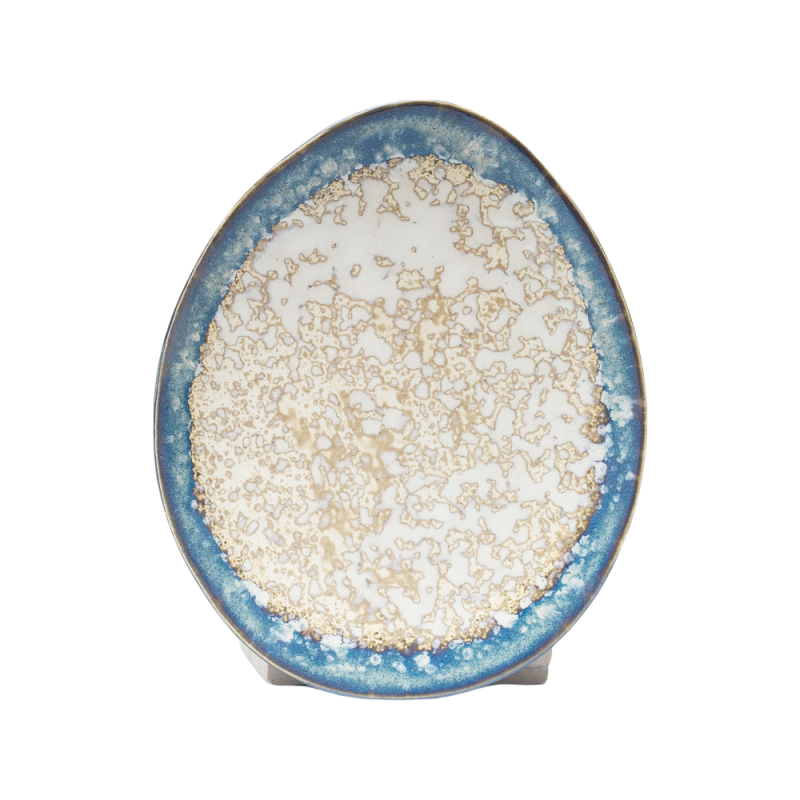
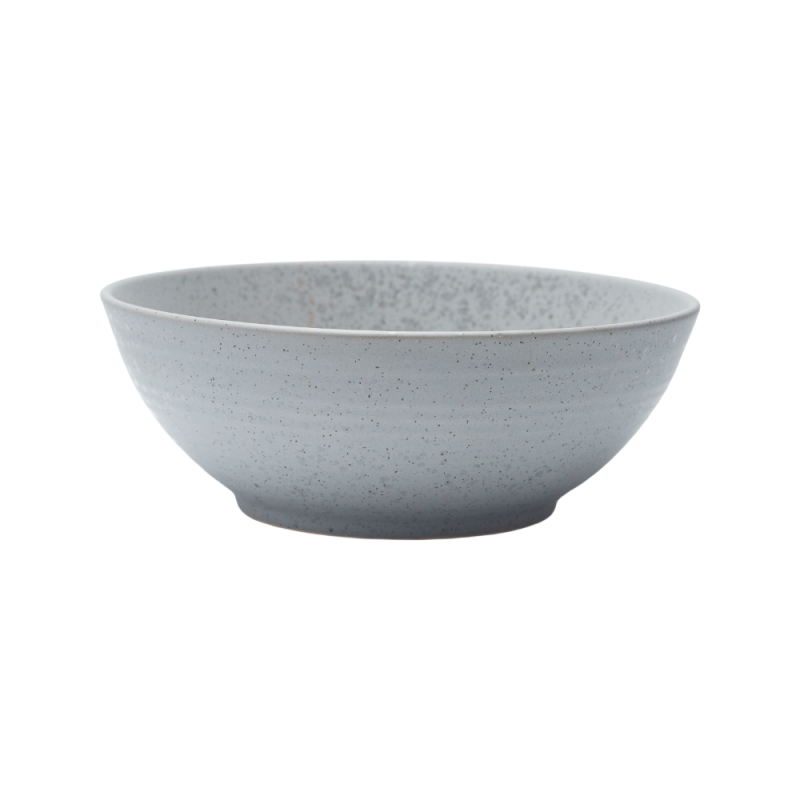
Products in this guide: Nordic Design Ceramic Salad Plates · Nordic Matte Speckled-Glaze Stoneware Bowl
For a supplier, that means the product range has to be chosen as carefully as the file behind it. An import programme into the Nordics is rarely a single order but a running relationship measured in seasons, and the suppliers who keep the business are those whose product and paperwork survive a second look in year two. This guide works from the buyer's side of that relationship: who buys, through which channels, under which rules, on which calendar, and with which documents. The facts below reflect official public sources as of September 2026. It is operational guidance, not legal advice, and it deliberately cites no specific limits, rates or fees.
The Channel Map: Where the Volume Actually Moves
The four Nordic countries are separate jurisdictions but buy like one coherent design culture. Volume arrives through three channel groups.
Importers and distributors. This is the backbone of the market. Most volume from China moves through established importers and distributors rather than through direct retail mandates. These companies hold the accounts that matter underneath: hotel and restaurant supply houses, catering distributors and regional wholesalers serving canteen and staff-restaurant operators. They buy in ranges, reorder the same SKUs on a repeat cycle, and value documented consistency and reliable delivery above a one-off discount. A distributor's range is a multiplier: one listing serves dozens of operators who would never open a direct account with a factory in China, which is why stable pricing and dependable lead times capture this channel's annual volume.
Retail groups and design retail. Retail buying runs at two speeds. Grocery and department groups operate private-label tableware programmes with disciplined seasonal calendars, supplier manuals and long planning cycles. The design retail layer — interior stores, design shops, museum and gift retail — buys smaller, more curated quantities at higher prices, but its appetite for new looks each season is constant. This is where Nordic taste is most visible: muted glazes, speckled stoneware, honest texture, forms that survive contact with an ordinary breakfast. It is also the channel most likely to ask you to document sustainability claims, and where the Christmas gifting spike concentrates.
Hotels, restaurants and cafés. The hospitality layer is the base load of the market: hotel breakfast culture, all-day coffee and the restaurant tier — from New Nordic kitchens to bakery and coffee chains — turn over tableware in volume. Replacement buying is steady; renovation and rebranding projects create sudden spikes channelled through a designer or a local distributor. Durable, stackable, dishwasher-safe product with a coherent look sells across this whole tier at once, which is why stoneware ranges in natural palettes find buyers in every country in the same season.
The Nordics are a compact version of a wider pattern: a handful of very large programmes over a long tail of smaller, design-led accounts. For the wider pattern behind it, our buyer's guide to sourcing ceramics for Europe's fragmented market walks through how buying teams organise.
Compliance: The File Nordic Buyers Expect
Nordic buyers expect compliance to be handled inside one consistent framework, so the file is easier to build than in markets where each country runs its own rulebook.
The EU food-contact framework. Denmark, Sweden and Finland are EU member states, and Norway participates in the EU single market through the EEA agreement, so the framework governing ceramic food-contact goods is consistent across all four markets. Under that framework, food-contact ceramics are expected to be covered by a Declaration of Conformity, to be correctly labelled, and to be backed by a current test report that matches the declaration. A declaration without a matching report is treated as paper, not evidence. When the same product reaches consumers, the EU product-safety rules — the framework that includes the General Product Safety Regulation, GPSR — require a named economic operator established inside the EU/EEA who answers for the product on the market, plus traceability for withdrawal of a problem batch. Buying teams ask who fills that role before samples move, so have the answer ready.
Sustainability beyond the legal minimum. Compliance is the floor; sustainability is the filter above it. Nordic retail and restaurant groups routinely require environmental and traceability evidence as part of supplier review, and voluntary ecolabels carry real weight as signals. The Nordic ecolabel system Nordic Swan — the official ecolabel of the Nordic cooperation — endorses products that meet published environmental criteria, and buyers treat it and similar third-party marks as credible shortcuts. No supplier should pretend to hold a label it does not hold. What buyers actually reward is a credible file: controlled lead and cadmium, construction meant to last, and packaging redesigned around less plastic. In practice three questions come up in almost every serious conversation: what does the glaze test say, how long is this piece built to last in daily service, and what happens to the packaging once the carton is opened? On the packaging question specifically, our guide to sustainable packaging options retail buyers accept sets out what actually gets accepted at retail. On the factory-side questions, our overview of ESG in the ceramic supply chain and what European buyers ask covers the ground you will be walked through in a supplier review.
Changes are the risk. A test report describes one sample made at one time. When the glaze, the decal, the body or the firing changes, the evidence stops covering the product. Nordic buyers work to tight seasonal windows and dislike surprises. Agree in writing that no change to an approved specification happens without prior approval, and re-confirm tests before each new season's production.
Documentation That Moves with the Shipment
A purchase into the Nordics is documented twice: for the commercial transaction and customs clearance, and for compliance and traceability. The importer manages the declaration through its own arrangements; your job is to make the file complete and SKU-accurate so they can rely on it.
| Document | What it does in the transaction | Who issues it |
|---|---|---|
| Commercial invoice and packing list | Basis for the customs declaration and the buyer's import accounting | Supplier |
| Transport document | Proof of shipment and control of the goods in transit | Carrier |
| Declaration of Conformity | Links the product to the EU food-contact framework | Supplier, per SKU |
| Current test report | Evidence behind the declaration; matches the glaze and decoration shipped | Laboratory |
| Label and marking artwork | Shows how food-contact and product-safety information appears on goods and cartons | Buyer and supplier jointly |
| Traceability file | Ties each batch to its production records and identifies the responsible operator | Supplier data, held by buyer |
Three practical rules keep that table honest. First, keep declaration and test report on the same page: the report must cover the SKU as shipped, including its decoration, with a date current enough for the buyer's policy. Second, send label and marking proofs before production. Third, keep a sustainability file ready — packaging specification, factory-level environmental and social overview, material declarations — because Nordic buyers treat it as part of the order, and they will ask you to back any claim with a document.
On the VAT side, goods enter under the importer's VAT registration and follow standard commercial-invoice and declaration practice across the four markets; this guide quotes no rates. Because the single-market framework covers all four countries, many importers distribute from one established entry point, which is why documentation quality matters more than any single shipment's paperwork.
Logistics and Lead Times: Plan in Weeks, Not Days
Sea freight from China to the Nordic region is measured in weeks, and production for a typical programme adds its own window of several weeks on top. That combination is the single most common reason seasonal programmes run late: someone planned in days when the supply chain works in weeks. Set the expectation early — order placement to warehouse door is a matter of several weeks.
Three logistics habits keep Nordic programmes on schedule. Consolidate into full container loads where you can; mixing SKUs within one programme is normal and keeps freight predictable, whereas partial loads create delays and costs at every hand-off. Book seasonal capacity early — importers who place the Christmas programme in the first half of the year protect themselves against the freight pressure that builds in the second half. And ship samples ahead of bulk by air or courier, so design, compliance and label approvals finish before the main production run. Air freight exists for urgent top-ups, but it is a rescue tool, not a planning method.
Distribution from one regional entry point also means any mark, claim or backstamp must be identical from carton to carton across the whole run — the batch is what gets traced.
The Seasonal Calendar: Two Big Windows and a Steady Base
The Nordic year for tableware has two large seasonal windows sitting on a steady hospitality base.
Christmas is the biggest gifting season of the year. Design retail and department stores build their largest tableware offer of the year around it, months before shelves turn. Importers commit early in the year so production and sea freight can run calmly; waiting until autumn to place that order is how programmes slip. If you serve gifting channels, the first half of the year is your working window for the Christmas range.
Summer is the outdoor dining season. Seasonal cafés, terraces and lighter foodservice menus open with the warmer months, and hotels refresh their breakfast and outdoor service. Design retail also launches spring and summer collections: lighter forms, bowls and plates that photograph well, ranges that feel new without breaking the buyer's palette.
The base load runs all year. Hotel breakfast culture, bakery and coffee chains and restaurant replacements do not stop between the two windows, so a foodservice range is orderable in any month. Treat the year as three conversations with each buyer — the Christmas programme, the summer programme and the running foodservice range. Regional tableware and hospitality trade fairs run each year as well; organisers publish the current year's dates, so check the published schedule rather than assuming a fixed month.
Getting in Front of the Buyers Who Matter
The shortest route into the Nordics is usually through a local partner who already holds the shelf. Importers and distributors with established accounts place your range in front of dozens of operators at once — most successful programmes start with one distributor relationship built properly rather than ten cold pitches. Agents who already work the design and hospitality accounts do the same at specification level, where a hotel rebrand or restaurant opening is decided by a designer together with purchasing.
When you do approach a buyer directly, lead with fit, not with a general catalogue. Present a range that already speaks the regional visual language — muted, matte, natural — alongside the documents that answer the standard questions: the test report, the durability story, the packaging plan. Send physical samples, not only photographs — a piece that feels substantial in the hand outperforms a beautiful image of a lightweight one. Be specific about what can be customised and what cannot, because design-led buyers ask early and do not enjoy discovering limits at the sample stage. And put the sustainability file on the table in the first conversation rather than waiting to be asked, because in this market being asked twice is already a mark against you.
Your Pre-Order Checklist
Before you commit production to a Nordic programme, work through this list with the buyer and the supplier together.
- Range fits the regional palette — clean lines, matte or natural finishes, quiet texture.
- Declaration of Conformity and a matching current test report exist per SKU, covering the decoration as shipped.
- Consumer placements have a named EU/EEA economic operator and agreed label and marking artwork.
- Sustainability file is ready: packaging specification, factory environmental and social overview, and no unearned ecolabel claims.
- Change control is agreed in writing: no glaze, decal, body or firing change without prior approval.
- Lead time is mapped in weeks from order to door, and ship windows are agreed before the season starts.
- Seasonal plan is explicit: Christmas programme, summer programme or running foodservice range.
- Packaging and backstamps are identical across the whole production run for traceability.
- Commercial invoice, packing list and transport document sets match the shipment exactly.
- Re-test and re-confirm documents before each new season's production, not just at the first order.
Work through that list once and the first order becomes routine rather than heroic. The file exists before anyone asks for it, the range matches the market, and the calendar is agreed in weeks, not days. That is how ceramic tableware programmes in the Nordic market stay on the shelf — and on the table — season after season. Rules in destination markets change, so the working reference is always the latest official announcement from the relevant authorities; this guide reflects the official public framework as of September 2026.
"Nordic-Style Sustainable Ceramic Tableware"
Explore products featured in this guide:
Have questions? See our Sizes & Finishes FAQ and Ordering & Certifications FAQ.
Need a custom quote? Send an inquiry or browse our full product catalog.