Sourcing Ceramics for the Benelux: Rotterdam Gateway, GPSR and Multi-Market Distribution
Why the Benelux Comes First in an EU Plan
Your container has left the factory in China and you still have to name its port of call. That choice fixes which customs house clears the goods, which country treats them as placed on its market and how easily one shipment becomes sales in several countries. For an importer whose real market is Europe rather than one member state, the Benelux is usually where the question is answered first.
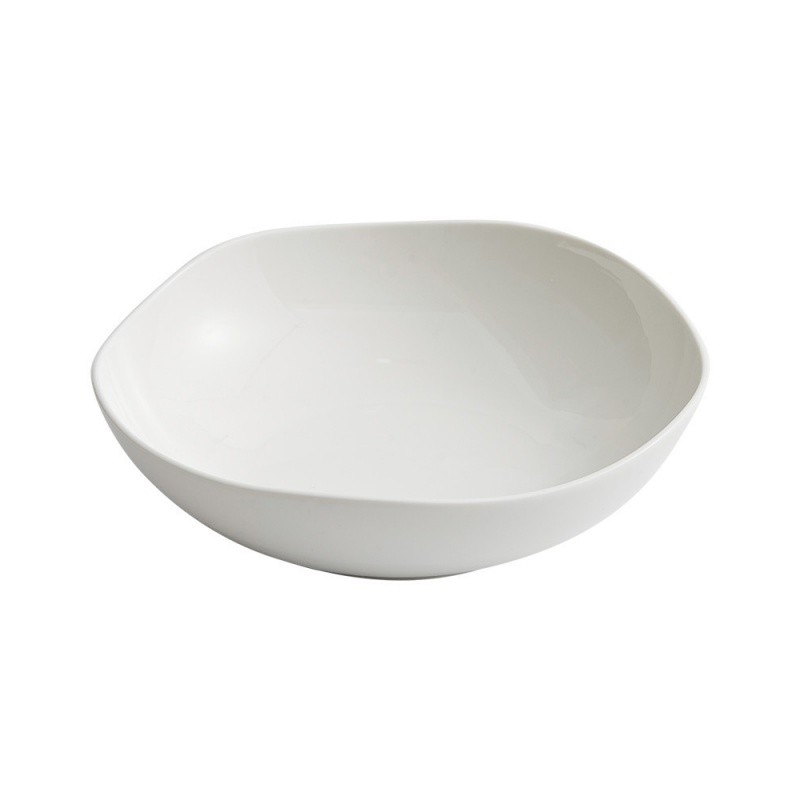
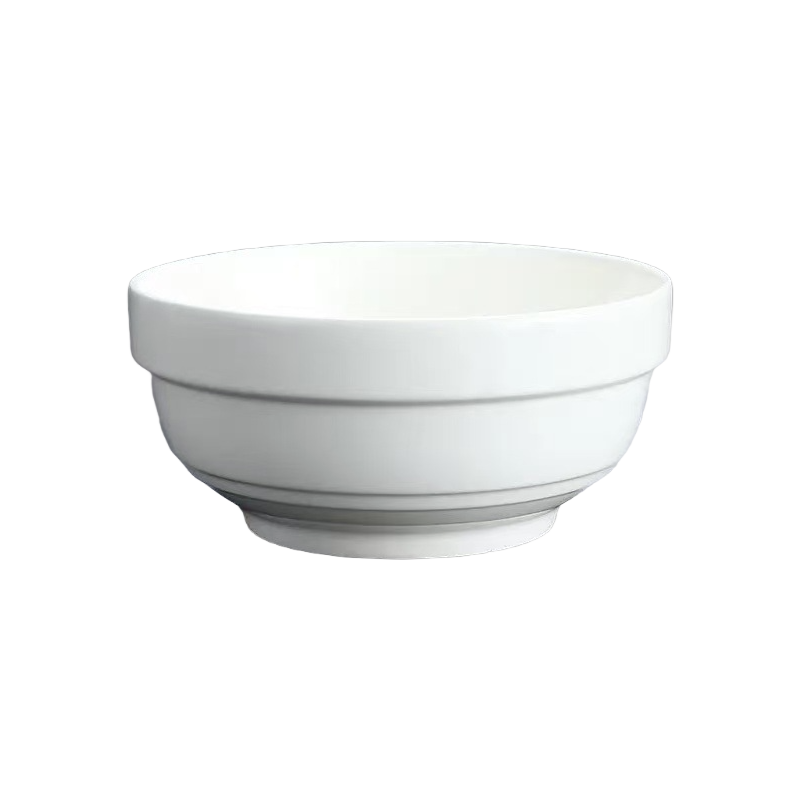
Products in this guide: Luxury Wave Ceramic Salad Bowl · Minimalist White Ceramic Rice Bowl
The reason is position, not size. The three countries sit in the centre of the EU's most populated consumption corridor, between Germany and France. Rotterdam is one of Europe's principal maritime gateways and Antwerp-Bruges a major hub whose terminals receive a steady flow of import containers from China. Behind both ports runs a dense inland network of motorways, rail corridors and navigable rivers reaching into Germany, France and Central Europe.
The legal layer makes the geography pay. The EU is a single market: goods from outside are declared to customs once at the point of entry, and once in free circulation they move between member states with no further customs formalities. Landing stock in the Benelux and serving many national markets from there is the standard operating model of pan-European distributors.
This guide walks through that model from a buyer's perspective: how the gateway works, what the three markets look like through importers and distributors, the compliance file that lets one clearance travel across the whole market, and the calendar discipline that keeps European stock moving. It reflects the official public framework as of September 2026 and is not legal or tax advice; where a rule is involved, the governing reference is the latest official announcement of the relevant authorities.
Clear in One Port, Serve the Whole Region
Mechanically the model is simple. Your shipment arrives by sea at Rotterdam or Antwerp-Bruges, and the importer of record files the import declaration. Once the goods are cleared into free circulation they are legally EU goods, and the rest of the journey is logistics: truckloads and groupage to customers across Germany, France and Central Europe, rail to inland terminals and barges along the river corridors.
A Benelux hub gives you one inventory instead of several. An importer who clears in each national market holds safety stock in each country, guesses the split between markets months ahead and re-balances when the guess is wrong. A single stock location keeps every SKU available to every customer, so fill rates rise and duplicated safety stock falls.
Choose your model before you pick a warehouse. In the flow-through model you clear on arrival and ship straight to customers as orders are allocated; in the stock-in-region model you clear and hold inventory and replenish customers through the season. Both suit the gateway but imply different warehousing and VAT handling.
Three Small Markets That Share One Door
None of the three countries is a giant market on its own, and their value is as the landing zone for a much larger one. Knowing who buys inside each country helps you choose the distributors and agents you will work with.
The Netherlands is the trading and distribution country, where international brands keep European headquarters and logistics teams. Wholesale and foodservice distribution is mature, and the coffee culture is a genuine buying force: takeaway coffee is an everyday habit, keeping demand steady for mugs, takeaway cup sets and café tableware from independents and chains alike.
Belgium carries the institutional layer of Europe. Brussels hosts the EU institutions and a large community of international bodies, which shows up in steady demand from business hotels, conference catering and hospitality suppliers. Belgian retail also has a strong gift and table culture — chocolate, gifting, family settings — so giftware and decorated tableware move through Belgian importers into retail.
Luxembourg is small, affluent and institution-heavy. Its financial-services sector buys quality tableware for corporate hospitality and events, but most of that demand is served by distributors already carrying pan-regional ranges, so you rarely sell "to Luxembourg" directly.
Treat the three as one test market for a pan-European line. For the country-level detail — how French and German retail buyers differ, how their seasons run, what they ask suppliers for — our buyer's guide to sourcing ceramics for Europe's fragmented market covers the buying patterns behind this model.
The Compliance Checklist for a Multi-Market Shipment
Distribution reach is only as wide as your compliance file, and this model adds an obligation importers often miss: placing goods on the EU market from a warehouse that serves several countries makes you the economic operator who puts the product on the market.
The general layer is GPSR, the EU's General Product Safety Regulation. Products must be safe, and an economic operator established in the EU — the importer of record or an authorised representative you appoint — must be contactable about product safety and hold the relevant documentation. If you import from China and clear the goods yourself, that person is you; if you use an importing partner, the obligation sits with them and your agreement should say so. For who does what, when the role can be delegated and what documentation it needs, see our GPSR guide for every importer selling into the EU.
The second layer concerns ceramics that touch food. EU harmonised rules set migration limits for lead and cadmium for ceramic articles in contact with food and require a written declaration of conformity (DoC) from the producer. The DoC travels with the goods, so compliance holds across member states without a separate national approval in each. You need a current DoC per SKU matching a current test report for the exact body, glaze and decoration you ship; if the supplier changes a glaze or decal, the old report stops covering the product, so re-test or release the change in writing first.
The third layer is labelling, where neutral multi-language packaging earns its keep. Consumer information must reach buyers in the language of each market, but you rarely know at production whether a mug will go to a Dutch supermarket, a Belgian gift shop or a German café. The fix is an undecorated pack printed once for the whole programme, carrying only universally valid information, plus a library of self-adhesive labels — for Benelux distribution, Dutch, French, German and English. Labels are applied at the warehouse when a batch is allocated to a destination, and each language version is a small, version-controlled artwork change.
Your EU compliance file, kept per SKU, should therefore hold the following.
| File item | What it covers | Why it matters |
|---|---|---|
| Declaration of conformity | Food-contact compliance of the SKU as made | One document that travels across all member states |
| Test report matching the DoC | Lead and cadmium migration for the current body, glaze and decoration | Valid only while the product is unchanged |
| GPSR responsible operator record | The importer or authorised rep established in the EU, with contact details | Someone can answer on product safety in every market |
| Label artwork and sticker library | Neutral pack plus the language label versions | Lets one production run serve every destination |
One discipline follows from the same logic: the file you open for a country's question must describe the product you actually shipped, not a newer version. And a neutral pack is not an excuse for wasteful packaging. Our guide to sustainable packaging options retail buyers accept covers the formats that pass retail review in this region and beyond.
Import Documents and the Bonded Warehouse Option
The paperwork is one clean import, repeated, rather than several imports into several countries. The shipment arrives under your transport documents; the importer of record, registered with an EU economic operator number (EORI), files the declaration; customs applies the classification, duties and VAT in force for that year. We state no rates: the correct figure for your product in the year you ship is the one published by the authorities and applied by your customs broker.
Your forwarder and broker need the commercial invoice, packing list and bill of lading, plus the product information behind the declaration and any origin documents your shipment relies on. Alongside the customs set travels the compliance set above — DoC, test report, label files — because whoever buys the goods will ask for it before the first repeat order.
The Benelux-shaped option is the bonded warehouse, or customs warehousing. Goods held there stay under customs supervision and are not yet in free circulation, and duty and import VAT are paid only on release. You can hold imported stock before knowing which market will take it, clear it when an order is confirmed and re-export it without import duties if it is ultimately sold outside the EU.
One operational point follows for customers across the EU: dispatching from Benelux stock to a VAT-registered buyer in another member state is an intra-EU supply between businesses, and VAT is normally handled at the buyer's end. Confirm the treatment of each sales pattern with your tax advisor; the numbers belong to the year, the country and the deal.
Logistics and Restocking Rhythm
The chain runs from the factory in China to the gateway port, inland to your warehouse and out to customers across the region. End to end, from production release to goods on your European shelf, it takes several weeks — the number depends on production, sailing, clearance and the inland leg — so you plan with a buffer, not against one date.
That is the argument for holding European stock, and it changes how you buy. High-volume, predictable lines are bought on a standing programme and replenished against consumption, so stock stays healthy while containers are at sea. Seasonal and custom designs are produced as campaigns to a fixed delivery window and cleared on arrival.
The packing that protects you is decided in China before loading: the export carton, inner fitment, pallet pattern and loading plan decide whether goods arrive sound at your warehouse. Tell the supplier which SKUs will move as single cartons and which as full pallets; the two jobs need different packing.
The Seasonal Calendar: Working Backwards from Two Peaks
Buying for Benelux distribution is buying for the European calendar, which has two repeating peaks for tableware.
The first is the winter holiday and gift season: giftware, mug sets and festive dinnerware must reach shelves in autumn, so the goods are in your European warehouse by then and the production and sailing plan starts in the first half of the year. The second is the spring hospitality refresh, when cafés, restaurants and hotel groups renew tabletop. In both cases, plan backwards from the date goods must be available and subtract production, sea transit and buffer — and leave room for a second round, because a line that sells through cannot be re-ordered and delivered in time by sea.
Because every importer serving Europe works to the same windows, factory production slots and space on the gateway services fill first for those seasons. Book early, freeze artwork and approve samples ahead of production, and confirm delivery windows in writing. Trade fairs remain the best place to meet the distributors who buy for these seasons; dates and locations are set by each year's organiser announcements, which are the reference.
Reaching Buyers Through European Distributors and Agents
In ceramics, the Benelux model is a wholesale model, and your route runs through a few professional buying types: the pan-regional distributor who holds stock and serves retail chains, tabletop and houseware shops and foodservice companies across several countries; the import agent who sells your line to those distributors without holding stock; and buying groups and hospitality procurement companies that consolidate demand and buy as one.
If you are the importer of record, you carry the GPSR role, the EORI registration, the customs relationship and the VAT position above, and you sell to distributors from your own stock. If you prefer not to, sell to an importing partner who carries those obligations. Both routes are legitimate; the difference is who holds the compliance role and who controls pricing and the customer relationship.
Whatever the route, winning products share three traits. They ship with clean documentation — a current DoC, matching test reports, label files that answer a retailer's questionnaire on the spot. They travel in neutral, multi-language packaging, so one production run can point at any market without reprinting. And they come from a supplier who can repeat the product to the same standard, because a distributor sells continuity, not one-off deals. Present those three things first: the file, the pack and the repeatability.
Buyer's Self-Check List
Whether you are opening your first gateway shipment or running an established European warehouse, work through this list before the next production window closes.
- GPSR role named and documented. You or your EU partner is the economic operator placing goods on the market, reachable by any retailer or authority.
- DoC and test report per SKU, current and matching, covering what you actually ship; the supplier notifies you of changes before making them.
- Neutral pack and sticker library in place, with the language versions you need approved and version-controlled.
- Import and bonded arrangements confirmed in writing — clearance route, EORI, broker — and VAT treatment checked with your tax advisor.
- Inventory policy explicit: which SKUs are held in Europe and which are made to order, with reorder triggers that protect the season.
- Seasonal plan set: production, sailing and clearance worked back from the winter gift and spring hospitality windows, with buffer.
- Compliance file per SKU maintained as a standing file with a named owner.
- Official announcements on your review list — GPSR guidance, customs classifications and VAT rules change each year.
A European distribution model does not ask you to be the biggest importer in the region. It asks you to be organised enough that a container cleared once in Rotterdam or Antwerp serves customers in five countries without a second customs border, a missing declaration or a packaging surprise. The ports provide the gateway, the single market provides the freedom, and the discipline is yours.
"Multi-Market Ceramic Tableware for European Distribution"
Explore products featured in this guide:
Have questions? See our Sizes & Finishes FAQ and Ordering & Certifications FAQ.
Need a custom quote? Send an inquiry or browse our full product catalog.