Sourcing Ceramics for South Korea: Coffee Chains, Online Retail and MFDS Rules
Coffee Density and the Gift-Box Economy
Mid-morning in a South Korean business district: takeaway cups in every commuter's hand, delivery cups on desks, and ceramic mugs on the tables inside the cafés. Coffee culture here is dense, sophisticated and continuous — large chains with thousands of outlets, a serious specialty scene and a takeout-and-delivery habit that keeps the category moving from opening until late. For a ceramics supplier, the coffee side is only half the story. South Korea is also a gifting economy. Chuseok, the autumn harvest holiday, and Seollal, the lunar new year, turn households and companies into buyers of boxed gifts, and premium mugs and tableware increasingly sit inside those sets. Christmas adds a festive coffee-and-merchandise season at the end of the year.
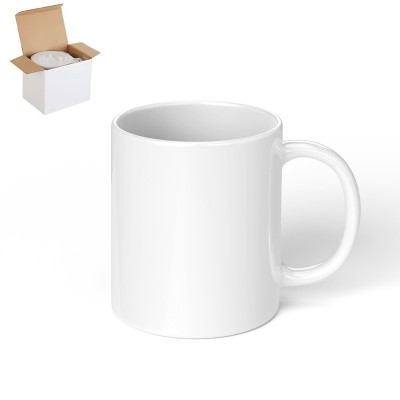
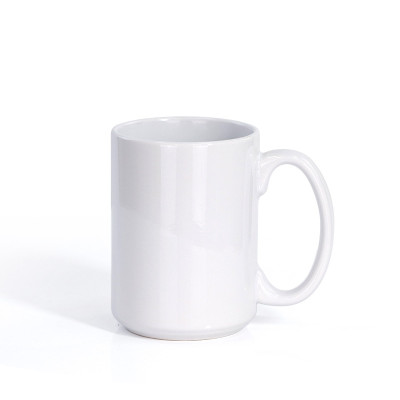
Products in this guide: 650ml Large Ceramic Coffee Mug · Custom Printed Ceramic Mug
For an importer, brand owner or retail group planning a Korea program, the opportunity sits where those two engines overlap: everyday drinkware for coffee channels on one side, gift boxes and branded merchandise on the other, and a strong sense of local brand identity in between. Korean buyers are receptive to custom design and brandable products.
This guide maps the five channels where the volume sits, the MFDS food-contact framework that every food-contact shipment must clear, the documents that travel with the goods, realistic lead time and the seasonal windows that decide what lands when. It reflects official public sources as of September 2026 and is operational guidance, not legal advice.
The Channel Map: Where the Volume Sits
Demand for ceramics in South Korea is not held by one buyer type. It runs across five overlapping channels that buy at different rhythms and need different proofs of readiness.
- Importers and brand houses. Importers remain the gate into department stores, franchises and e-commerce platforms. They hold the import relationships, manage the food-contact and labeling paperwork, and convert a factory's range into Korean-branded lines.
- Coffee chains and specialty roasters. Thousands of outlets run ceramic mugs through commercial dishwashers every cycle, so durability, stackability and glaze integrity are the real spec. Seasonal menus bring recurring drops of festive or limited mugs, and loyalty programs repeat year after year. Before you spec a chain range, it pays to walk our coffee cup sourcing map and lock the dimensions and capacities that match outlet operations.
- Online retail and the duty-free channel. Online sellers move fast on trend and reward factories that can turn a sample around quickly. Duty-free operators and airport retailers carry Korean and imported gift lines, and they look for sets that travel well, wrap cleanly and read as premium at first glance.
- Gift-box and branded-merchandise programs. Chuseok and Seollal drive boxed sets that combine ceramics with coffee, tea or confectionery, and corporate gifting runs through the same season. Brand merchandise and character collaborations add a steady line of custom-decorated mugs. This is where Korean copy on the cup and the box earns the margin.
- Kitchen and living retail. Department stores, houseware specialists and online lifestyle retailers buy mugs, sets and bowls, and the home-café trend means retail consumers want the café look on their own shelves — stackable cups, mugs with saucers, breakfast and dessert sets.
| Channel | Who buys | What wins the order |
|---|---|---|
| Coffee trade | Chains, specialty roasters, franchise groups | Durable commercial mugs, seasonal drops, on-schedule delivery |
| Gift economy | Gift-box brands, corporate gifters, department buyers | Custom decoration, Korean-labeled boxes, holiday timing |
| Online and duty-free | E-commerce sellers, duty-free operators | Trend-right finish, fast samples, premium unboxing |
| Retail | Kitchen and living retailers | Cohesive sets, stackability, clean quality story |
| Brand programs | Korean brands and licensed merchandise | Reliable custom printing, consistent quality across runs |
A working Korea range usually balances all five: volume-grade mugs for chains, gift-configurable SKUs for boxed programs and a retail set story in between.
The Compliance Backbone: MFDS Standards and Specifications
The legal base for food-contact products in South Korea is the Food Sanitation Act, whose provisions prohibit manufacturing, importing or selling utensils, containers and packaging that contain hazardous substances. The technical framework that importers actually work with sits with the Ministry of Food and Drug Safety — MFDS, formerly known as KFDA. MFDS maintains the Korean standards for food utensils, containers and packages, a document that combines general standards, material-based specifications and the test methods used to check them.
For ceramics and glass, the relevant checks are lead and cadmium leaching tests, applied by vessel type — in other words, the glaze and decoration are tested for what they release under the conditions the ware category is used in. No limit values are repeated here; the point for a buyer is structural. A certificate issued against another market's standard does not automatically demonstrate Korean compliance. The report must be framed to the Korean framework, for the right vessel category.
Two habits keep a Korea program clean. First, ask the supplier in writing which Korean standard version applies to your SKUs, which vessel category each item falls under and what the certificate covers — body, glaze, decoration and date. Second, treat the MFDS framework as a moving target: standards are revised, and the reference is always the latest official announcement from MFDS itself, not a third-party summary.
No Positive List: Standards, Not a Permitted-List System
One structural point simplifies Korea for ceramics buyers. South Korea does not run a positive list of permitted materials and additives. This differs from Japan, where a positive list for synthetic resins determines what may be used in food-contact resin; Korea instead manages food-contact articles through material-based specifications. A product is compliant when it meets the specification for its material, and the evidence is the test certificate for the finished article — not proof that an ingredient appears on an official register.
That structure suits a pure-ceramic line: compliance evidence stays on the article itself, tested as produced. Where an item carries a non-ceramic component such as a lid, seal or plastic insert, the material category of that part matters, so confirm with the importer which specification applies to it. The rule to remember: Korea asks what a product releases and what material class it is made from, not whether a substance sits on an approved list.
Pre-Registration and the First-Import Full Inspection
Imported food-contact materials do not simply clear on a customs declaration. Korea subjects them to a clearance review that can combine document checks, appearance inspection and laboratory inspection. Two mechanisms matter most when a program is new.
- Prior confirmation registration. A factory in the exporting country can apply to MFDS for an on-site review and registration. Once the factory is registered through this route, the import procedure for its products is simpler. Because the review happens at the factory and takes time, the registration question belongs at the planning stage, not after the container is booked.
- First-import full-item inspection. Under the Food Sanitation Act, a product imported for the first time is typically required to undergo a full-item inspection — the complete set of applicable checks rather than a reduced sampling. The practical translation for a buyer is that the first shipment should carry laboratory test certificates prepared in advance, and the importer should build the inspection into the schedule instead of treating it as a surprise.
The strategic takeaway: do not let the first order double as a test of the regulatory process. Confirm whether the factory is registered or will apply, line up the certificates before production finishes, and let the first container sail with its evidence already on board.
Korean-Language Labels and the Import File
Korean-language labeling is the baseline for any Korean retail or online channel. The consumer-facing information that reaches the end buyer — product description, quantity, the importer's details and the usage or caution points that apply to the item — is expected in Korean. For custom programs this is usually solved in the factory: decals or printed packaging that carry the Korean copy correctly is part of the specification, and the gift box carries Korean text as well for holiday programs. Your importer confirms the exact label points for each SKU.
The import file is the second half of the same discipline. What travels with a Korea shipment is a test certificate issued against the Korean framework, for the SKU as it was actually produced — same body, glaze, decoration and firing. The importer assembles the import declarations; the supplier provides the technical specification, the certificate and the batch record, and keeps a change discipline so that nothing is silently swapped between the tested sample and the shipped run. When certificates cross your desk, our guide to reading ceramic test reports without the confusion walks through what a report actually covers.
Logistics and Lead Time: Counting in Weeks
Custom ceramics move through a fixed sequence: sample approval for color and print, body and mould preparation for new shapes, scheduled kiln runs, decoration, quality control and packaging — gift-box packaging included — then the container and sea transit to Korean ports, followed by customs clearance and the import inspection steps described above. Each stage is measured in weeks, and the total from an approved sample to stock on a Korean shelf runs to a span of several weeks, before inspection and buffer are added.
Three habits keep a Korea program realistic. First, count in weeks, not days, and never plan a launch two weeks after confirmation. Second, add margin around the first shipment, because the first-import full-item inspection is part of that container's journey. Third, once a program is in steady state — approved samples, locked molds, a registered factory — reorders run on a shorter cycle.
The Seasonal Calendar: Chuseok, Seollal and the Coffee Christmas
South Korea buys ceramics on two calendars at once, and a sourcing program has to serve both.
- The gift calendar. Chuseok in autumn and Seollal in the lunar new year are the two fixed points of the boxed-gift economy. Households buy premium sets, companies buy corporate gifts, and retailers fill their shelves weeks ahead of each holiday. Because the dates move every year with the lunar calendar, the planning anchor is each season's announced dates, and production is back-planned from the shelf date, not from a calendar page.
- The coffee calendar. Christmas brings a festive coffee season — seasonal drinks, limited cups and year-end merchandise. Online sales events keep a steady drumbeat underneath, which is why daily-use mugs and gift-box SKUs can share one production plan.
For a factory, the practical result is two recurring peaks: holiday box sets that need to land ahead of Chuseok and Seollal, and festive cup runs that need to clear inspection before the Christmas coffee season. Each window has a fixed date and a short selling season, so the orders that arrive early get the capacity, and the ones that arrive late wait.
How to Reach the Buyers Who Matter
Entry into South Korea most often runs through local importers and distributors. They carry the importing relationships, the channel listings and the paperwork experience, and a factory that makes their life easy — clean certificates, Korean-ready labels, reliable dates — gets the repeat orders. The second route is direct partnership with Korean brands, coffee groups and online sellers who already source custom programs from China and are comfortable commissioning their own designs. For the mechanics of that relationship — sampling, decoration, capacity, commercial terms — our complete guide to sourcing custom ceramic mugs from China is the read before you start.
Trade events are a third door. South Korea and the wider region run tableware and sourcing shows; organizers announce their dates each cycle, so check the official program before planning attendance. Whatever the entry route, the supplier who shows up with a Korea-ready posture — documentation framed to the Korean framework, bilingual label support, gift-box packaging and disciplined change management — is the one Korean buyers treat as a program partner rather than a price quote.
The Buyer's Pre-Shipment Checklist
Before the first Korea container ships, run through this list.
- Confirm the importer's registration status and whether the factory will apply for prior confirmation registration with MFDS.
- Confirm the first-import full-item inspection is planned and that laboratory test certificates are prepared in advance and travel with the shipment.
- Confirm the certificate is framed to the Korean framework for the correct vessel category and covers the SKU as produced — current body, glaze and decoration.
- Confirm the certificate date is current and that the Korean standard version applied is the one in force on the import date.
- Approve Korean-language labels for every SKU and for the gift packaging, in writing.
- Confirm packaging survives e-commerce handling, retail shelf display and the boxed-gift format you are selling into.
- Back-plan production and buffer from the Chuseok, Seollal and Christmas coffee windows so the goods land with weeks to spare.
- Agree a change rule with the factory: any change to body, glaze, decoration or production site triggers a re-check before the next shipment.
None of this is legal advice, and the rules in force on the day of import are those published by MFDS — the reference here is the official public framework as of September 2026. But the checklist logic does not change with the regulations: know the channel, match the standard, keep the file current and back-plan the calendar. A Korea program built on that logic clears inspection, lands on time and gives the coffee and gift-box buyers a reason to reorder.
"Korea-Ready Coffee & Custom Mug Program"
Explore products featured in this guide:
Have questions? See our Sizes & Finishes FAQ and Ordering & Certifications FAQ.
Need a custom quote? Send an inquiry or browse our full product catalog.