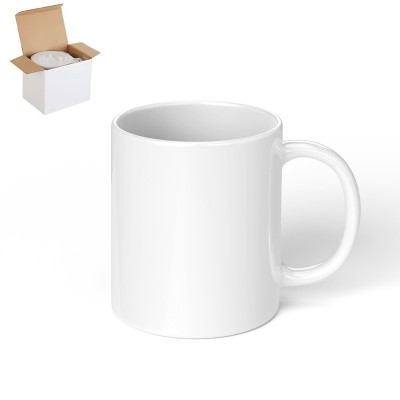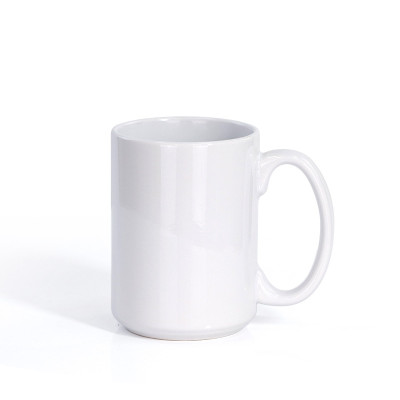
Sourcing Ceramics for Germany and the DACH Region: LFGB, Retail and the Ambiente Calendar
The Call That Stopped at "Sensory Testing"
The Hamburg buyer has moved quickly to documents. "Send the LFGB report for this SKU," she says, "and confirm the sensory test is inside it." You have a lead-and-cadmium migration report, the same file your last two export markets accepted without a follow-up question. It is genuine, it is current, and it is not what she asked for. The pause on the line is the pause of a deal that will not advance until the right file lands in her inbox.
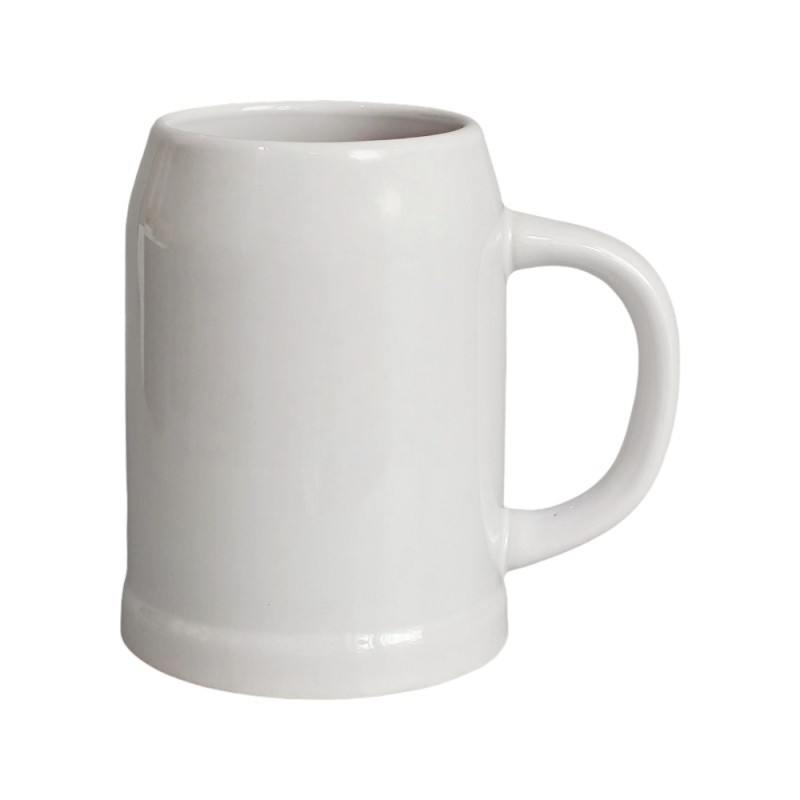
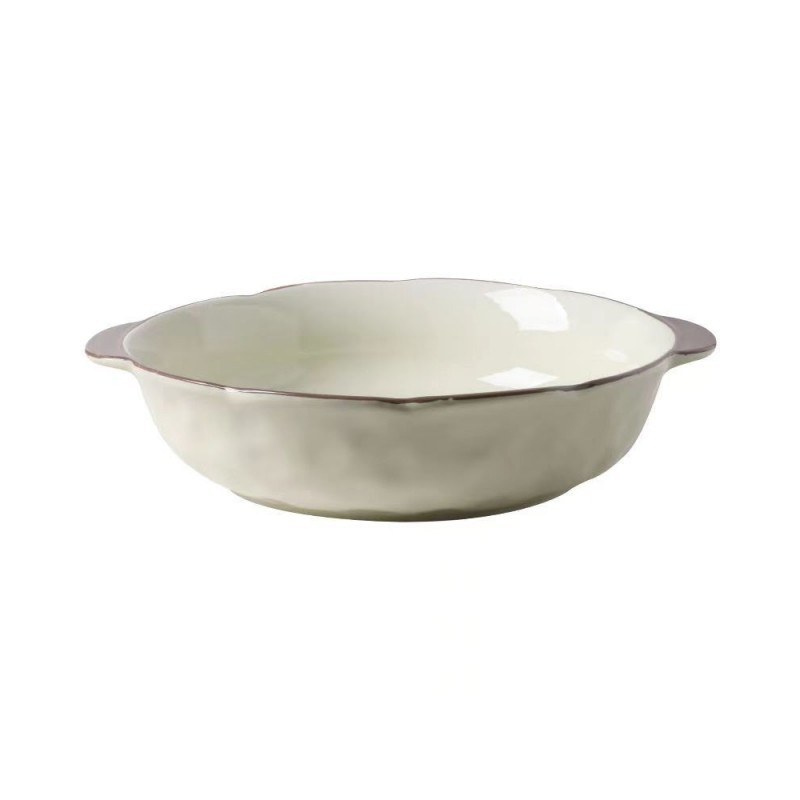
Products in this guide: Classic Large Beer Stein Mug · Large Handheld Porcelain Soup Bowl
That is the DACH market in one scene. Germany is the largest economy in Europe and one of its most structured consumer markets: concentrated retail, substantial foodservice, and buyers who qualify suppliers on evidence before negotiating price. Documentation is part of the product. A supplier with a complete, honest file moves quickly; one with an almost-complete file waits.
This guide is a buyer-side operating manual for that market, built from practical sourcing logic and from the official public framework as it stood in September 2026. It is not legal advice, and it deliberately cites no specific limits, rates or fees: where an official figure matters, the governing reference is the latest official announcement of the relevant German or EU authority.
Why the DACH Region Repays Serious Suppliers
The DACH region — Germany, Austria and Switzerland — is the German-speaking heart of Europe: one language, a shared regulatory neighbourhood, and habits worth treating as one market rather than three separate experiments. Germany gives you scale, with the largest economy in Europe, a retail system that runs on disciplined central purchasing, and a foodservice market that drinks coffee and beer out of ceramic in volumes few markets match. Austria adds a compact, quality-conscious retail scene with strong ties to German buying groups. Switzerland adds the toughest expectations of the three, around material quality and environmental claims, and pays for them.
What the region rewards is the unglamorous side of sourcing: consistent glaze and finish across runs, test reports that cover the SKU as it is actually made, delivery discipline measured in weeks, and files kept current when a decoration changes. Suppliers who demonstrate these things earn the region's most valuable asset: repeat volume. DACH buyers switch suppliers slowly once a program is proven, because switching costs them compliance reviews, customer-facing changes and risk. This is not a market for one-off opportunism; it is a market for suppliers who treat the file, the glaze and the shipping calendar as one system.
The Channel Map: Where DACH Orders Live
Buyers in the region split into four groups, each with its own decision rhythm and document demands.
- Importers and distributors move containers of standard and semi-custom ranges to retail and foodservice customers across the three countries; they buy frequently, compare files, and are the fastest door a new supplier can open.
- Discount grocery chains and supermarket groups with strong private-label programs — Aldi, Lidl, REWE and Edeka are the best-known names — buy through central purchasing teams on planned programs that renew year after year.
- Foodservice, hotel and catering operators refresh mugs, tableware and serving pieces on predictable cycles, where durability and replacement continuity decide the supplier.
- Gift and homeware retailers buy seasonal collections with strong design content and strict delivery windows.
Private label is the structural anchor. German grocery retail is among the most concentrated in Europe, and its discount and supermarket groups build much of their non-food assortment as private label, purchased centrally and sold under their own brands. For the factory and the importer who represents it, that means a different way of selling: instead of chasing single-season novelty, you bid into programs that repeat, with quantities your production planner can actually schedule. The entry price is a complete qualification file and the patience to move through a structured tender. The reward is volume that returns every year.
Foodservice buying sits close to the culture — beer gardens, brewpubs and hotel bars run on ceramic steins and sturdy mugs, steady rather than seasonal — while gift and homeware retail carries the margin and is unforgiving about delivery dates.
LFGB: What the Buyer Will Ask For, and Why Sensory Testing Is the Differentiator
German food-contact law sits in the Lebensmittel- und Futtermittelgesetzbuch — the German Food and Feed Code, LFGB. Two provisions govern ceramic tableware. Section 30 sets the general safety bar: consumer goods for food contact may not release substances harmful to health. Section 31 protects the food itself: tableware must not alter food's composition or its sensory properties — smell, taste or appearance.
In practice, German and central-European retailers recognise an LFGB report as practical proof of food-contact suitability, and it normally goes beyond the EU baseline: it adds a sensory test — the decisive element — plus broader screening, with methods drawn from the recommendations of the German Federal Institute for Risk Assessment (BfR) and from DIN and EU approaches. A plain lead-and-cadmium report tells a buyer nothing about whether a mug will make coffee taste of its glaze. The sensory test answers exactly that, and it is the first question a DACH buyer asks about your report.
Before you quote to any German-speaking customer, put these questions to your factory and keep the answers in writing:
- Does the report cover the body, glaze and decoration of the SKU you are quoting today?
- Does it include a sensory test of odour and taste, and which method does it follow?
- Is there a declaration of conformity matching the report, naming product, manufacturer and market?
- What changed since testing — body, glaze supplier, decal, firing, production site?
- How quickly can the factory re-test after a change and issue an updated report?
- Does the same evidence cover any decoration in the food-contact area?
LFGB does not replace the EU framework; it stacks on top of it. Ceramics entering Germany must still satisfy the EU rules on food-contact tableware — the harmonised migration rules for lead and cadmium and the written declaration of conformity (DoC) — then add the German-market layer. The full file has three parts: a migration test under the current EU method, a DoC per SKU, and the sensory test with the screening German practice expects. New to the stack? Start with our complete certification checklist for selling ceramics in Europe, which lists every document in the order your buyer will ask for it, and follow it with our overview of European tableware standards: LFGB, sustainability and design for the wider context.
German-Language Labels and Product Data: The Quiet Access Requirement
DACH channel managers rarely advertise the language requirement, because to them it is not a requirement at all: it is the normal state of business. German-language product material is a de facto condition of entry, and it signals that a supplier has a counterpart who reads the German consumer rules and builds for that market.
Operationally, expect to deliver, at minimum: labelling and packaging that carry the channel's information in German; care and usage instructions covering dishwasher and microwave handling; and the item-master data retail systems require — article number, description, packaging dimensions, units per carton, barcode — entered cleanly before the first order ships. In foodservice, instructions a kitchen team can read without translation error are part of the product's usability.
Clarify the language scope before sampling, not after. Ask each channel which documents and labels must be in German, and whether Austrian German or Swiss German variations matter. For a Swiss customer selling nationwide, check whether French and Italian versions are expected alongside German. Where the buyer supplies label artwork and data templates, follow their layout exactly: retail data teams match incoming files against their own systems, and the match has to be exact.
Importing into Germany: The File Behind the Container
Germany imports as part of the European Union's single market, which simplifies the paperwork. When a shipment clears customs in an EU member state, the goods enter free circulation and can move anywhere in the EU without another clearance: your importer in Hamburg clears once, and the same containers can serve an Austrian retail group or another EU customer.
The shipment file is not exotic: commercial invoice, packing list, transport document — a bill of lading for sea freight or an airway bill for air freight — and the commercial documents that identify the goods precisely. For ceramic tableware, add the compliance package: the test report and the declaration of conformity for each SKU, with report dates visible so a customs officer or retail auditor can match document to goods. Import duties and taxes apply under EU rules; the rate depends on classification and the rules in force on arrival, so confirm the figure with your importer or customs broker each season.
Switzerland is the exception. It is not in the EU single market, so a shipment to a Swiss customer is a separate import with its own formalities, documents and label expectations. If your program spans all three countries, confirm at quote stage who clears the Swiss leg and what the Swiss buyer requires in the file.
Logistics and Stocking Rhythm: Weeks, Buffers and Two Seasons of Visibility
Ocean freight from the Chinese factory to a German gateway port is measured in weeks, not days, and the buyer's calendar, not the factory's, sets the deadline. Teams that run DACH programs smoothly treat lead time as four moving parts: production, shipping in weeks, customs and inland delivery, and a buffer that absorbs the surprises every container season produces.
Three habits separate reliable suppliers. First, add a buffer measured in weeks and put it in the quote, so the customer plans against a real date. Second, give two seasons of visibility: confirm the current shipping window and reserve the next slot before pressure starts. Third, schedule compliance work off the critical path — a report that must be re-issued because a decoration changed needs laboratory time, and that time is easiest to book before the factory starts loading containers. Because every season tightens the calendar, our guide to when to test ceramic tableware and how to cut cost helps you plan the lab work so compliance protects the lead time instead of consuming it.
The Sourcing Calendar: Ambiente in February and Christmas in Reverse
The anchor date for DACH tableware buying is Ambiente, held each year in February at Messe Frankfurt. It is a global reference point for home, gift and hospitality buying and, for the German-speaking trade, the place where the season's programs start to take shape: importers scout ranges, retail teams compare suppliers, hospitality buyers walk the halls. Exact dates are announced by the organiser for each edition, so confirm the current year's dates before planning travel or product readiness.
Plan in both directions from that anchor. Forward from Ambiente: samples and files should be ready before the fair, because those conversations become orders in the following weeks. Backward from retail delivery: the Christmas and New Year gift season in Germany puts goods on shelves in early autumn, which means production through the summer and shipping in the weeks before — decide in spring which products will carry the season and test them early. Foodservice follows the same logic with a spring refresh ahead of the summer beer-garden season.
Keep one rule for this market: start from the German retail delivery date and subtract the weeks — production, sea freight, customs, inland delivery, buffer — to the date the factory must start firing. Share that reverse plan with the customer; it is the difference between shipping a Christmas program and talking about it.
Reaching DACH Buyers from a Chinese Factory Floor
The route into the region runs through people already inside it. The most efficient first contact for most suppliers is an importer or distributor serving German, Austrian and Swiss customers: they hold the relationships, understand the qualification files, and carry the language burden while you supply the factory evidence. A local agent who already calls on the right buying offices is a second route. A third is the trade itself — Ambiente in Frankfurt is the natural meeting point, and specialist German-speaking industry media are read by exactly the buyers you want to reach.
Whatever the entry door, the qualifying behaviour is the same. Arrive with a German-market file, not a generic one: an LFGB report with sensory testing, a declaration of conformity matching the SKUs you show, and product data a retail system can read without rework. Answer document requests within a day or two — DACH buyers treat response speed on paperwork as a proxy for how a supplier behaves when a shipment is late. Bring products that fit the market: sturdy handled mugs and beer steins for hospitality, durable espresso and coffee cups, clean dinnerware for the private-label groups who will brand it. The buyers are not hard to find; they are hard to satisfy, and the repeat orders follow the file.
The Buyer's Self-Check Before a DACH Order
Before you commit capacity to your first German-speaking customer, run the file against a short list and fix any missing line first — DACH buyers check these lines twice.
- The LFGB report covers the SKU as it will ship, with current glaze and decoration.
- The report includes a sensory test of odour and taste under a method you can name.
- A declaration of conformity exists for the SKU, naming product, manufacturer and market.
- A change in decoration, glaze or production site would trigger a re-test and updated file.
- Labels, packaging and care instructions are in German, as the channel requires.
- Item-master data is agreed with the customer before the first shipment.
- The EU import file is clear with your importer; the Swiss leg is separately confirmed.
- The shipping plan works backward from retail delivery with a weeks-based buffer.
- Samples and files are ready before the relevant Ambiente edition and the Christmas season.
- You can send the full package to a buyer within a day of the request.
Suppliers who accept that discipline earn the most valuable currency in export ceramics: orders that come back every year. This guide reflects the official public framework as of September 2026; for any specific requirement, the governing reference is the latest official announcement of the relevant German or EU authority.
"LFGB-Ready Ceramic Range for the DACH Market"
Explore products featured in this guide:
Have questions? See our Sizes & Finishes FAQ and Ordering & Certifications FAQ.
Need a custom quote? Send an inquiry or browse our full product catalog.