Sourcing Ceramics for France: EU Documents, French Labels and the Gift & Tableware Route
The Table Is the Offer: Why France Earns a Dedicated Guide
Walk into a French restaurant at lunchtime and watch the room being set: place settings aligned, cups on saucers, tableware chosen for a cuisine, not simply for function. In France the table is part of the offer — a small cultural point with large purchasing consequences for anyone who makes ceramic tableware and mugs.
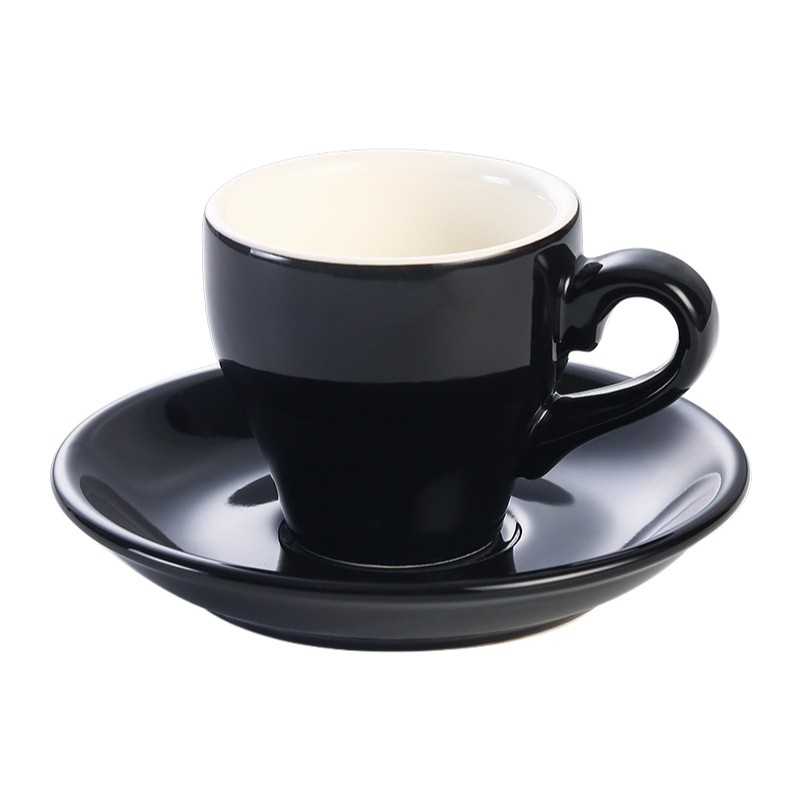
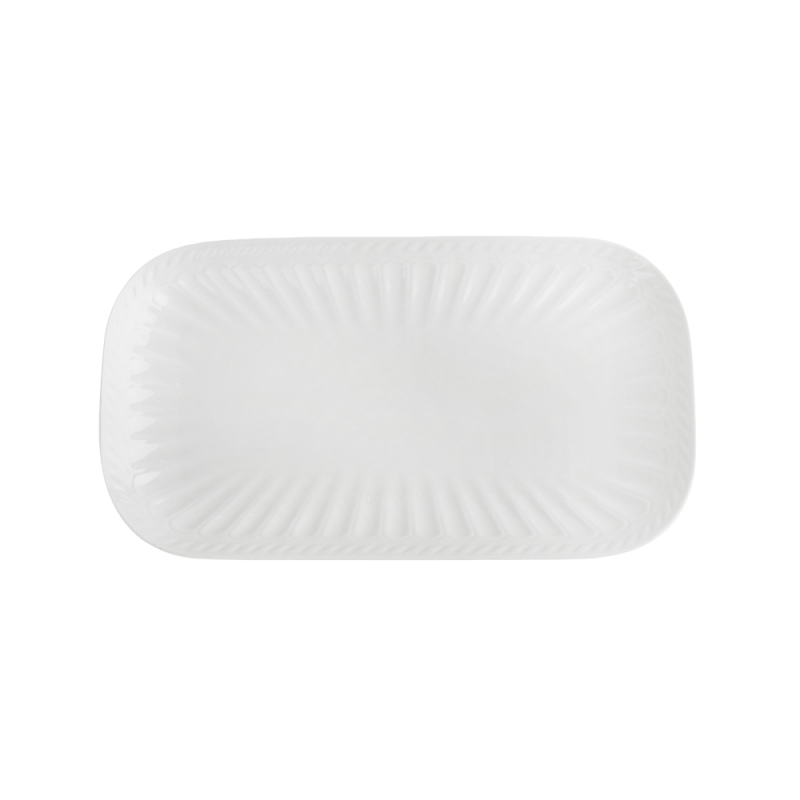
Products in this guide: Espresso Cup and Saucer Set · White Ceramic Long Rectangular Serving Plate
Buying is never only about price per piece. A bistrot replacing worn espresso cups wants a set that reads as French tabletop; a gift retailer stocks tableware because customers buy it for someone else's table; a department store keeps a table-setting section coherent across dozens of SKUs. The French buyer is buying design, finish, delivery reliability and documentation in proportions that differ from most markets.
There are structural reasons France earns a dedicated guide. Foodservice demand from bistros, cafés and restaurant groups is steady and presentation-driven. The gift and homeware retail scene is unusually developed. And France sits inside the EU single market, so compliance done for France works across the whole region. This guide covers the France-specific part of that work: the channel map, the compliance package, the label expectations and the buying calendar, drawn from practical sourcing logic and the official public framework as of September 2026. It is not legal advice; where figures shift, the latest official announcement governs.
The Channel Map: Importers, Retail Groups, Gift Retail and the Café
French distribution for ceramics runs through four broad channels.
| Channel | Who you deal with | What they expect from you |
|---|---|---|
| Importer / distributor | The importing company that owns the French market entry | Complete EU compliance file, French-language materials, reliable landed logistics |
| Hypermarket and supermarket groups | Own-label and buying desks of the large French retail groups | Structured ranges, documented compliance, consistent lead times |
| Gift, home and lifestyle retail; department stores | Independent stores, chains and department stores running table-setting and gift programs | Design coherence, packaging that sells, seasonal deliveries |
| Foodservice: bistrot, café, restaurant groups | Group buyers and regional distributors to the trade | Replaceable items, durable finishes, delivery rhythm that matches menus |
The importer or distributor is usually the first buyer you sign. Across Europe, retail groups and many independent stores buy through suppliers that deliver the complete import package; sell to an importer and the importer assembles it, sell to retail directly and you assemble it. In France the importer tier is strong, retail groups concentrate volume, and gift and lifestyle retail buys with a design vocabulary a factory alone rarely masters — a pattern explored across markets in our buyer's guide to sourcing ceramics for Europe's fragmented market.
A few distinctions matter in practice. Retail groups concentrate volume in own-label programs and buy ranges that hold together, not one-offs. Independent gift and homeware stores buy smaller but reorder through the same networks, and they are where a new design becomes "a thing". Foodservice buyers buy replaceables — the espresso cup and saucer set, the serving dish on every table — so their orders are predictable, and a chipped rim in busy service produces a fast complaint.
The EU Compliance Package Sits Behind Every French Sale
France does not run a separate national safety regime for ceramic tableware; what applies is the EU framework, and that is the first and largest simplification for an exporter. Food-contact ceramics are covered by EU coordinated rules under Council Directive 84/500/EEC as amended, which set migration limits for lead and cadmium by category of ware. The figures are the laboratory's work; the mechanism is yours, because it decides which documents you hold.
The document that anchors the system is the written declaration of conformity, the DoC: it states which rules and test methods the product meets and links the product to its test report. Every food-contact SKU shipping into the EU should have one, matched to the article as actually made — the body, the decoration and the surface treatment tested are the ones declared. A DoC for a plain glaze does not cover a decal version of the same mug, and a report for one batch does not cover next season's glaze. Our guide to how European retail buyers select ceramic tableware, from sample to shelf, shows how the sample you approve becomes the standard the shipment is checked against.
A second EU requirement sits on top of the food-contact rules. The General Product Safety Regulation — GPSR — requires products placed on the market to have an economic operator established in the EU who answers for product safety information. That operator is usually the importer or a manufacturer's authorized representative. French retail buyers ask who your EU responsible person is early, and again at the audit; keep the answer written, current and tied to a named company. See our GPSR guide for every importer selling into the EU for how to set it up. The supplier-side obligations follow: a test report and DoC per SKU, proof the tested article matches what ships, batch records for traceability, and the EU responsible operator stated on the documents the importer relies on.
French-Language Consumer Information: The Label Is the Gate
The EU framework gets you through the door; French is the language the door opens onto. France requires that consumer information supplied with a product — labels, packaging, instructions, warnings and other information made available to the consumer — be provided in French. For tableware this lands on small, concrete things: the product designation on a hang tag, care and cleaning guidance, any safety statement, and the importer's identity and contact details on the pack. It sounds administrative; in practice it is a gate: a product whose consumer information is not in French does not get listed.
Treat the French label as a deliverable of the sample process, not an afterthought at shipment. For each SKU, agree the label zones and the exact French wording before bulk production: what the product is called, what it is made of, how to care for it, who imports it and how to contact that company. Have the copy reviewed by someone who sells in France — the importer, a local agent or a French-speaking retailer — because channel-ready French is idiom as much as grammar. Then put the rule in the purchase order: the supplier delivers the finished French label proof before production, and inspectors compare it against the physical goods, exactly as they do with the test reports.
Import and Documentation: Clear Once, Circulate Across the EU
Once the framework is understood, import into France is a single-market operation, not a national one. Goods are cleared through the customs formalities of an EU member state — France or any other — and once released into free circulation they move across the EU without further import checks. The duties, VAT and any trade measures that apply are settled at clearance, and the current figures depend on the rules in force at that moment, so they belong in the conversation with your freight forwarder and customs broker, not in a sourcing guide.
What belongs in the buyer's file is the documentation that clearance and the market both rely on. Shipping documents are routine and handled with the forwarder. The compliance documents carry the commercial weight: the test report and declaration of conformity per food-contact SKU, the French label and packaging proofs, and the batch records that connect a specific shipment to its production conditions. The importer keeps these on file: it is the EU responsible operator for products imported in its own name, and producing the file on request is the French company's job, not the factory's. If you sell to an importer, your contract should require you to deliver those documents, to notify the importer before any change in glaze, decoration, body or production site, and to keep the records current. If you are the importer, the folder per SKU is your asset in compliance reviews, audits and customs enquiries.
Lead Times and Replenishment Rhythm: Plan in Weeks
Production in China, sea freight to a French or other European port, and the inland leg to a warehouse add up to a lead time measured in weeks, not days. Mature programs do not fight this; they build on it: a retail group's range review runs on its calendar, not on yours, and a bistrot needs espresso cups when the old ones wear out, not when the container happens to land. Work backward from the moment the goods must be on a shelf or in a kitchen, and reserve factory capacity accordingly.
For volume programs the rhythm is a running one: sample approval, bulk production, inspection, shipment, reorder. When batches are many weeks apart, a slow reorder decision quietly creates a gap, so buyers with steady demand set reorder points rather than waiting for stock to run out. Seasonal and gift programs work the same, only tighter: the shipment date is fixed by the selling season, so the order date is fixed too, and no emergency lane rescues a program planned late. Add a buffer for inspection and for the documents — a shipment held at the dock for a missing label proof helps no one. Date every order backward from the French selling moment, and confirm that date in writing before production starts.
The Buying Calendar: Maison&Objet and the Gift-Season Countdown
The wholesale calendar for the French home, gift and lifestyle trade revolves around Maison&Objet. The fair is held at Paris Nord Villepinte, organized by SAFI, and takes place twice a year, in January and September — exact dates as published by the organizer for the current year. For a supplier of ceramic tableware and mugs it is the most efficient place to meet the importers, retailers and brands that buy for France, and it rewards preparation more than presence: buyers walk the aisles with a budget and a season in mind, and part of their decision is the file you bring.
Work the calendar backward from the selling season. Maison&Objet is a sourcing moment, not a shipping moment. The gift season is your reference point: France's festive gift and table demand concentrates around the Christmas period, when tableware sells both as a gift and as the setting for the table itself. The practical method is reverse planning: decide when the goods must be in the French warehouse, subtract the shipping weeks, subtract production and inspection, and work back to the order date — then make sure that date sits comfortably before the fair where the range is shown, so what buyers order at the fair is a program that can actually land on time. Let the organizer's published dates set your milestones. The most common first-season mistake is not the price; it is a range that arrives one season too late.
How to Reach the Buyers Who Decide: The Show and the Local Partner
Two routes matter for reaching serious French buyers. The first is Maison&Objet used as a structured selling exercise. Before the fair, build a short target list of importers and retailers from the show directories and ask for meetings in advance, because the buyers who matter are busy walking their own appointments. Bring what makes you credible: per-SKU test reports and declarations of conformity, French label mock-ups and finished packaging examples. On site, qualify hard — who buys, for which channel, at what volume, on which calendar — and follow up within days with the specific range and file each buyer saw, because a French retail decision is often made between two appointments.
The second route is a local partner. The importer-distributor layer is the fastest path to retail groups and the independent trade: a distributor with a French entity already holds the EU responsible-operator position, already works in French, and already carries the label and logistics competence a new program needs. Agencies and trade representatives selling into the French market play the same role for foodservice and smaller accounts. The combination is usually the answer: use the show to build the shortlist, use a partner to convert it. Your supplier in China makes excellent ceramics; your partner in France makes them sellable.
The Pre-Order Checklist for a French Program
Before you commit to a first French order, run the program against a short list. Each item should be answerable in writing.
- Every food-contact SKU has a test report and a declaration of conformity matched to the article as made, including its decoration.
- An EU-established responsible operator is named and documented for the program — usually the importer — with contact details on file.
- Consumer information for each SKU exists in correct French: designation, composition, care, importer identity and contact, approved before production.
- Label and packaging proofs are part of the order file and are checked against the physical goods at inspection.
- The channel is chosen — importer-distributor, retail group program, gift and lifestyle retail, or foodservice — and the compliance work is assigned to the side that owns it.
- Batch records and a written change-notification clause cover glaze, decoration, body and production site.
- The calendar is reverse-planned from the French selling season and the fair dates published by the organizer, with margin in weeks for production, inspection and shipping.
- Current duty, tax and border conditions for the shipment are confirmed with the forwarder before the order is placed.
None of these points is exotic; each is the difference between a program that lands on the table and one that lands late, unlabelled or unsellable. Where any rule or figure matters — migration limits, duties, show dates — the authority that governs is the latest official announcement of the EU and French authorities and of the fair's organizer. Get the file, the label and the calendar right, and France is not a complicated market to enter; it is a rewarding one to serve.
"French Table-Setting Ceramic Range"
Explore products featured in this guide:
Have questions? See our Sizes & Finishes FAQ and Ordering & Certifications FAQ.
Need a custom quote? Send an inquiry or browse our full product catalog.