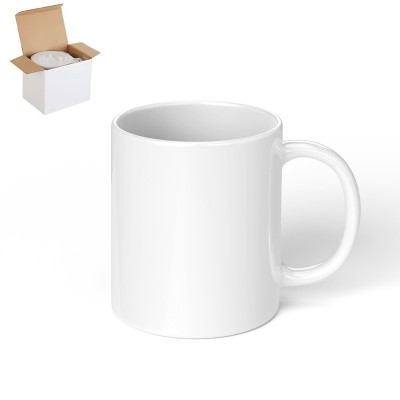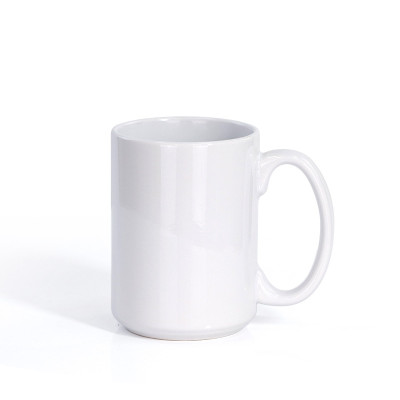
Sourcing Ceramics for Canada: Bilingual Labels, Ceramicware Rules and Coffee-Driven Channels
Coffee at Scale, Two Languages, One Federal Rulebook
A coffee chain sells mugs by the thousand before noon; two blocks away an independent roaster serves its own branded cups; across town a restaurant group sets brunch tables with white porcelain that runs through a commercial dishwasher twice a day. The buyers do not know one another, but their supply lines converge in the same place: containers that clear the same ports and the same federal rulebook before any cup reaches a Canadian customer.
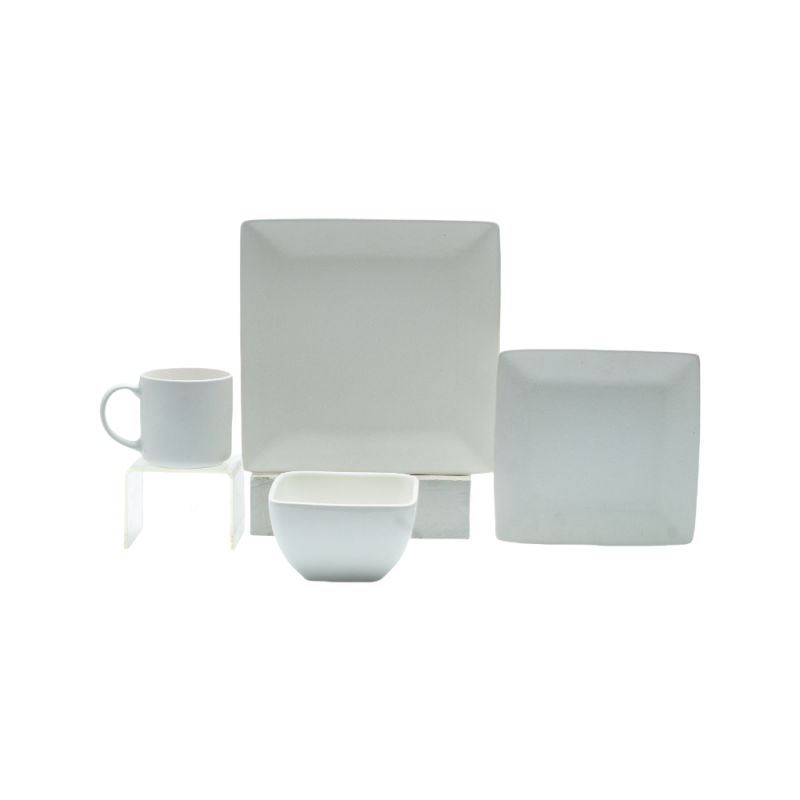
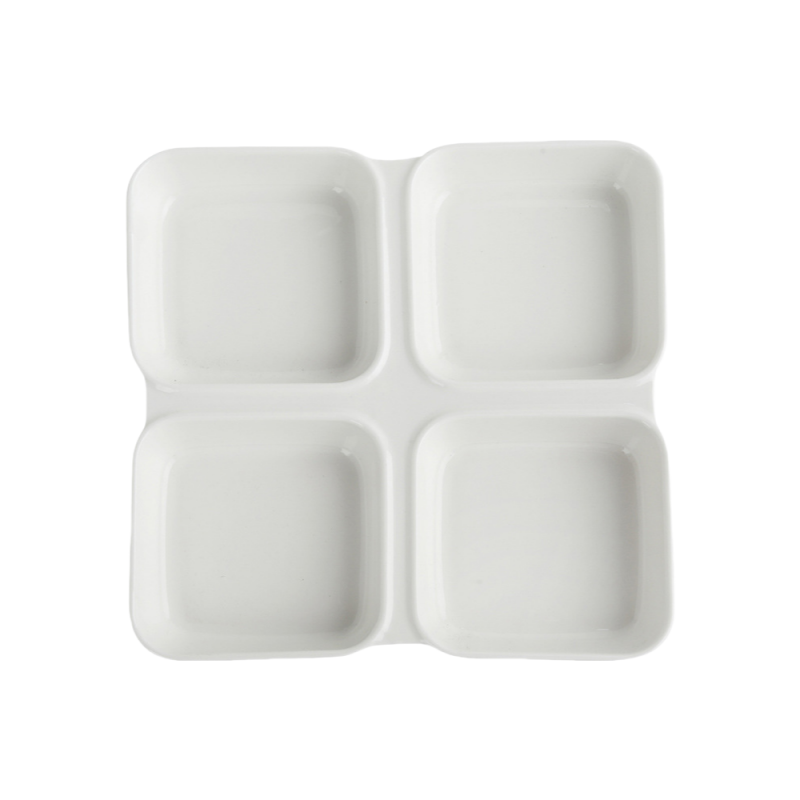
Products in this guide: Minimalist White Square Porcelain Dinnerware Set · White Ceramic 4-Section Dessert Plate
Canada rewards buyers who treat it as a market of its own, not as an extension of the United States. Coffee culture runs at scale in two layers - national chains and independent cafés that use ceramic as part of their identity - and strong takeaway habits keep mug demand steady all year. The bilingual requirement, English and French on retail labels, filters out suppliers who will not invest in it, leaving less shelf competition for buyers who prepare correctly. Retail demand in homeware, gift and department channels is seasonal and peaks in the Christmas and holiday period; foodservice stays steady. Freight from China resembles other North American destinations, but the rulebook does not: a mug fully compliant in the United States is not automatically compliant in Canada.
See our guide to selling ceramics into North America for how the two markets work as one supply zone with separate rules; this article covers the Canadian-specific part. It is operational guidance from the official public framework as of September 2026, not legal advice, and it quotes no limit values or fees - the current figures come from the latest official announcements of the importing market's authorities.
The Channel Map, Part 1: Importers, Distributors and National Retail
Think of the market as a series of gates. The importer of record holds the factory relationship, clears customs, carries the compliance file and takes inventory risk. A distributor aggregates importers' lines and services retailers at store level - regional stock, delivery windows, merchandising. The retailer - department stores, housewares chains, grocery and discount groups with kitchenware programs, gift specialists - decides at head office what reaches the shelf.
Each gate takes a margin and adds a service, so your landed cost plus every resale margin must land under the retail price point the market already accepts. Plan the range backward: start from what the consumer pays and work back to what you can pay in China. Sell to a distributor and you trade control of end pricing and presentation for fast coverage of many accounts; sell direct to retail head offices and you keep the margin and the program, but you also carry merchandising, chargebacks and in-season service.
Two consequences follow. First, the program beats the one-off item: retail buyers award shelf space to coherent ranges - a dinnerware set, a mug series, a coordinated colourway - because a range sells more per square metre than single SKUs. Second, private label is a real route: grocery and discount groups run own-brand kitchenware programs bought in large category volumes, expecting the same compliance and bilingual packaging as branded goods. Ask the buyer or distributor which retail accounts they serve, in which seasons they set ranges, and whether they buy stock-in or on consignment. The answers change your production calendar, packaging and cash flow.
The Channel Map, Part 2: Coffee Chains, Independent Cafés and Foodservice
Coffee chains buy like industrial buyers. Multi-unit chains source through head office, run annual programs with promotional releases, and put every piece through commercial warewashing - hence specs that demand durable glaze, chip-resistant profiles and decoration kept out of the lip-contact zone of the rim.
Independent cafés and roasters buy smaller volumes through café-supply and restaurant-equipment distributors, and they buy identity as much as capacity: a mug carrying a local brand, a regional pattern or a neighbourhood colour. Quebec buyers respond especially to designs with local cultural references. Foodservice - brunch, family and multi-ethnic dining, hotels - is the most predictable volume: plates, bowls, mugs and cups replaced on a cycle, lifting in spring-summer as patio season opens.
Match product to channel before ordering. For chains, send glaze and profile documentation early and confirm rim-decoration position with the factory. For cafés and foodservice, keep a stackable profile that survives freight and storage, and price breakage into the deal. Ask what the glaze does under commercial washing, whether rims are fully glazed to reduce chipping, and how items are packed for export - packaging is part of landed cost, not an afterthought.
The Compliance Checklist: Glazed Ceramics and Glassware Regulations (SOR/2016-175)
Food-contact ceramics in Canada are governed by the Glazed Ceramics and Glassware Regulations (SOR/2016-175), made under the Canada Consumer Product Safety Act. In force since 2016 and amended since, the consolidated version in effect as of September 2026 is the reference. It sets migration limits for lead and cadmium from glazed ceramicware - and from glassware, which shares the regime - intended to contact food. This section explains the mechanism, not the numbers; confirm the limits from the official text when you set up a product.
Limits are set by vessel category. The rule divides food-contact articles into categories - flatware such as plates, small hollowware, large hollowware, cups and mugs, and pitchers - and applies lead and cadmium migration limits by category. Your spec sheet must record each SKU's category, because the evidence you collect must match it.
The decorated rim has its own rule. Drinking vessels face a stricter requirement when they show obvious external decoration in the top 20 millimetres of the rim, the zone that touches the lips. A glaze line, decal or band inside those 20 millimetres changes what you must test. Design decorated rims clear of that zone, or test and document the rim separately. This is the most common place a decorative cup surprises an unprepared importer.
Decorative, non-food pieces take another route. An article not intended for food contact can be exempt from migration limits, but only if it carries a permanent bilingual warning - for example that it is not for food use - in English and French, applied so it survives washing, with lettering of adequate height. Decide intended use deliberately: a product called a mug with a non-food warning is a marketing risk; a decorative piece without the warning is a compliance risk. Record the decision in the spec sheet.
Collect matching evidence; keep the US file separate. Whole-article migration is assessed by soaking the article in a solution such as 4% acetic acid under an ISO 6486-type method covering all food-contact surfaces. Where the rim rule applies, the rim decoration is tested separately with a local test under an ASTM C927-type method. Ask the factory for accredited-laboratory reports naming the article, its category and the method, and re-test whenever body, glaze, decoration or firing changes. If the same SKU sells in the United States, the two rulebooks are separate; our explainer on FDA, LFGB and Prop 65 food-safety certifications keeps the files straight.
Bilingual Labels and the Quebec Factor
Bilingual English-French labelling is the default assumption of Canadian retail, not a premium feature. Consumer products are expected to carry label information in both official languages, and the warnings the ceramics rules require must be bilingual by design. Act early and permanently: print bilingual information on packaging and backstamp at the factory, approve artwork before mass production, and keep the approved label proof in the SKU file. A bilingual sticker applied in-market is a workaround retailers spot-check, at the worst time and cost.
Two claims deserve care. Dishwasher-safe and microwave-safe are performance claims Canadian buyers take seriously and should be backed by tests of the actual product. A claim the glaze and decoration cannot support is worse than no claim.
Quebec is where bilingual work pays off and where it is most often done badly. Retail buyers there read French first, and machine-translated French reads as supply-chain risk. Complete, correct French on packaging and labels, French marketing materials where accounts need them, and designs with local cultural identity are the entry conditions. If no native French speaker sits on your team, have a Quebec-based partner review the artwork before printing - correction at artwork stage costs nothing next to reprinting a container.
Import Practice: Declarations, Records and the Tariff Background
As importer of record you file a customs declaration for each shipment, usually through a customs broker, and the declared description of goods must match the commercial invoice, packing list and box labels. Discrepancies between what you declare, invoice and label slow clearances or trigger questions. Build the three documents from the same master data and keep them together.
The Canada Consumer Product Safety Act places a documentation duty on importers: you must be able to show the products you place on the market meet applicable rules. Build that file before the first order - per SKU: spec sheet with category and intended use, migration test report, bilingual label proof, and batch records linking a shipment to its production run. Name an owner, date everything, review annually. A file that answers a customs question in an afternoon is assembled when the folder is created, not when the question arrives.
Two background points frame buying decisions. Trade with Canada's North American partners operates under the region's trade framework, and tariff measures between the United States and Canada have moved and continue to move - exactly why supply chains watch origin and routing more closely. No rates appear here, and decisions should rest on official announcements, not articles. For the specific effect on gift and tableware supply chains, our guide to the US tariff on Canadian goods and what it means for gift supply chains walks through the logic.
Logistics and the Stocking Rhythm
Sea freight from Chinese production hubs to Canadian ports runs in weeks, not days - a span varying with port of loading, service and season. Add customs clearance and inland haulage to the distributor's warehouse, and the pipeline from factory floor to Canadian shelf is measured in months. That number drives ordering discipline: from a retailer's fixed floor-set date you work backward through transit, clearance, distribution and production, and place the order early enough that test reports and label approvals finish before production, not after.
Operational choices protect the pipeline. Test and approve samples before the production run so the report you present matches what you ship. Pack for the sea leg - export cartons sized to the retail unit that protect glaze through stacking, with breakage priced in. Always hold a buffer for the two things that cannot be rushed: re-testing after a change, and a customs or labelling question that costs time.
The Buying Calendar: Working Back from the Holiday Rush
Canada runs on a northern-hemisphere calendar - the reverse of southern markets like Australia and New Zealand, a useful contrast for any supplier serving both. The biggest retail moment is the Christmas and holiday gift season. Homeware and gift buyers set holiday ranges months ahead, so backward planning starts at the floor-set date, not the consumer's shopping date. Selling into foodservice adds the spring-summer patio and outdoor-dining season: it pulls mug and dinnerware orders earlier in the year and explains why a café distributor may reorder in January for a May patio launch.
Trade fairs are the other rhythm. They anchor seasonal planning for retail and distributor buyers, and dates change yearly - confirm each edition from the organizer's official announcement. Align sales outreach with the buying cycle each fair sets.
Reaching the Market: Agents, Importers and Trade Events
Most factories and overseas brands reach Canadian retail through an in-market partner. Two classic models: the importer-distributor, which buys stock, holds it in-country and sells to retailers and foodservice distributors; and the agent or rep agency, which sells your program to accounts on commission without taking inventory. A distributor suits steady, repeatable volume; a rep agency suits a branded program needing account-by-account selling into housewares or gift retail.
In a bilingual market, local representation does double duty. A partner working the Quebec retail scene understands French expectations, local design preferences and that province's buying calendar in a way remote selling cannot. Give the partner a complete spec sheet, test reports, approved bilingual artwork and clear pricing with margins resolved.
When you take on a partner, put the split in writing: who owns the compliance file, who approves label changes, who answers a customs question, who bears the cost of a failed product claim. A market that rewards preparation punishes the handshake deal when the first compliance question arrives.
The Buyer's Self-Check List
Run this list before you commit an order, and again before each shipping season.
- Every SKU has a spec sheet recording its vessel category and intended use - food contact or decorative.
- Food-contact pieces carry a whole-article migration report from an ISO 6486-type method; drinking vessels decorated in the top 20 millimetres of the rim carry the local rim test from an ASTM C927-type method where it applies.
- Decorative non-food pieces carry a permanent bilingual warning that survives washing, with lettering of adequate height.
- The bilingual label proof is on file and matches what is on the boxes; French has been reviewed for Quebec retail.
- Reports are current for the body, glaze, decoration and firing actually shipping; any change triggered a re-test or a documented release.
- A named owner holds a per-SKU file of spec, report, label proof and batch records, reviewed on an annual cycle.
- Order dates are back-calculated from floor-set and patio-season dates, with several weeks of sea transit and clearance inside the plan.
- Current tariff and regulatory status was confirmed from official announcements in this buying cycle.
Buy for Canada this way and the compliance question answers itself before it is asked: the category is decided at the spec stage, the rim is designed or tested, the bilingual artwork is approved before printing, and the file is complete before the container sails. Two languages and a category-based rulebook are not the difficult part of this market - they are the specification. The latest official announcements of the importing market's authorities govern in all cases; this guide reflects the official public framework as of September 2026.
"Canada-Ready White Ceramic Tableware"
Explore products featured in this guide:
Have questions? See our Sizes & Finishes FAQ and Ordering & Certifications FAQ.
Need a custom quote? Send an inquiry or browse our full product catalog.