
Sample Rounds: Why Two Is Normal and Five Is a Process Problem
Ask an experienced buyer how many sample rounds a ceramic project should take and the answer is usually two. Ask how many their last project took and the answer is often four or five.
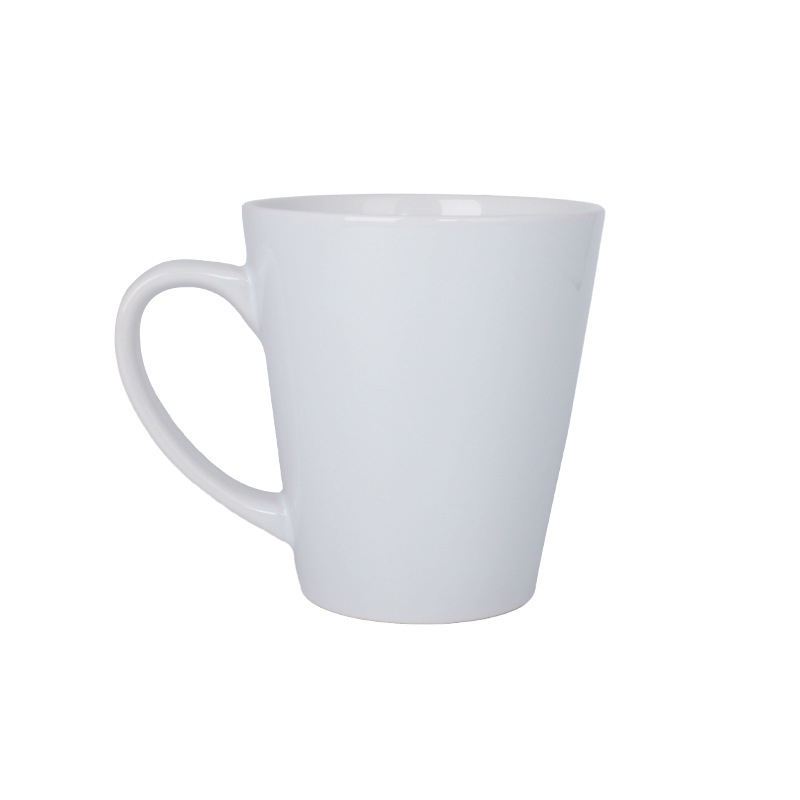
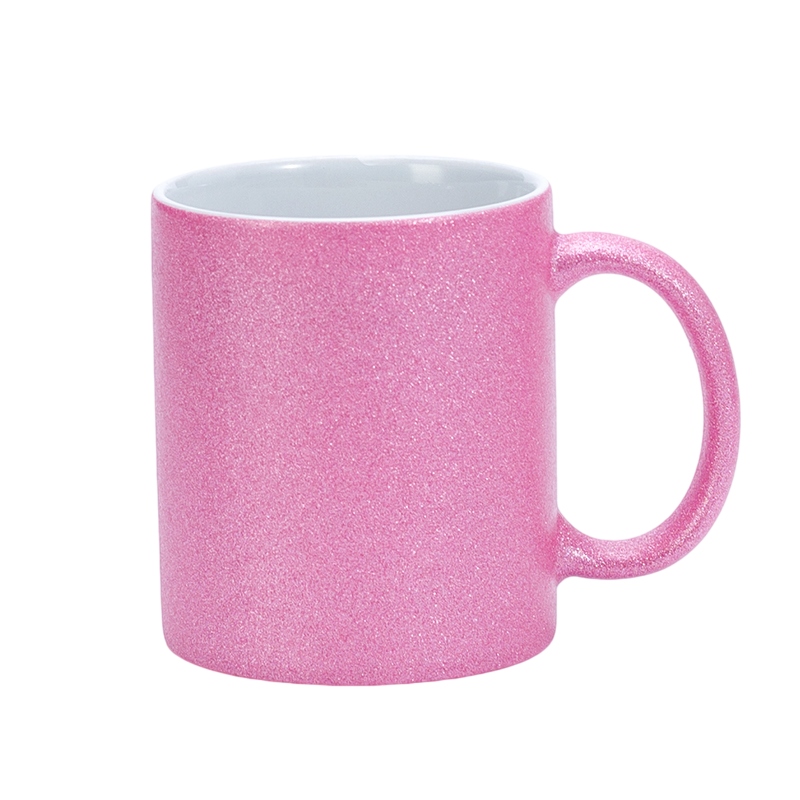
Products in this guide: 12oz Blank Sublimation Latte Mug · Heart Handle Sublimation Mug
The gap is not usually about the factory. It is about how feedback travels. A round that produces a clear, single-direction instruction converges. A round that produces a collection of opinions produces another round.
What a round is actually for
It helps to separate the decisions a sample is meant to settle, because they do not all resolve at the same speed.
Shape and proportion. Is the taper right, is the handle the right size for the hand, does the base look heavy. These are geometry questions and they are settled by looking at a physical object.
Fired dimensions. Capacity, height, diameter, weight. These cannot be judged from a drawing and cannot be judged from an unfired sample either, because the piece shrinks in firing.
Decoration position and scale. Where the artwork sits relative to the handle, how much of the body it covers, whether it survives the curve.
Colour. Which is the hardest of the set, because a screen, a printed proof, and a fired glaze are three different things.
Surface and touch. Gloss level, the feel of the rim, the weight distribution in the hand.
Packing fit. Whether the piece sits correctly in its inner packing, and whether the assembled carton meets its dimension target.
Six groups, and they do not all need to be settled simultaneously. That is the key insight behind the two-round norm.
Why two rounds is the normal shape
The first round is a form and dimension round. It answers whether the object is the right object: proportion, capacity, handle geometry, weight class. Decoration at this stage can be indicative rather than final, because the shape may still move and decoration applied to a shape that then moves is wasted work.
The second round is a confirmation round. Shape is now fixed, so decoration, colour, surface, and packing can be assessed against a stable body. This is the round that should produce a signed master sample.
Trying to compress this into one round is possible and occasionally works, but only when the shape is already proven from a previous order. For a new shape, one round means the buyer is being asked to judge decoration and colour on a form that has not yet been approved, which is how a project ends up approving a decoration on the wrong body.
Trying to expand it beyond two happens for reasons that are almost always procedural.
The master sample guide explains how sealed references keep batches identical.
Five reasons round counts escalate
Changing too many variables at once. If round two changes the height, the handle, the glaze, and the artwork, and the result is wrong, no one can say which change caused it. The project now needs another round just to isolate the cause. One change group per round is slower per step and faster overall.
Verbal or photographic feedback. A photograph flattens gloss, distorts colour, and hides weight. Feedback that says the handle feels small, delivered by photograph, produces a guess. Feedback that says the handle span should go from a stated dimension to another stated dimension produces a change.
No single decision maker. Five stakeholders, five opinions, one sample. The factory either averages them, which satisfies no one, or picks one, which restarts the argument. A project needs one person who signs.
Reacting to feel rather than to parameters. A comment such as the rim is too sharp is a sensation. The corresponding instruction is a radius, or a chamfer dimension, or a comparison against a known reference piece. Without that translation, each round produces a new sensation rather than a resolved specification.
Discovery of a requirement late. Labelling artwork, a retail packing requirement, or a food-contact document appears in round three because it was never collected at the start. The sample was correct for a brief that turned out to be incomplete.
What a round costs
The visible cost is freight on a small parcel. The real cost is spread across several places.
There is the mould or tooling adjustment, which may be minor or may require rework. There is kiln space, because a sample occupies a load position that could have carried production. There is the calendar, which is the largest item: each round typically consumes a fixed cycle of forming, drying, decorating, firing, and transit, and those cycles do not compress because a buyer is in a hurry. And there is decision fatigue, which is real and measurable in behaviour: by round four, buyers approve things they would have rejected in round one.
That last effect is the most expensive and the least discussed. A project that runs five rounds does not usually end with a better product than one that ran two. It ends with a product that was approved by exhaustion.
How to structure feedback so rounds converge
A single feedback document per round, with four fields per comment.
- What: the specific feature, named as it appears in the specification.
- Current: what the sample shows, measured or described precisely.
- Target: what it should be, as a number, a reference, or a named comparison.
- Priority: must change, should change, or noted for next time.
The fourth field is what prevents a round from becoming unbounded. A ten-item list where everything is a must is not a priority list; it is a restart.
Two further disciplines matter. First, consolidate comments from all stakeholders into that one document, with the decision maker resolving conflicts before it is sent. Second, mark up the sample physically where possible, because a mark on the object removes ambiguity that a paragraph cannot.
The spec freeze guide explains how artwork and packing files are locked between orders.
When more than two rounds is legitimate
Three situations justify additional rounds, and it is worth naming them so that a third round is not automatically treated as failure.
A genuinely new shape with a new decoration method and a new packing format is three development tracks running at once. Expecting two rounds is optimistic. A change of body, for instance moving from earthenware to a higher-fired stoneware, changes colour response and shrinkage, and the decoration may need re-approval even if nothing about the artwork changed. And a regulated market requirement discovered mid-project can force a re-sample regardless of process quality.
In each case the additional round is a consequence of scope, not of process, and the correct response is to re-baseline the plan rather than to compress the remaining rounds.
What to put in the development plan
Five items, agreed before round one.
- A round ceiling, stated as an expectation rather than a contract term: two rounds, with a third only if a defined trigger occurs.
- The cycle time per round, from instruction to sample in hand, so that the calendar is realistic.
- The feedback format, being the four-field document, with a named owner and a stated response deadline.
- The decision maker, by name, with authority to sign the master sample.
- The complete brief, including packing, labelling, and any market documents, collected before the first sample is made.
The fifth is the one most often skipped and the one that most often causes a late round. A sample can only be right against a brief that is complete.
The honest boundary
None of this removes the possibility of a bad sample. A glaze can fire differently from the trial, a mould can wear between rounds, and a hand-applied decoration will always carry variation. What the structure does is ensure that each round produces a decision rather than a discussion, and that the number of rounds is set by the number of open questions rather than by the number of people with an opinion.
Related Products
Explore products featured in this guide:


Have questions? See our Sizes & Finishes FAQ and Ordering & Certifications FAQ.
Need a custom quote? Send an inquiry or browse our full product catalog.

