
Rework and Touch-Up: Where the Line Should Be Drawn
The Problem: A Repair Nobody Mentioned
A piece comes out of the glost firing with a pinhole, a small speck, or a print that registered badly. Throwing it away costs a firing's worth of value; repairing it costs a little labour. Every factory reworks to some degree, and almost no buyer asks about it. That silence is the problem: a well-executed repair can be genuinely invisible and entirely acceptable, while a badly-executed one — or a repair applied to a defect that should never be repaired — reaches the customer as a failure with no traceable cause.
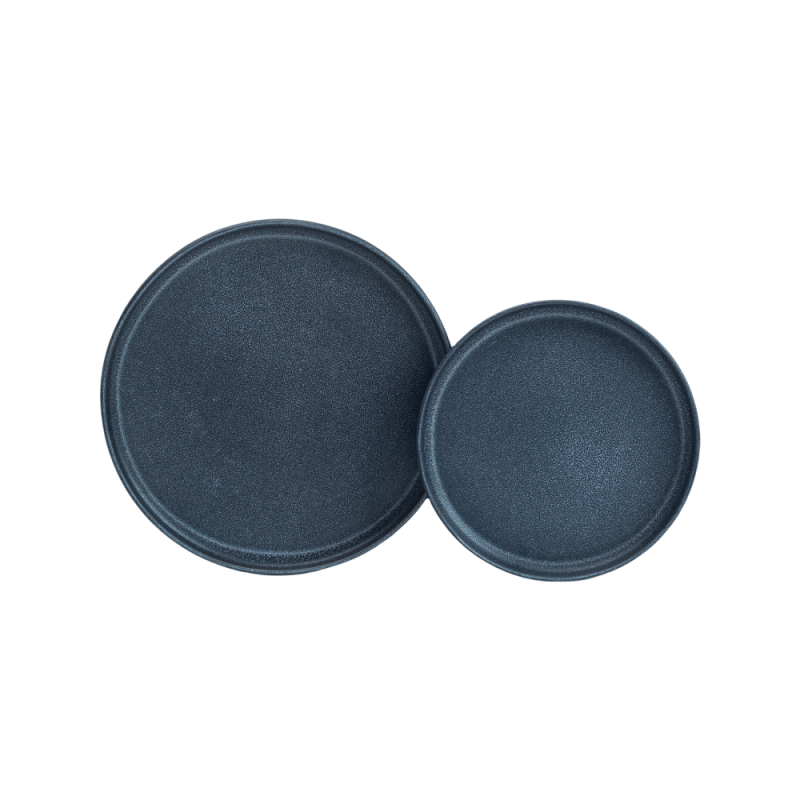
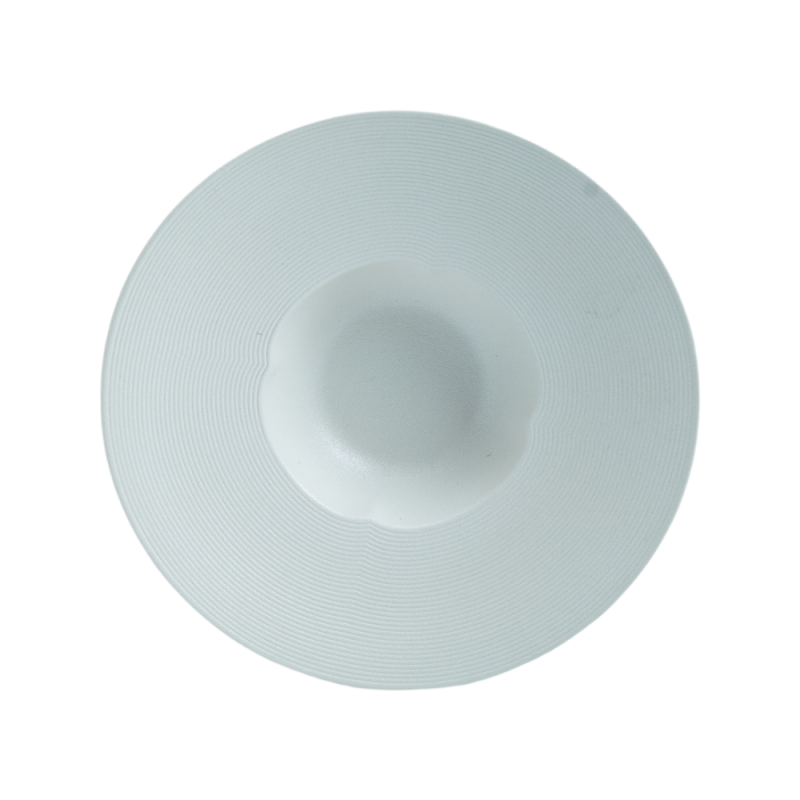
Products in this guide: Custom Printed Ceramic Mug · Reactive Glaze Dinner Plate
What Can Usually Be Reworked
Glaze surface defects. A pinhole, a small speck or a thin patch can often be refired after local touch-up or re-glazing. This is the most common form and, done well, acceptable for most volume programmes.
Decoration errors. A misregistered or under-fired print can sometimes be removed, the piece cleaned and re-decorated with a further firing.
Minor surface roughness where the surface can be re-glazed without changing the shape.
What Should Not Be Reworked
Four categories, and the line here is about function rather than appearance.
Structural defects. Cracks, even hairline, and any chip affecting the rim or a handle joint. A cracked piece that survives refiring is a piece waiting to fail with hot liquid in it.
Anything affecting food-contact integrity. A repair that leaves an unglazed or thinly glazed area on an internal surface is a hygiene question, not a cosmetic one.
Distortion. A warped base or oval rim cannot be corrected by refiring; it can only be hidden.
Defects the buyer cannot see after the repair. The distinguishing test: if a competent inspector cannot identify a repaired piece, the buyer has no way to monitor it — which is why disclosure, not detection, is the instrument.
The Risks in a Refire
Three, all real.
Colour movement. A second thermal cycle can shift the glaze tone slightly; a refired piece may be measurably different from the rest of the batch.
Dimensional change. Another firing means further shrinkage. It is small, but on a lidded item or a stacking piece it can be enough to break fit.
Weakened properties in ways that are not visible. Repeated thermal cycling is a stress; the piece that survives may be the piece that fails a thermal-shock test later.
What to Write Into the Specification
Four lines, all cheap, and they convert an unmanaged practice into a disclosed one.
- What may be reworked and what may not — allowing glaze touch-up and decoration repair, prohibiting structural repairs and rim repairs, and prohibiting any repair to an internal food-contact surface.
- A limit on repetition — one rework cycle, stated. Two or three firings on one piece is a different product.
- Disclosure — repaired pieces are counted and reported per shipment, and are not packed as first quality within first-quality cartons unless the buyer has agreed to that explicitly.
- A separate grade where the market allows it: repaired pieces sold as a defined second grade, marked and priced, rather than blending invisibly into first grade.
The spec freeze guide explains how artwork and packing files are locked between orders.
What to Ask a Supplier
Five questions.
- Do you rework, and what proportion of a typical batch?
- Which defect types do you repair, and which do you scrap?
- How many times will a piece be refired at most?
- How do you mark or record a repaired piece?
- If we asked for a no-rework programme, what would it do to the price per piece?
The Commercial Argument for Asking
Two reasons, and neither is about distrust.
A disclosed rework programme protects the buyer's customer. A repair that is known, limited and graded can be sold as a second grade; the same repair hidden inside first-grade cartons becomes a reliability problem the buyer owns.
It also protects the supplier. A factory that says "we rework glaze specks, once, and we count them" is describing a controlled process. A factory that says "we never rework" is either unusual or not answering the question.
The packaging guide explains how retail-ready and protective layers are specified together.
The Habit That Ties It Together
The habit is to decide the repair rules in advance and to require the count. Programs that do this get a lower price where rework is acceptable, and a clean first-grade programme where it is not — instead of discovering the question in a customer's hands.
Related Products
Explore products featured in this guide:


Have questions? See our Sizes & Finishes FAQ and Ordering & Certifications FAQ.
Need a custom quote? Send an inquiry or browse our full product catalog.