Qualifying a New Ceramic Factory: The Trial-Order Process That Proves a Supplier Before You Scale
A New Factory Is an Unknown Wrapped in a Price
The cheapest quote in the room is how most buyers find a new factory — and it is also how they find their worst quality problems. A new factory is an unknown: its kiln discipline, its glaze consistency, its QC standard, its honesty about delays. None of that appears in the price. The qualification process exists to convert the unknown into evidence — cheaply, before a large order turns the experiment into a disaster. This guide covers the capability pre-screen, the trial-order design, and the gates that let a trial become a core supplier.
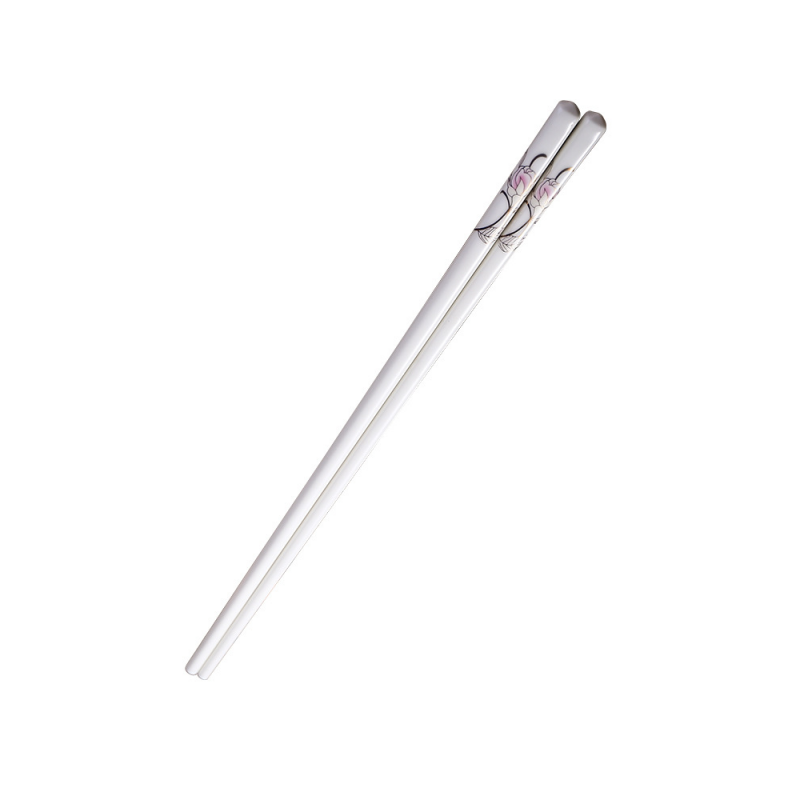
Products in this guide: Floral Pattern Chopsticks · Porcelain Kids Bowl
Step 1: The Capability Pre-Screen
Before any trial order, verify the factory is worth testing. The pre-screen covers:
- Credentials: business license, export experience, certifications (BSCI, LFGB/FDA testing capability), and references from other buyers. Ask for two reference buyers in your market — and actually contact one.
- Production capability: what they actually make (shapes, glazes, decoration methods), their monthly capacity, their kiln type and firing temperature (see our factory-capability guide for the questions).
- Facility check: a video tour or an on-site audit if the volume justifies it — the audit checklist in our BSCI guide covers the factory-level risks.
- Red flags to decline early: no verifiable history, refusal to share references, capacity far beyond their facility size, or a price far below the market (a price that low is a loss being recovered elsewhere).
Step 2: Design the Trial Order
The trial order is not a small version of the real order — it is a test that covers the critical processes. Design it to answer three questions:
- Shape and body: does the factory produce the shape correctly? Order the actual shape family you will scale (mug, plate, bowl) with your dimensions.
- Glaze and decoration: does the finish match the references? Include your intended glaze and decoration method — this is the riskiest part of ceramic production (see our color-control guide).
- Process discipline: does the factory manage sampling, inspection, packing and documentation? The trial tests the whole chain, not just the product.
The trial size: enough to be a real production run — typically 1,000–5,000 pieces or 20–30% of the projected first order — big enough to reveal process issues, small enough that a failure is contained. The trial should also use the same packaging spec and inspection standard as the real order, so the trial results transfer.
Step 3: Run the Trial with Full Verification
The trial only proves the factory if it is verified:
- Sample gate first: the approval sample (see our sampling guide) is verified before the trial runs — never start production on an unapproved sample.
- Mid-production check: for the trial, add a mid-production inspection (see our third-party inspection guide) to catch issues while the run is still small.
- Pre-shipment inspection: the finished trial is AQL-inspected against the approval sample, and the report is kept as the trial record.
- Score the trial: measure the factory against the three dimensions of our supplier scorecard — delivery, quality, responsiveness — using the trial as the first data points.
Step 4: The Gates to Scale
The trial does not automatically qualify the factory. Apply gates:
- Gate 1 — trial passes: the trial meets the AQL standard and ships on time. The factory moves to the approved list for small reorders — the next order is bigger but still below the full volume.
- Gate 2 — two clean cycles: the first reorder also passes and ships on time. The factory is now qualified as a second source for the category (see our single-source vs multi-supplier guide) — volume can be split.
- Gate 3 — consistent performance: after 3–4 clean cycles, the factory qualifies as a core or supporting supplier with a defined volume share, and its score feeds the annual review.
The discipline: never jump from a passed trial straight to full volume. The gates protect the buyer from the factory that performs once and degrades after — the most common failure pattern in new suppliers.
The Trial-Order Checklist
Before committing to a new factory trial, confirm: the pre-screen is complete (credentials, references, capability, facility); the trial design covers shape, glaze/decoration and process discipline; the trial size is contained (1,000–5,000 pieces) with the real packaging and inspection standard; the verification chain is booked (sample gate, mid-production, pre-shipment); and the gates to scale are agreed (small reorder → second source → core). A new factory is a risk — the qualification process is how the risk becomes evidence, and evidence is what a supplier base is built on.
When the decision moves to a bulk order, our bulk ceramic mug manufacturer page covers MOQ, decoration methods and certification in one place.
"Qualification-Ready Ceramic Programs"
Explore products featured in this guide:

Have questions? See our Sizes & Finishes FAQ and Ordering & Certifications FAQ.
Need a custom quote? Send an inquiry or browse our full product catalog.