
Print Registration Tolerance: When a Logo Moves a Millimetre
The Problem: A Curved Surface That Shrinks
A logo printed on paper lands where the file says. A logo printed on a mug lands on a curved surface that shrinks during firing, positioned by a screen, a plate or a decal that a person or a machine has to align. The result is that position varies — always. The commercial question is not whether it varies, but by how much, measured from what, and judged how.
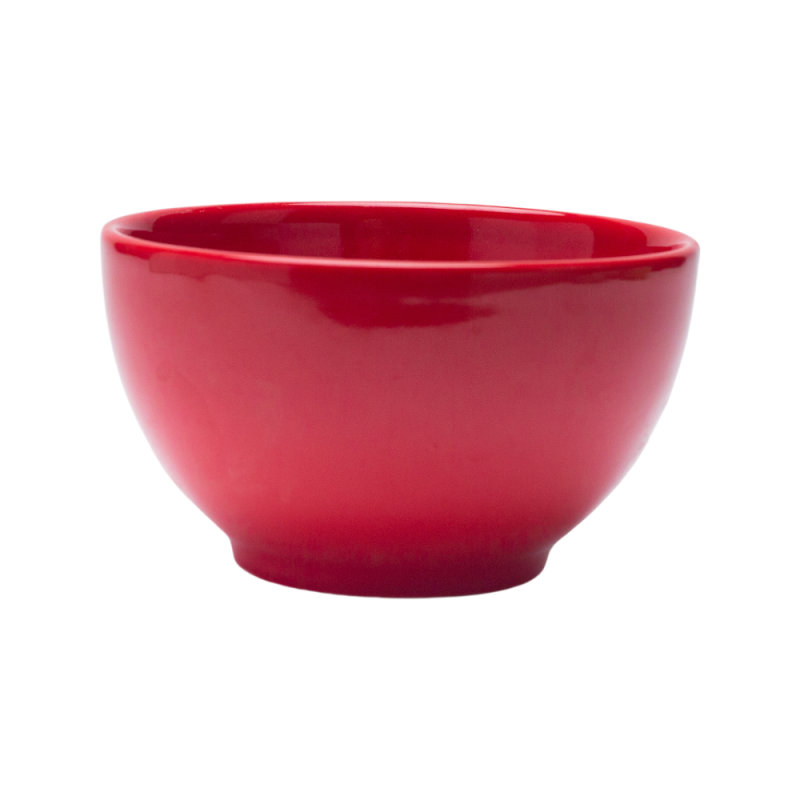
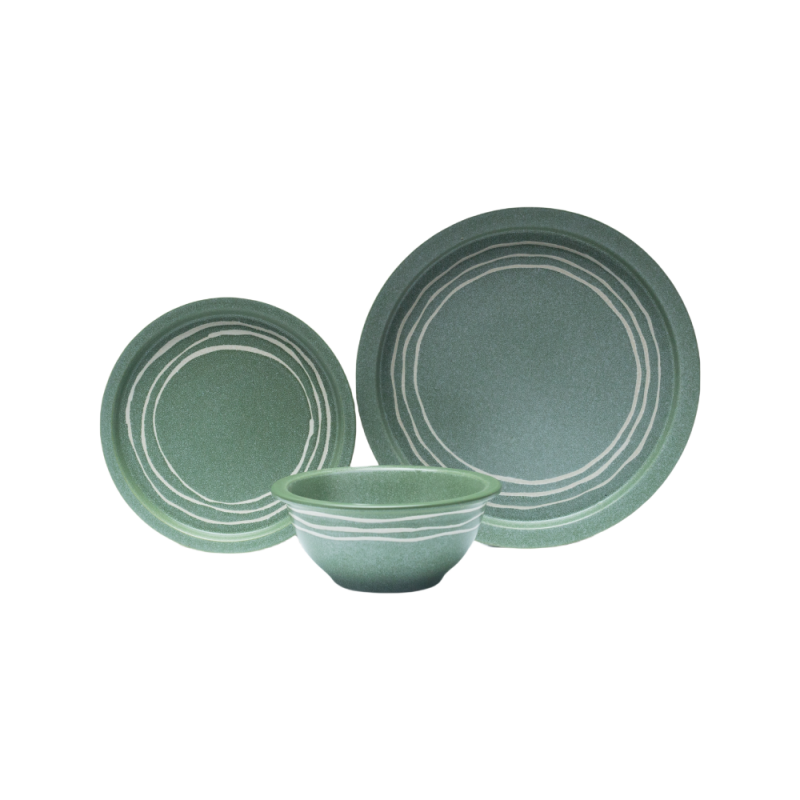
Products in this guide: Vibrant Glazed Ceramic Bowl · Handcrafted Green Stoneware 3-Piece Set
The Three Tolerances That Matter
Position tolerance relative to a reference. The only workable way to specify where a logo goes is to name a reference feature — the centre line of the handle, or the rim edge — and give a distance from it, with a tolerance. "Centred on the body" is not a specification; "centred on the handle axis within ±3 mm" is.
Colour-to-colour registration. Where a design uses two or more printed colours, registration is the alignment between them. It is typically tighter than position tolerance, because a layer printed out of register is visible as a halo or a gap on artwork with outlines.
Print-area boundary and clearance. Where a print must stop — before the rim, above the base, clear of the handle — the boundary also needs a tolerance, because a print that runs into the rim looks like a defect even when everything else is correct.
Why Position Moves
Four mechanisms, and it is worth naming them because each has a different remedy:
- Alignment of the screen, plate or decal — set by an operator or a fixture, and the first place to add a gauge.
- Placement by hand or by machine — hand-applied decals vary more; machine placement with a fixture varies less and costs more to set up.
- Firing shrinkage — ceramic shrinks during firing, and shrinkage is not perfectly uniform across a curved body, so a print applied "straight" on greenware can end up slightly rotated.
- Curvature distortion — a flat artwork wrapped onto a cylinder compresses at the edges, which changes the apparent position of elements near the ends of a wrap.
What to Write Into the Order
The reference. Name the feature the tolerance is measured from, and state the measurement method: from the handle centre line, measured on the outside surface, with the mug standing upright.
The numbers. Position tolerance in millimetres, colour-to-colour registration in millimetres, and the print-area boundary with its clearance from the rim and the handle.
The acceptance method. How a batch is judged: a gauge or template (a transparent overlay, a printed jig) or visual comparison against the approved sample under a stated light. A gauge is more objective and cheap to make — and it is the single most useful artefact to request, because it turns a discussion into a yes-or-no.
The artwork allowance. Artwork supplied with bleed and clearance built in avoids the most common design failure: a wrap that is correct in the file but too tight on the mug, so the tolerance squeezes the design.
Judging It on Arrival
Two checks catch most issues without a laboratory: a template overlay on a sample from the box, and a handle-alignment check — standing the mug up and sighting the logo against the handle. Both take seconds per piece and give the buyer a defensible basis for a claim, or the confidence to accept the batch.
Where the programme is large, the same checks can be written into the incoming inspection routine so that marginal batches are identified before they reach the buyer's own customer.
Our <a href="https://www.storiwareceramicmugs.com/products2147420/Custom-Ceramic-Mugs-Cups.htm">ceramic mugs and cups</a> range is quoted with a position tolerance and a reference feature, and <a href="https://www.storiwareceramicmugs.com/oid1757203/The-Custom-Mug-Programme-Buyer-Guides-by-Decision.htm">the custom mug programme guides</a> collect the related decisions on artwork and sampling. To fix a tolerance for a specific artwork, <a href="/contact-us.htm">send the design and the intended placement</a>, and see the <a href="https://www.storiwareceramicmugs.com/oid1756307/Custom-Ceramic-Mugs-Bulk-Order-Factory-Direct-from-China.htm">bulk order programme</a> for how sampling and production fit together.
The spec freeze guide explains how artwork and packing files are locked between orders.
What to Put in the Order
- A named reference feature, with the measurement method.
- Position tolerance in millimetres, from that reference.
- Colour-to-colour registration tolerance, where the design has multiple colours.
- Print-area boundary with clearance from rim and handle.
- An acceptance method — gauge or template, plus the viewing light.
- Artwork with bleed and clearance, so the tolerance has room to work.
The packaging guide explains how retail-ready and protective layers are specified together.
The Habit That Ties It Together
The habit is to specify print position the way you specify capacity: a number, a tolerance and a reference. Buyers who do this stop arguing about whether a batch is acceptable and start measuring it.
Related Products
Explore products featured in this guide:

Have questions? See our Sizes & Finishes FAQ and Ordering & Certifications FAQ.
Need a custom quote? Send an inquiry or browse our full product catalog.

