Mug Handle Design: Comfort, Durability & Style
Mug Handle Design: Comfort, Durability & Style
Ask a mug user what they remember about a cup and they will say the color or the print. Ask them what they notice first in daily use, and the honest answer is the handle. It is the part you touch every single time, the part that determines whether the mug feels good or annoying.
For buyers designing custom mugs, the handle is a decision that gets far too little attention. It affects ergonomics, durability, packing, and — increasingly — the look that sells the mug in photos. This guide covers what matters in handle design.
Why the Handle Deserves More Thought
A mug handle is load-bearing, heat-adjacent, and constantly handled. It takes more abuse than almost any other part of the mug:
- It carries the full weight of a hot, full cup.
- It gets gripped with different hand sizes and grip styles.
- It absorbs thermal shock when the mug is hot and the handle is not.
- It is the most common point of breakage during handling, packing, and shipping.
A handle that is too small, too thin, or poorly attached ruins an otherwise good mug. And in the current market, a distinctive handle can be the feature that makes your mug stand out.
The Basic Handle Shapes
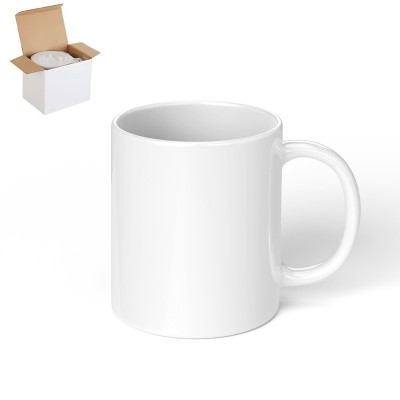
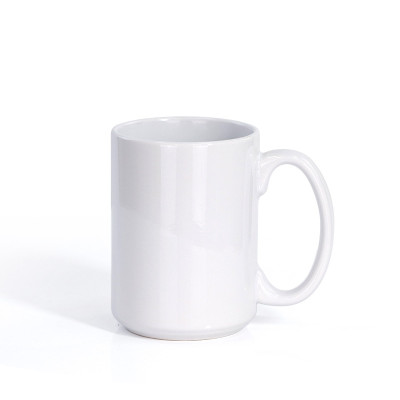
The classic "C" handle. The standard loop found on most mugs. It works, it is familiar, and it is cheap to produce. The design question is how thick, how deep, and how wide the loop should be.
The "D" handle. A flat-sided loop that follows the mug body more closely. Common on dinnerware and stacking designs because it stays out of the way.
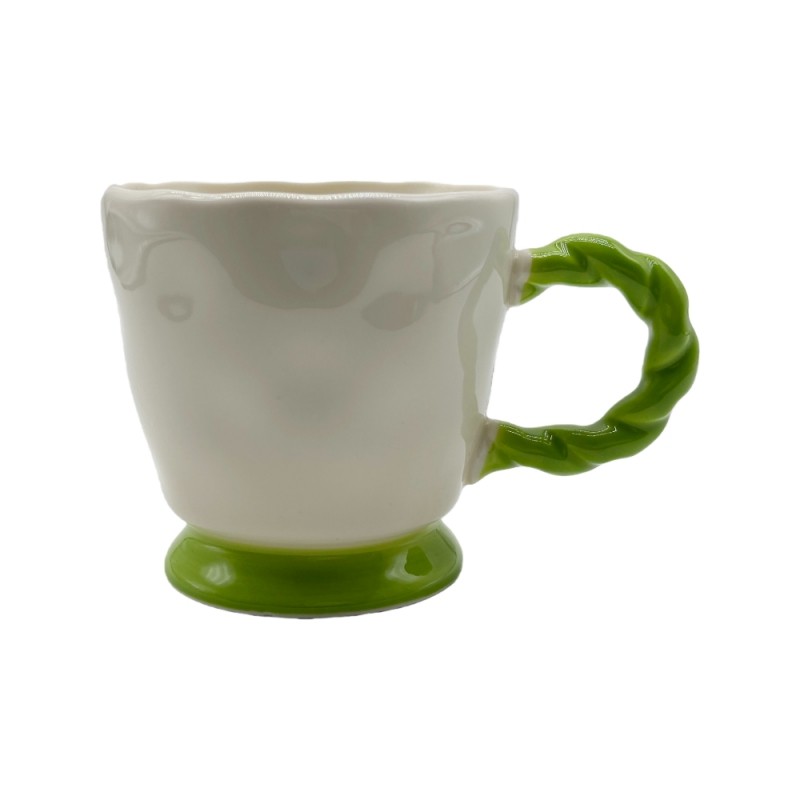
The sculpted handle. Twisted, ribbed, knuckled, or shaped handles that double as a design statement. These are trending in the artisan and home-café market.
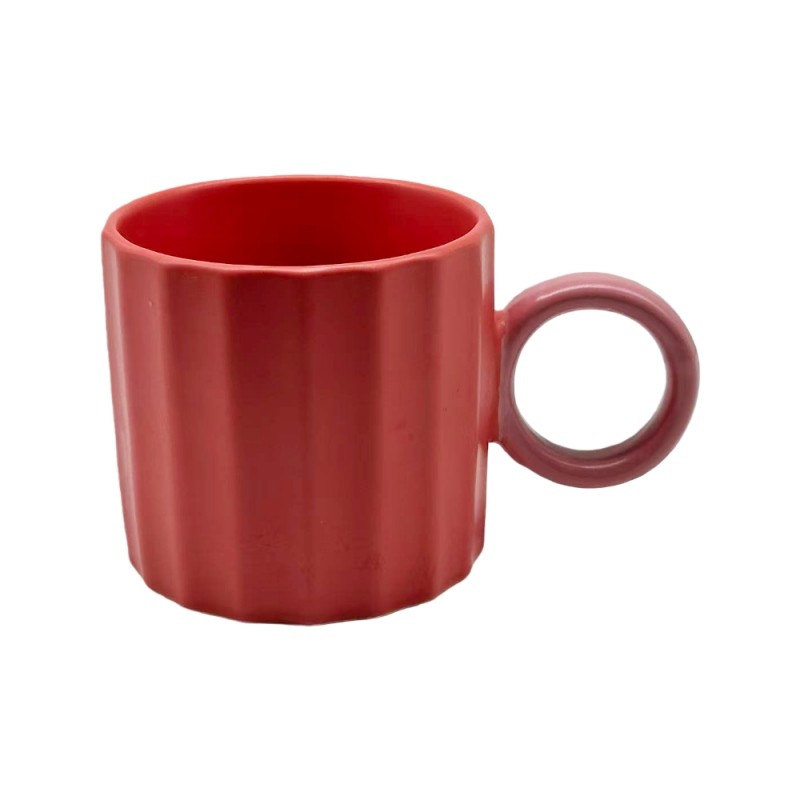
The oversized or comfort handle. A larger loop with a thicker grip, designed for two fingers or a full hand. "Hug" mugs and larger-capacity mugs use these to feel substantial.
The integrated handle. Moulded as part of the body rather than attached. Common in some mass-production lines, it can be very strong but limits shape variety.
The handleless design. Some modern lines drop the handle entirely and rely on thick walls and a rim that insulates. These are not for everyone, but they have a loyal following in the artisan market.
What Makes a Handle Comfortable
Comfort is subjective, but it follows predictable rules:
- Loop width. The hole should fit at least two fingers comfortably — typically 15-20mm of interior width for standard mugs. Too narrow and the mug is uncomfortable; too wide and it looks awkward.
- Grip thickness. The bar you hold should be thick enough to feel solid (roughly 8-12mm) but not chunky. Thinner handles dig into fingers on a full mug.
- Weight distribution. A full mug is heavy, so the handle must balance the load. The attachment points should be positioned so the cup hangs naturally, not tips forward.
- Finger clearance. Between the handle and the mug wall there must be enough room for fingertips, especially on deep mugs. Shallow clearance makes the mug hard to hold.
What Makes a Handle Durable
Durability is where handle design failures show up — often after the order has shipped.
- Attachment strength. On most mugs, the handle is joined to the body as a separate piece of clay, then fused in firing. Weak joins crack or separate under repeated use. The join should be generous, not a thin weld.
- Material thickness. A thin handle breaks. The bar needs enough cross-section to carry the weight of a full cup with a safety margin.
- Thermal behavior. The handle should be shaped so that hot liquid does not make it painful to hold. Some designs put the handle too close to the body, where it picks up heat.
- Glaze coverage. The join between handle and body is often where glaze thins. Check that the handle is fully glazed, since unglazed areas stain and weaken.
Handle Design Trends in 2026
If you are designing a line that needs to feel current, these are the handle directions buyers and consumers are responding to:
| Trend | What it looks like | Best suited to |
|---|---|---|
| Sculpted / twisted handles | Ribbed, twisted, or hand-shaped loops | Artisan lines, gift mugs |
| Oversized comfort grips | Thick, generous loops | Hug mugs, large capacities |
| Geometric handles | Square, angular loops | Modern minimal brands |
| Double handles | Two small loops, one each side | Sharing / tea bowls |
| Integrated handles | Moulded flush with body | Stackable sets, dinnerware |
| Natural / organic handles | Slightly irregular, hand-thrown look | Home-café aesthetic |
How to Specify the Right Handle
When you brief a factory or manufacturer about your mug, do not just send a photo. Specify the handle precisely:
- Draw the shape. Give a side-view and top-view sketch of the handle with dimensions.
- State the interior clearance. "At least X mm between handle and body" is the number that protects finger comfort.
- State the grip thickness. "Handle bar Y mm thick" sets the durability bar.
- Show the join. Mark where the handle meets the body and how thick the join should be.
- Request a sample in hand. The only true test of comfort is holding a sample. Ask for one with the exact handle design before production.
Working with Storiware Ceramic Mugs
Storiware Ceramic Mugs produces mugs with a wide range of handle designs — from classic loops to twisted, sculpted, and oversized comfort handles — with custom handle development for your brand.
When you work with us:
- Our design team refines handle shapes for comfort and manufacturability
- You receive samples to test the handle in hand before bulk production
- We check join strength and glaze coverage at every handle point in QC
- We advise on handle design for stackable sets and packing efficiency
Summary
The handle is the most-used part of a mug and, in the current market, a real opportunity to stand out. Get the basics right — comfortable loop width, solid grip thickness, strong join — and then use the handle as a design feature.
Specify handles precisely, test them in hand with samples, and choose a manufacturer that understands both ergonomics and durability. A great handle makes a mug that people reach for again and again.
Featured Mugs from Storiware Ceramic Mugs
Explore products featured in this guide:
Need a custom quote? Send an inquiry or browse our full product catalog.