Managing Reactive Glazes: Controlling Variation Without Killing It
The Problem: A Feature That Becomes a Defect
Reactive glazes — the class that includes colour-breaking, speckled, drip and matte/gloss effects — are engineered so that the surface changes across a piece and between pieces. Buyers choose them deliberately: the variation is what makes the product look craft-made rather than industrial. The difficulty arrives later, when a shipment is inspected. A buyer who approved "variation" now has to decide whether a particular carton is too variable, and without a defined range the decision becomes a matter of taste, argued after the goods have crossed an ocean.
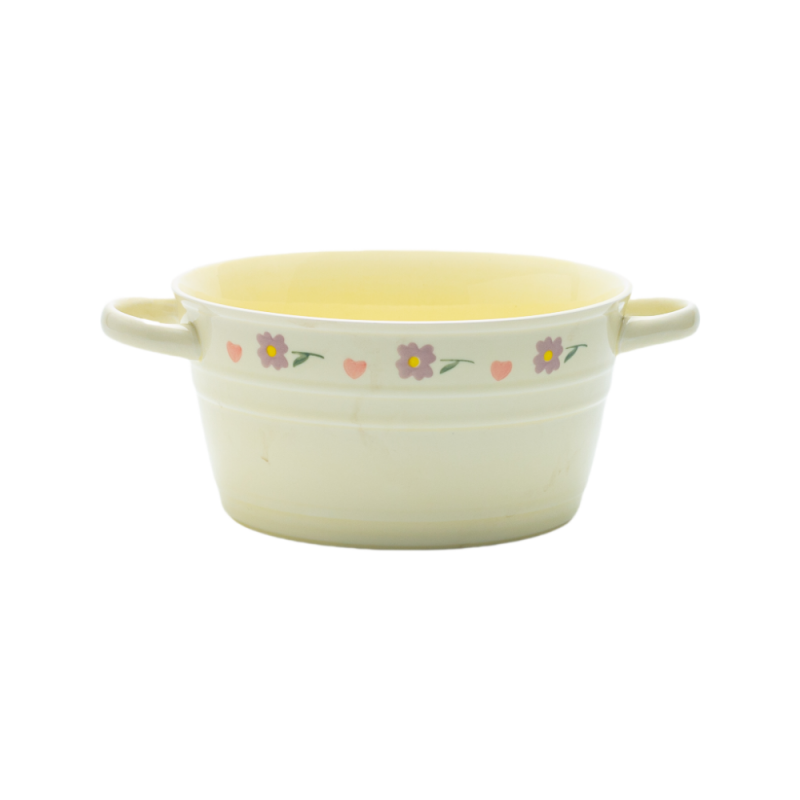
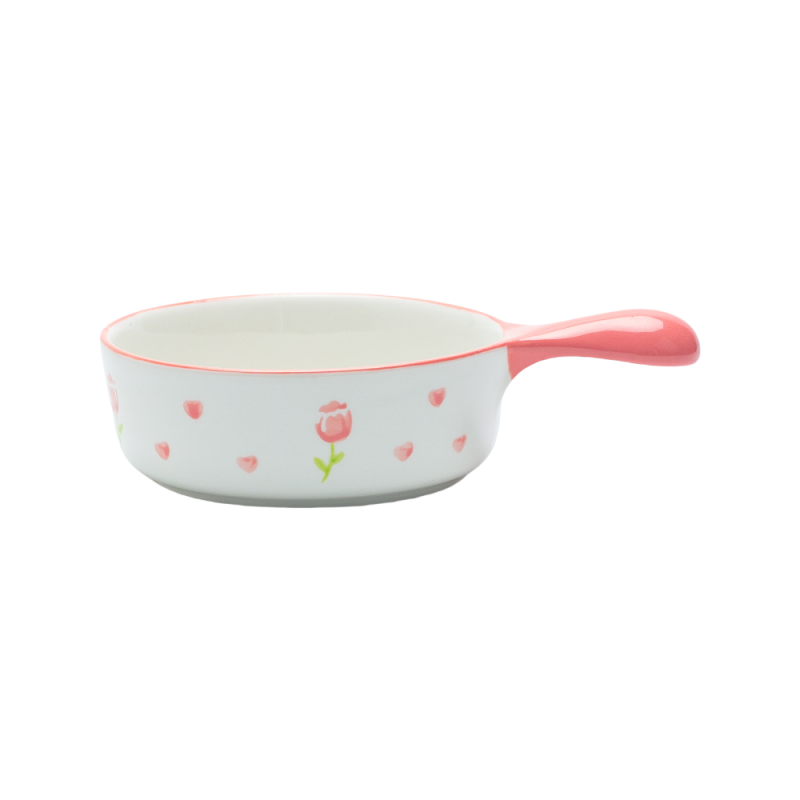
Products in this guide: Vintage Floral Yellow Glazed Stoneware Bowl & Plate Set · Cute Ceramic Bowl with Handle
There is a second, quieter problem. Some factories respond to a complaint about variation by trying to make the glaze uniform — which fails, because a reactive glaze cannot be made uniform, and the attempt damages yield and colour.
How Variation Is Actually Controlled
Four variables produce the variation, and each can be held within a range rather than a point.
The glaze recipe. The reactive effect comes from specific materials — a colourant that breaks, an oxide that speckles, a high surface tension that causes crawling or beading. Once the recipe is fixed, it must be treated as a named, change-controlled item: a substitution produces a different effect, not a cheaper version of the same one.
Application thickness. This is the largest controllable factor. A thicker coat deepens the break and the drip; a thinner coat makes the same glaze look flatter. Dip time, slurry gravity and withdrawal speed therefore become the tools that hold the effect in range.
Firing position and cycle. Position in the kiln changes temperature and atmosphere, and reactive glazes are sensitive to both. Pieces near a door and pieces in the centre of a load can differ visibly — which is why a factory that knows this places reactive-glaze production in the most uniform zone it has, and why the same item fired in two different kilns will not match.
Pieces per firing and kiln loading. Density affects airflow and the local atmosphere; a load that is too tight produces a darker, flatter surface on the inner pieces.
The Pair-Standard Method
The practical instrument is not one standard piece but two: a sealed piece representing the lightest/least-broken end of the acceptable range and one representing the darkest/most-affected end. Production is compared against both.
A piece that falls between them is acceptable, regardless of which end it is closer to. A piece more extreme than either is out of range, and that is a decision that can be made by an inspector without a designer's eye — which is exactly what makes it usable at scale. The pair should be fired from the same production route as the goods, sealed, dated and held by both parties.
Why two standards and not one. With a single reference, every variation reads as a deviation. With a pair, the range is defined and the discussion moves from taste to comparison.
Set Matching
Where pieces are sold as a set — two mugs, a dinnerware set, a matched pair — an additional rule is needed: pieces within one set should sit close to each other in tone, even though the range as a whole is acceptable. The practical version is to sort production into two or three tone families and pack sets within a family rather than across them. The specification line is one sentence: *sets are matched within a defined tone band; a set may not contain pieces from opposite ends of the range.*
Photography, and Where It Misleads
Reactive glazes photograph badly and inconsistently. The effect depends on the angle of the light, the colour temperature and the surface finish, and a phone photograph flattens exactly the variation the glaze is sold on. Three practical rules: approve with physical pieces, never with photographs alone; where photographs are necessary, use the same setup for the standard and for the production sample; and show at least two angles per piece, because one angle hides the break.
What to Write Into the Specification
Five lines.
- The glaze named, with a change-control clause: any change of recipe, colourant supplier or frit batch requires re-approval.
- The pair standards: the light and dark ends, sealed and dated, held by both parties.
- The acceptance rule: production between the pair is acceptable; production beyond either is out of range.
- The set-matching rule, where sets are involved.
- A retained standard per production batch, so that a later question can be answered with a physical comparison rather than a memory.
The spec freeze guide explains how artwork and packing files are locked between orders.
What to Ask a Supplier
Five questions.
- Which variables do you control to hold this glaze in range — thickness, firing position, both?
- Are there two sealed standards for this glaze, and can I hold copies?
- How much does the range shift between batches, and what causes the shift?
- Where reactive items are sold in sets, how do you match them?
- What happened the last time a buyer said a batch was too variable?
The Habit That Ties It Together
The habit is to define the range rather than the point. Programs that do this keep the feature that sells the product — and stop arguing about taste after the container has sailed.
Related Products
Explore products featured in this guide:


Have questions? See our Sizes & Finishes FAQ and Ordering & Certifications FAQ.
Need a custom quote? Send an inquiry or browse our full product catalog.