Glaze Preparation and Application: The Hidden Variable Behind Half the Defects
The Problem: A Recipe Is Not a Result
Ask a factory what glaze it uses and you will receive a recipe. Ask why the same recipe produced a shipment with pinholes in March and none in June, and the answer is usually not in the recipe at all — it is in the slurry: how finely it was milled, how much water it contains, how thick it is, how long the piece was dipped, and how it dried. These are the variables that decide the surface a customer actually touches, and they are almost never written into the specification that the buyer receives.
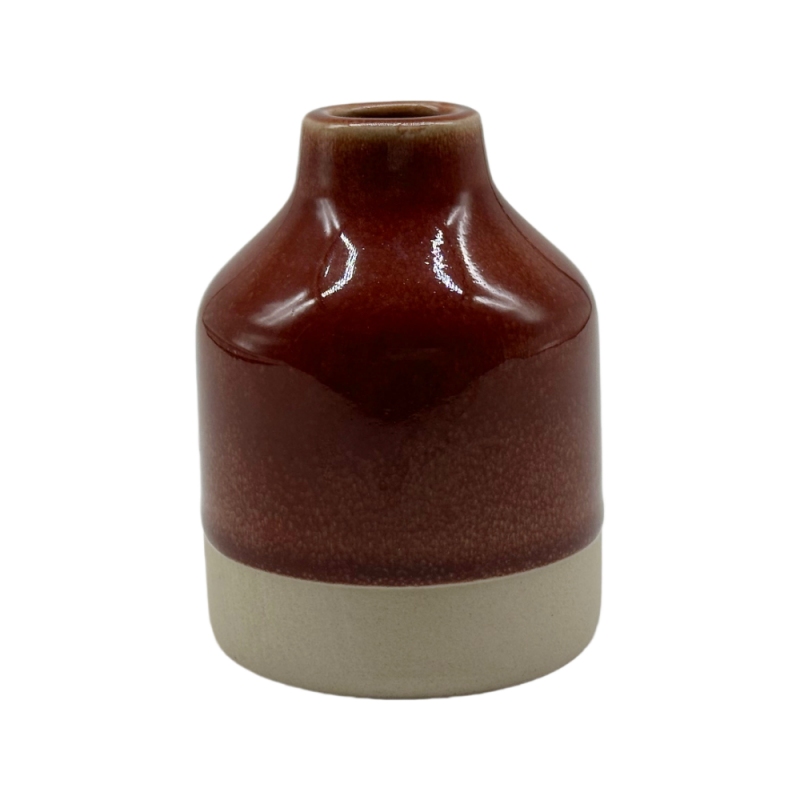
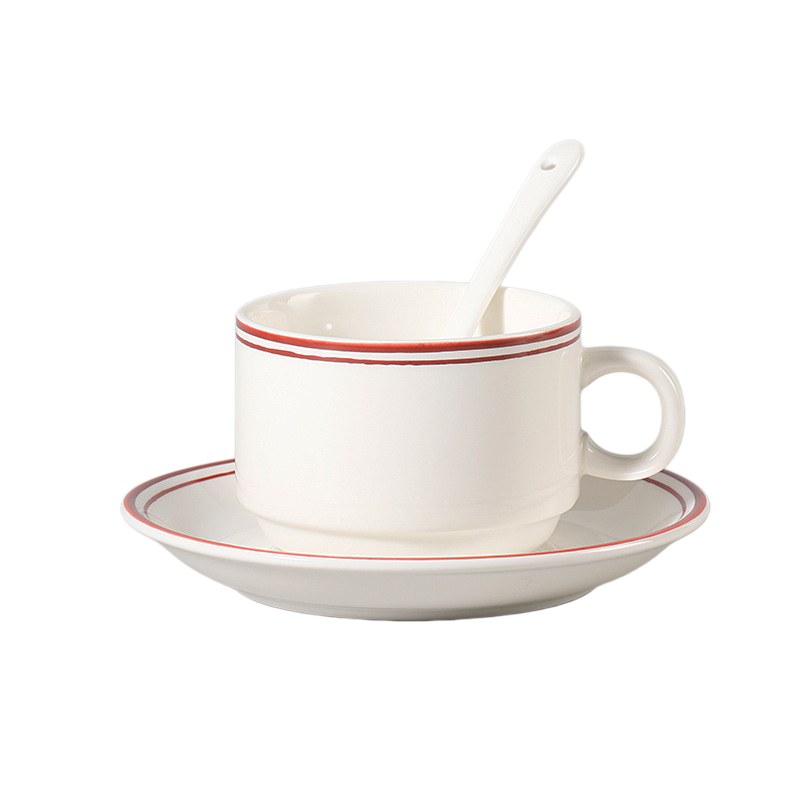
Products in this guide: Small Ceramic Gift Cup with Heart Pattern – “Lieblingsmensch” Design · Modern Ceramic Planter and Vase Set – Glazed Terracotta and Beige Accent
This matters commercially because glaze faults are the hardest group of defects to argue about. A pinhole, a bare patch or a colour that drifts across one shipment can all pass a visual inspection and then generate a market complaint — and none of them can be traced without records that most factories do not keep.
The Four Controls
Milling. The glaze is ground to a target particle size, which decides how it melts, how it flows, and how smooth the fired surface is. Under-milled glaze melts less completely, giving a duller or rougher surface and more pinholes; over-milling can cause the surface to craze or the slurry to settle differently. The practical control is a sieve residue test: a measured quantity of slurry passed through a fine screen, with the residue weighed or inspected. It takes minutes and it is the difference between a controlled glaze and an accident.
Specific gravity. The density of the slurry decides how much solid material is deposited on the piece in a given time. Thicker (higher gravity) deposits more glaze; thinner deposits less. It is measured with a hydrometer in seconds, and it is the single most practical control in the whole glazing area — a handful of points of gravity change is enough to move from an under-glazed surface with bare patches to an over-glazed one that runs and pools.
Viscosity and rheology. Two slurries of identical gravity can behave differently: one drains evenly, the other clings and leaves drip marks. Viscosity is adjusted with water and with small additions, and it is measured with a flow cup — the time for a defined volume to drain through a defined hole. The buyer's interest is simple: viscosity decides evenness, and evenness is what a customer sees.
Application. Three methods with different characteristics. Dipping is the most common for mugs and bowls: the piece is immersed for a defined time and withdrawn at a defined speed, and both variables affect the coat. Spraying gives more control on large or complex forms but depends on operator skill and gun settings, and produces overspray and rebound if done badly. Pouring is used for interiors or where a dip is impractical. In every method, the variables that matter are time, withdrawal, and drying before firing — and in every method, the failure mode of an inconsistent cycle is a visible band or a thin patch.
The Faults Each One Explains
Mapping faults to controls is what makes this useful rather than theoretical. Eight pairings cover most of what a buyer will see.
- Pinholes — milling (particle size), specific gravity, firing cycle, dust contamination.
- Specking and dark spots — milling, contamination in the slurry or carried over from kiln furniture.
- Bare patches and thin areas — gravity too low, dipping time too short, mould release residue on the surface.
- Running, drips and pooling — gravity too high, viscosity too low, uneven drying, a coat applied too thickly.
- Orange peel and a rough surface — under-milling, spraying technique, or drying that is too rapid.
- Colour variation across one shipment — gravity and thickness variation, kiln position, or a change of glaze batch.
- Crawling, where the glaze pulls apart — contamination by oil, dust or grease, or poor adhesion on a dusty surface.
- Crazing — glaze-body fit rather than preparation, although excessive thickness makes it worse.
The Records Worth Requiring
Four figures, recorded per production batch. A factory that keeps them can answer a complaint with data rather than an opinion.
- Specific gravity of the slurry, checked at defined intervals through the shift — not once at the start.
- Flow time (viscosity), with the cup and volume named.
- Sieve residue at the milling stage, with the screen used.
- Dipping time and drying interval before firing, per item.
Where the buyer wants more, two additions are worth asking for: the glaze thickness checked on a fired sample (by weight gain on a known piece, or by comparing against a retained standard), and a retained fired standard per batch — which is the same master-sample discipline that protects colour and fit.
Why This Belongs in a Purchase Specification
Three reasons, none of them technical.
It prevents the argument. A buyer holding gravity, flow time and dip records can ask a specific question; a buyer holding none can only say the surface looks wrong.
It protects the change. A new glaze supplier, a reformulation for cost, a change of ball mill or a different water source all move these variables. Written controls make a change visible rather than silent.
It links to the price. A glaze that is consistently at the right thickness wastes no material and produces fewer rejects. Both savings appear in the unit price — which is why a supplier running these controls can often quote lower than one who does not.
The spec freeze guide explains how artwork and packing files are locked between orders.
What to Ask a Supplier
Six questions, all answerable in one conversation.
- What specific gravity do you run on this glaze, and how often is it checked during a shift?
- How do you verify milling — do you keep sieve residue records?
- How is the piece applied: dipped, sprayed, poured; and what is the time and the drying interval?
- What records do you keep per batch, and can I see the last three?
- How do you detect an under-glazed or over-glazed batch before firing?
- If we ask for a brighter or deeper colour, what changes in preparation rather than in the recipe?
The Habit That Ties It Together
The habit is to treat the slurry as part of the specification rather than as a factory matter. Programs that do this receive surfaces that are even, repeatable and defensible — and stop explaining pinholes that nobody can trace.
Related Products
Explore products featured in this guide:

Have questions? See our Sizes & Finishes FAQ and Ordering & Certifications FAQ.
Need a custom quote? Send an inquiry or browse our full product catalog.