Full Container or LCL? The Ceramic Volume Decision That Shapes Your Landed Cost
The Box Within the Box
Every ceramic order travels in two units: the carton and the container. The carton is a packaging decision (see our packaging-engineering guide), and the container is a volume decision - full container load (FCL) or less than container load (LCL) - and that decision shapes the landed cost more than any single freight line on the quotation. This guide covers the FCL/LCL cost math, the seasonality that changes the answer, the breakage difference, and the planning rules that keep the decision on the buyer's side instead of the forwarder's.
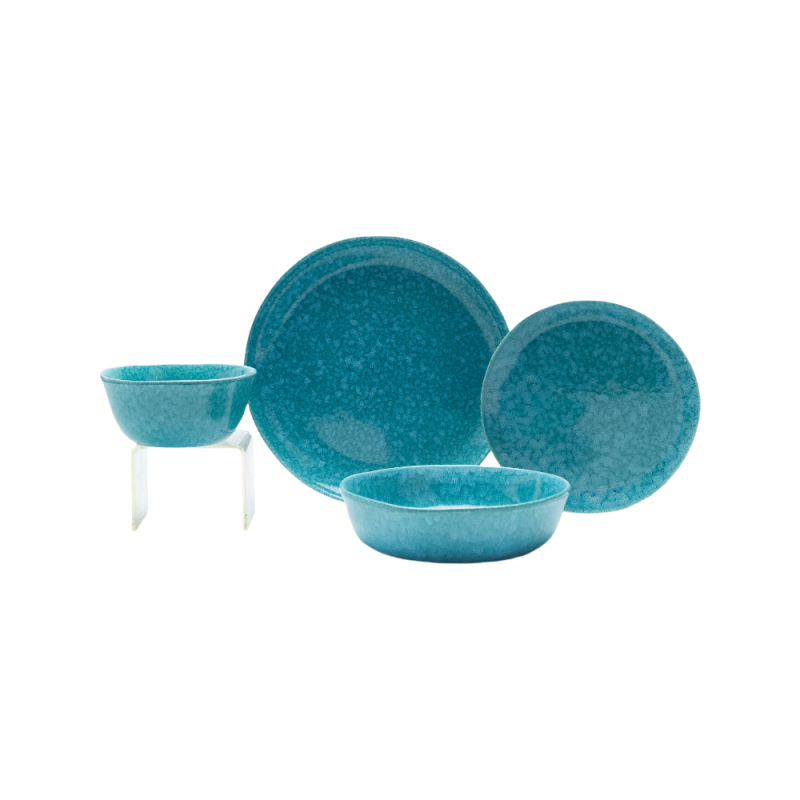
Products in this guide: 4-Piece Crystalline Glazed Dinnerware Set · Ceramic Dinnerware Plate
The FCL/LCL Cost Math
The simple version: an FCL pays a fixed rate for the whole box, an LCL pays per cubic meter, and the crossover point is where the LCL volume charge equals the FCL rate - usually somewhere around two-thirds of a container. Below the crossover, LCL is cheaper; above it, FCL is cheaper and the extra space is essentially free. But the real math adds three layers: the FCL includes the delivery to your door while LCL adds the destination handling and the de-consolidation fee; the LCL price per cubic meter is quoted on the chargeable volume - the actual volume or the weight-equivalent, whichever is bigger (see our shipping guide for the transport math); and the FCL unit cost falls with volume while the LCL unit cost barely moves, so the bigger the order, the more the FCL wins. The rule: run the comparison on the chargeable volume with all the fees, not on the headline rate.
Seasonality and the Breakage Difference
The answer changes with the calendar. In the peak season - the Q3 and Q4 windows before Christmas and the spring sell-in (see our peak-logistics and Q4 guides) - the LCL rates rise faster than the FCL rates and the space gets scarce, so the FCL margin widens; in the off-season, the LCL rates soften and small volumes travel cheaply (see our off-season guide). The second difference is breakage: an LCL container is packed and unpacked, the cartons move between warehouses and trucks, and every handling step is a chance for a drop - the breakage allowance for LCL ceramic is higher, and the claim follows the carrier's handling (see our breakage and claims guides). The FCL loads once, seals once and handles less. The rule: the smaller the order and the smoother the season, the more LCL works; the bigger the order and the tighter the season, the more FCL protects both the rate and the cargo.
The Volume-Planning Rules
The decision is better made at the planning stage than at the booking stage. The rules: plan the order in container units - a 20-foot container, a 40-foot container, or a repeatable LCL module - so the volume math is done once (see our cost-model guide for the unit math); consolidate the seasonal items into one container instead of spreading them across LCL shipments, because the FCL freight is a fixed cost that rewards consolidation (see our inventory and scheduling guides for the planning structure); and confirm the FCL/LCL answer with the forwarder at the quotation stage, with the chargeable volume and all the fees in writing. The buyers who decide the container at the planning stage are the buyers whose landed cost matches the quotation - and whose margins survive the season.
"Container-Friendly Ceramic Products"
Explore products featured in this guide:

Have questions? See our Sizes & Finishes FAQ and Ordering & Certifications FAQ.
Need a custom quote? Send an inquiry or browse our full product catalog.