
Firing Shrinkage: Why the Mould Is Bigger Than the Mug
The Mug Is Never the Size of the Mould
A mug that measures 85 mm across was formed by a mould that measures noticeably more. Between the two sits shrinkage: the clay loses water, the particles pack closer, and the piece contracts — first as it dries, then again in the kiln.
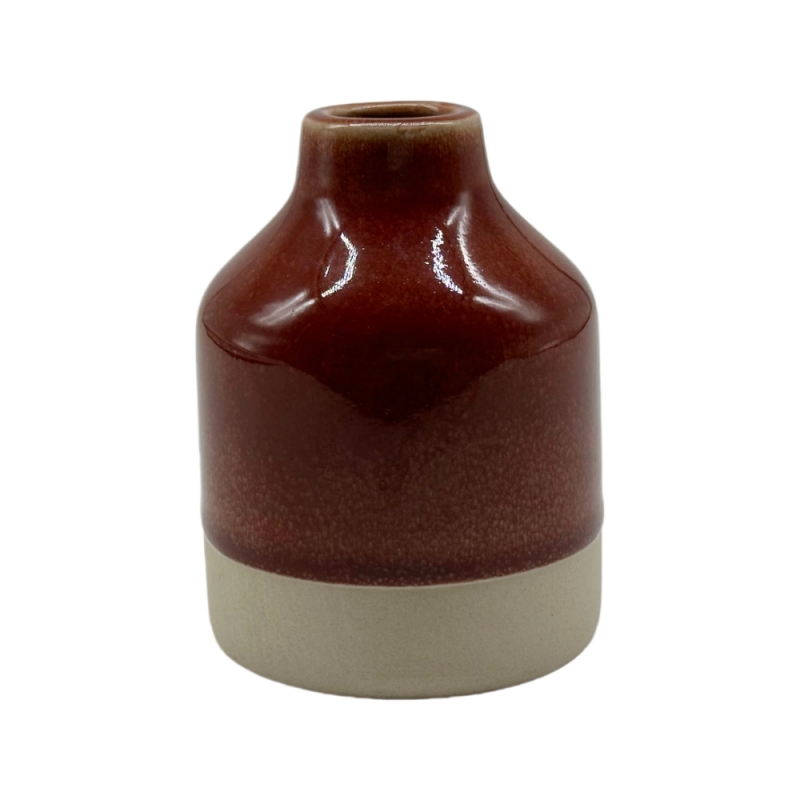
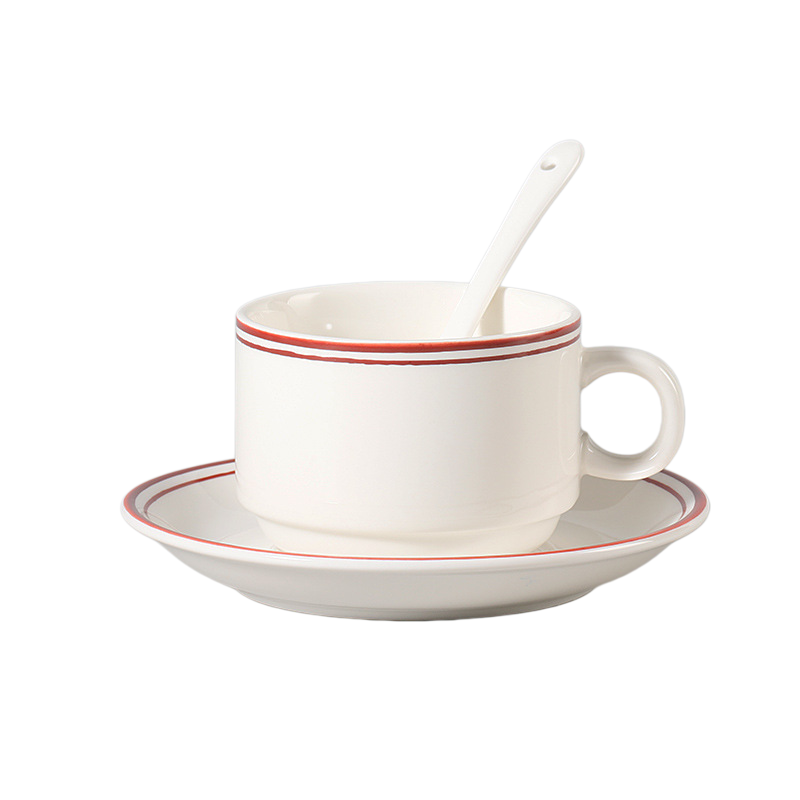
Products in this guide: Modern Ceramic Planter and Vase Set – Glazed Terracotta and Beige Accent · Custom Coffee Cup and Saucer
Every dimension a buyer puts on a drawing describes the fired piece. Everything upstream of it is compensation.
Why Shrinkage Happens Twice
- Drying shrinkage. As water leaves the formed piece, particles come closer together. This stage is large, and it is also when a piece can warp or crack if drying is uneven.
- Firing shrinkage. During sintering, particles fuse and the body densifies further. This stage is smaller but decisive, because it happens at temperatures the factory cannot correct afterwards.
The two together define how much the mould must be oversized for a given body.
What Shrinkage Depends On
- The body. A dense, high-firing body shrinks differently from a porous, low-firing one. Body formulations are adjusted partly to control this.
- Forming method. Pressing, jiggering and casting each pack particles differently, so each shrinks differently — which is why the same body cast and pressed can produce slightly different dimensions.
- Wall thickness and shape. Thin walls and tall shapes shrink less evenly; the base and the rim can move by different amounts.
- The firing curve. A higher peak or a longer soak produces more densification and therefore more shrinkage — which is one reason a curve change is a product change.
Why This Matters to a Buyer
Three practical consequences, and all three cause real disputes:
- Drawings describe fired dimensions. If a buyer quotes a supplier on the mould size, the pricing conversation becomes meaningless. Say "fired piece, as drawn" and let the factory compensate.
- Two factories, same specification, two different products. Each factory compensates shrinkage with its own body and process. The specification can be identical while the delivered dimensions differ — which is why a physical approved sample matters more than a drawing.
- First samples drift as the process settles. A new mould's first pieces are made while dimensions are still being dialled in, and a mould also wears over its life. Both effects are why a first article needs its own approval and a dimensional report, and why later production should be checked against the retained sample rather than the memory of the first run.
Shrinkage and Tolerance Together
Shrinkage is the cause; tolerance is the control. The two are specified separately and they work together:
- Shrinkage is the factory's business — it is compensated in the tooling and stated in the process specification.
- Tolerance is the buyer's requirement — the acceptable band on the fired piece, which is what an inspection actually measures.
A supplier who cannot state the body's shrinkage band for the forming method being used is a supplier who cannot predict dimensions. That is a question worth asking at quotation stage, not at delivery stage.
What to Specify
- Dimensions stated on the fired piece, per drawing, with tolerances.
- The measurement points named — where the diameter and height are taken, since a tapered wall measures differently at different heights.
- A dimensional report on the first article, before volume production is accepted.
- The retained sample as the reference for subsequent batches.
- Notification of any change to body, forming method, mould or firing curve, because each of those moves the dimensions.
- The measurement method and instrument for critical dimensions, so two parties measure the same way.
For the surrounding decisions, see <a href="https://www.storiwareceramicmugs.com/oid1757203/The-Custom-Mug-Programme-Buyer-Guides-by-Decision.htm">the custom mug programme guides</a>, which cover dimension and shape questions, and the <a href="https://www.storiwareceramicmugs.com/oid1757096/Ceramic-Quality-Inspection-Hub-AQL-Defects-Testing.htm">quality and inspection hub</a> for how dimensional checks fit into sampling. Our <a href="https://www.storiwareceramicmugs.com/products2147420/Custom-Ceramic-Mugs-Cups.htm">ceramic mugs and cups</a> range is quoted with fired dimensions and tolerances per item, and the <a href="https://www.storiwareceramicmugs.com/oid1756307/Custom-Ceramic-Mugs-Bulk-Order-Factory-Direct-from-China.htm">bulk order programme</a> explains how first-article approval and retained samples are handled. To set a dimensional specification for a new shape, <a href="/contact-us.htm">send the drawing and the measurement points</a>.
The spec freeze guide explains how artwork and packing files are locked between orders.
What to Put in the Order
- Fired dimensions with tolerances, per drawing.
- The measurement points and instrument named for critical dimensions.
- A first-article dimensional report, before volume approval.
- The retained sample as the ongoing reference.
- A change-notification clause covering body, forming method, mould and curve.
- The body's shrinkage band for the forming method, declared by the factory.
The packaging guide explains how retail-ready and protective layers are specified together.
The Habit That Ties It Together
The habit is to specify the fired piece and let the factory own the shrinkage.
Related Products
Explore products featured in this guide:
Have questions? See our Sizes & Finishes FAQ and Ordering & Certifications FAQ.
Need a custom quote? Send an inquiry or browse our full product catalog.

