
Energy Is the Line Item Nobody Quotes and Everybody Pays
Ask three factories to quote the same mug and you will get three prices. Buyers usually explain the gap with the things they can see: the quality of the clay, the thickness of the glaze, the wage level of the region. Those matter. But there is a cost line that almost never appears in a quotation and that moves more than any of them, and it is the energy consumed in firing.
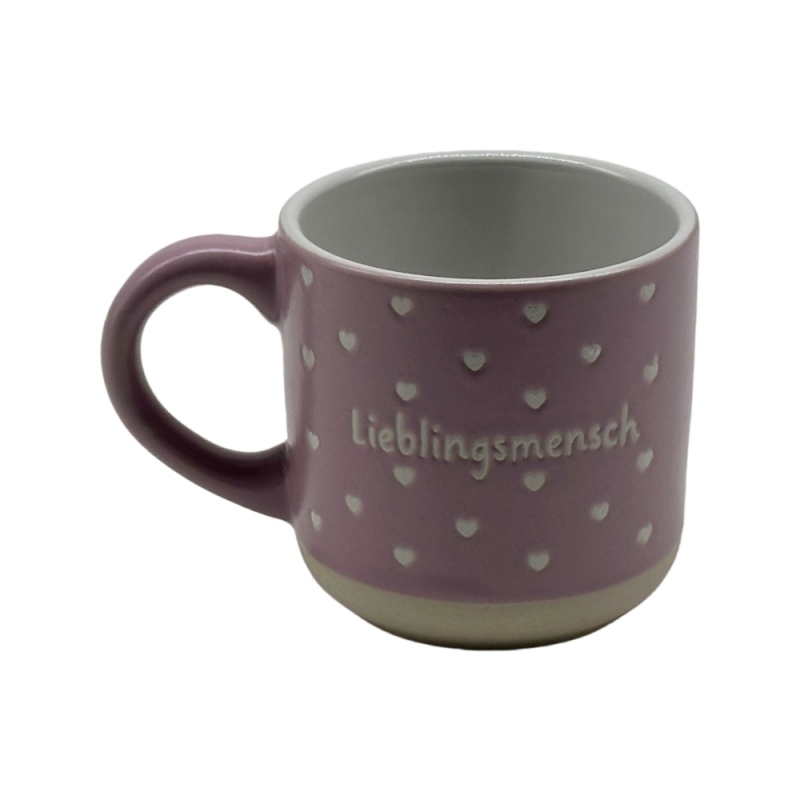
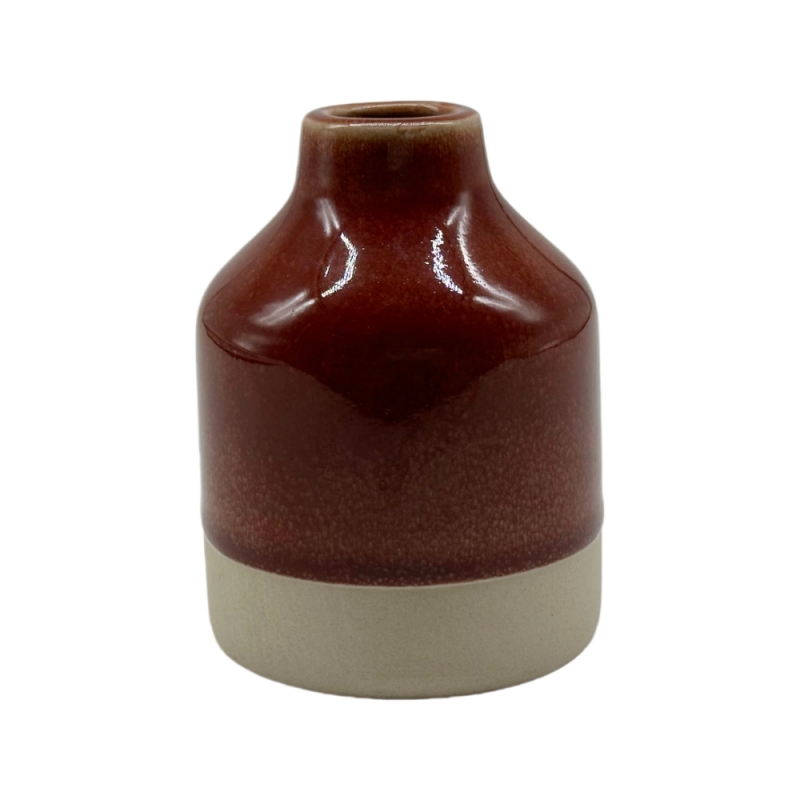
Products in this guide: Small Ceramic Gift Cup with Heart Pattern – “Lieblingsmensch” Design · Modern Ceramic Planter and Vase Set – Glazed Terracotta and Beige Accent
Two factories can run the same body, the same glaze, and the same labour rate, and still end up with a meaningful difference in cost, because one runs a kiln that is fuller, newer, or better insulated than the other.
Why firing dominates
A ceramic mug is not expensive because of its materials. The clay is cheap, the glaze is applied in grams, and the decoration is a few passes of a screen or a transfer. What costs money is turning soft, wet, shaped clay into a hard, non-porous object, and that happens exactly once, at temperature, over a period of hours.
Everything about the firing is a cost. The fuel to reach temperature. The time the kiln is occupied. The kiln furniture that goes in with the ware and gets heated and cooled for no product benefit. The losses from pieces that crack in the process. The energy spent heating a kiln that is only partly full.
This is also why ceramics is one of the more energy-exposed categories in housewares. A plastic item is moulded in seconds. A glass item is formed at a lower temperature. A mug sits in a kiln for the better part of a day, and the kiln does not care how many pieces are inside it.
Four variables that decide the energy cost
Firing temperature. Stoneware and porcelain mature at higher temperatures than earthenware, and the energy requirement rises steeply rather than linearly with temperature. This is one reason a high-fired body costs more than its material difference alone would suggest. When a buyer asks for a denser, less absorbent body, part of what they are asking for is more energy per piece.
Kiln loading density. A kiln load has a fixed energy cost whether it holds eight hundred pieces or two thousand. This is the single most under-appreciated driver of unit cost. It is also why minimum order quantities exist, and why they are not arbitrary. A small order does not become proportionally cheaper in a fuller kiln; it simply occupies a slot that could have held more.
Kiln furniture weight. The setters, saggers, and supports that carry ware through the kiln are heated and cooled alongside it. A factory with well-designed, thin, high-alumina furniture spends less energy per piece than one using heavy, older furniture. Buyers never see this, and it shows up directly in the price.
Continuous versus intermittent kilns. A tunnel or roller kiln runs continuously and holds a stable temperature band, which is generally more efficient per piece than a periodic kiln that must be heated from cold and cooled again for each cycle. A factory with continuous kilns and a full order book has a structural cost advantage. A factory running smaller batches in periodic kilns does not.
The quote validity guide explains how to hold prices on long programs.
Why the quotation moves
Energy is a market price, not a fixed input. In many production regions, natural gas and electricity are purchased on terms that change with the season, with industrial allocation policies, and with broader fuel markets. Some regions apply peak and off-peak tariffs that make night firing cheaper. Some impose periodic restrictions during high-demand periods.
The consequence for a buyer is that two quotations for the same specification, taken six months apart, can differ without anything in the product changing. Buyers often read this as opportunism. Usually it is not. It is a factory passing through a cost it cannot absorb at the scale of a single order.
This does not mean every increase is legitimate. It means the productive question is not whether the price went up, but which input moved and by how much, and whether the quoted change is consistent with that movement.
The replenishment calendar maps the ordering windows for the whole year.
What a buyer can do
Ask what the price is indexed to. A supplier who can name the input and the reference period is easier to trust than one who says costs have risen. You do not need to audit the index. You need to know whether there is one.
Combine orders to fill a kiln. If you can consolidate two shipments into one production run, you are asking the factory to run a fuller kiln, and that is a real cost saving rather than a negotiating position. Ask what volume would fill the next load, and what that does to the unit price.
Keep the body stable across the range. Moving between bodies of different firing temperatures splits production across more kiln loads. A family of products that shares one body fires together and costs less per piece than the same family spread across two temperature profiles.
Avoid peak-season production where you can. When regional energy demand peaks, both the tariff and the risk of restriction rise. Placing volume slightly ahead of the peak, where the calendar allows it, is often cheaper than paying for urgency later.
Three things not to do
Do not benchmark against a quotation from three years ago. The energy component has moved, and a comparison across that gap measures the market rather than the supplier.
Do not treat a lower quote as evidence of efficiency. A quote that is materially below the others may reflect older kilns carried at low utilisation, or a factory that has not yet priced in a current input cost. Both are risks, not savings.
Do not assume the buyer bears none of it. Energy is embedded in every quotation, including the ones that look stable. A supplier holding a price through a cost increase is absorbing a margin loss, and that usually shows up later as a service or quality decision.
The honest boundary
No supplier outside the factory can tell you what percentage of a given mug's cost is energy, because it depends on the kiln, the load, the fuel contract, and the season. What can be said is the mechanism: firing is the energy-intensive step, kiln utilisation drives unit cost, and fuel prices move. Those three facts explain most of the price variation a buyer will encounter across a year, and knowing them is more useful than any single number.
The practical conclusion is narrow but real. When a price changes, ask which input moved. When you want a lower price, ask what would fill the kiln. Both questions are answerable, and both lead to a conversation about production rather than about margin.
Related Products
Explore products featured in this guide:
Have questions? See our Sizes & Finishes FAQ and Ordering & Certifications FAQ.
Need a custom quote? Send an inquiry or browse our full product catalog.

