
Dimensional Tolerance on a Fired Mug: Diameter, Height and Out-of-Round
The Problem: The Mould Sets the Shape, the Kiln Sets the Size
A mug leaves the mould at one size and arrives after firing at another, smaller one. Shrinkage is not perfectly uniform, and the handle adds an asymmetry that can pull a body slightly oval. So every fired mug differs from every other by some amount — and the entire downstream chain (lids, stacking, cartons, sets, the retailer's own quality check) depends on how much.
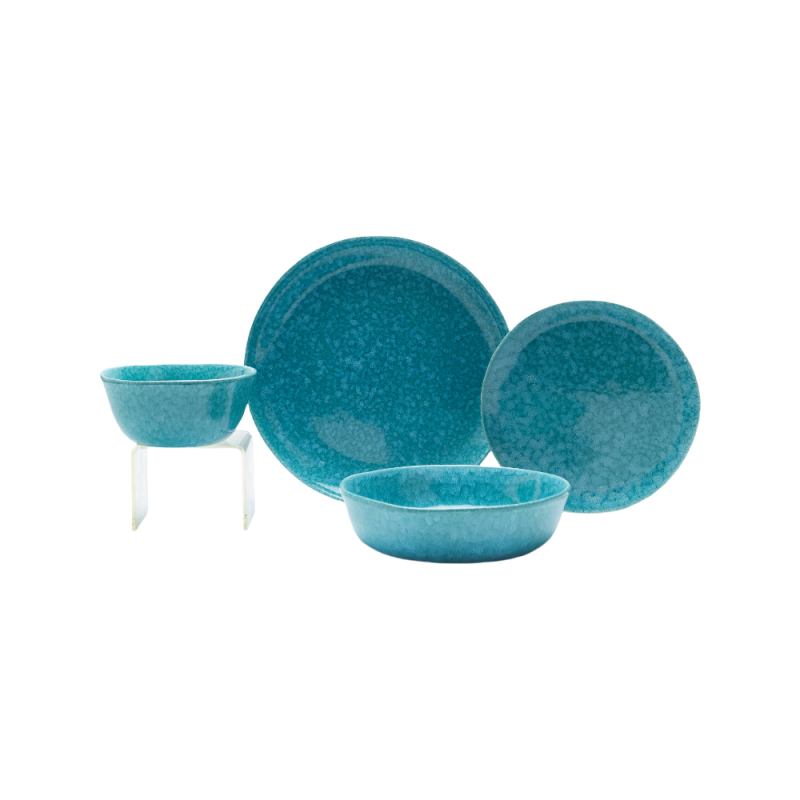
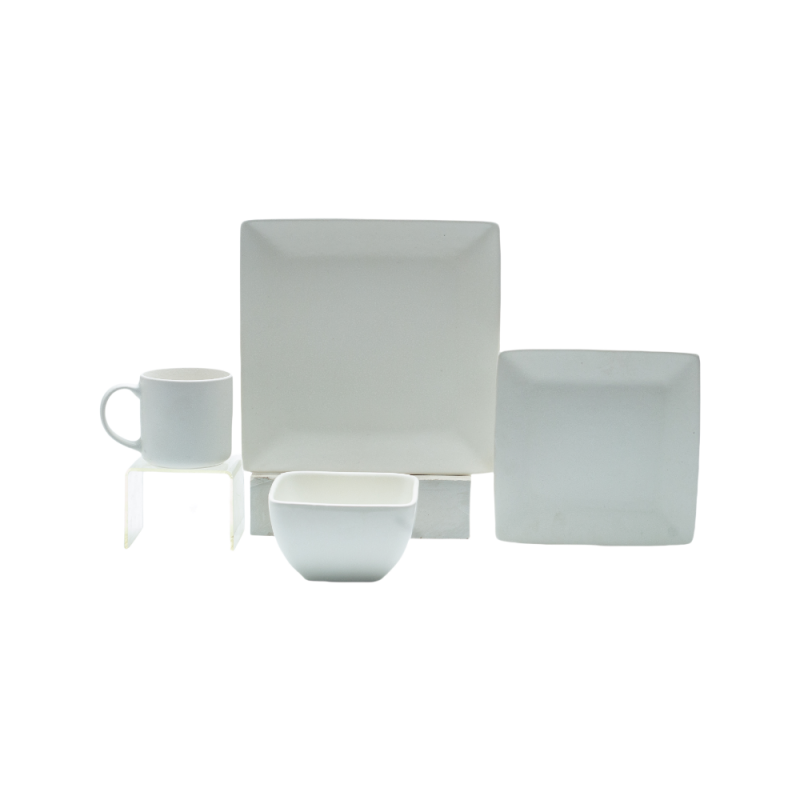
Products in this guide: 4-Piece Teal Blue Crystalline Glazed Stoneware Dinnerware Set · Minimalist White Square 4-Piece Porcelain Dinnerware Set
The Five Dimensions That Matter
Rim outside diameter. The dimension a lid seals on and a rack holds. It also decides whether a lid from one batch fits the next, which makes it the single most consequential tolerance in a real programme.
Out-of-round (ovality). How far the rim deviates from a circle. A body that is 1 mm out of round can still accept a loose lid and will reject a tight one — which is why ovality belongs in the specification next to the diameter, not instead of it.
Height. Decides stacking height, shelf fit and carton configuration. A 3 mm variation across a batch is invisible on the table and decisive in a carton.
Base diameter and flatness. Determines stability on a table and on a tray, and whether the mug wobbles on a flat surface — a defect that customers notice immediately.
Usable capacity. The volume actually held, measured to a stated level. Capacity drift is what turns a "350 ml" mug into a 335 ml one, and it is the dimension a buyer's own customer is most likely to test.
Why Dimensions Drift
- Shrinkage variation between bodies, and between firing positions in the kiln.
- Mould wear — a mould loses a little definition over thousands of cycles, and the parts made early in its life are not identical to the parts made late.
- Forming pressure and body moisture, which change how much the piece compresses before firing.
- Handle attachment, which can pull a body out of round during drying, especially on thin walls.
How to Specify Tolerance Usefully
Write tolerances per dimension, not as one blanket figure:
- Rim diameter: a tight band, because lids and racks depend on it.
- Ovality: an explicit limit, expressed as a maximum difference between the widest and narrowest diameter.
- Height: a looser band, sized to the carton and shelf rather than to the eye.
- Base flatness: a maximum gap under the base, tested on a flat surface.
- Capacity: a minimum figure plus a small allowance, since under-filling is a commercial risk and over-filling is usually harmless.
Then state how it is measured: with what instrument, at what point on the piece, on a fired and finished item, and on how many pieces per batch. A tolerance without a method is an argument waiting to happen.
Practical Checks on Arrival
Two checks catch most dimensional issues cheaply:
- A go/no-go gauge for the rim, made once and reused: the piece either passes or it does not, and the judgement takes seconds.
- A fill test with a measuring jug on three pieces from a batch, which verifies capacity rather than trusting the label.
Where the channel requires documentation, the same measurements can be recorded as part of an incoming inspection, which converts a vague complaint into a measured deviation.
Our <a href="https://www.storiwareceramicmugs.com/products2147420/Custom-Ceramic-Mugs-Cups.htm">ceramic mugs and cups</a> range is quoted with per-dimension tolerances, and <a href="https://www.storiwareceramicmugs.com/oid1757203/The-Custom-Mug-Programme-Buyer-Guides-by-Decision.htm">the custom mug programme guides</a> collect the related decisions — including lid fit and weight class, which both depend on these numbers. To fix tolerances for a specific item, <a href="/contact-us.htm">send the drawing or the sample dimensions</a>, and see the <a href="https://www.storiwareceramicmugs.com/oid1756307/Custom-Ceramic-Mugs-Bulk-Order-Factory-Direct-from-China.htm">bulk order programme</a> for how sampling and production fit together.
The spec freeze guide explains how artwork and packing files are locked between orders.
What to Put in the Order
- Per-dimension tolerances: rim diameter, ovality, height, base, capacity.
- The measurement method for each dimension, and the instrument.
- A sampling rule — how many pieces per batch are checked.
- A go/no-go gauge for the critical rim dimension.
- Base flatness and capacity checks on arrival.
- Recorded measurements where the channel requires documentation.
The packaging guide explains how retail-ready and protective layers are specified together.
The Habit That Ties It Together
The habit is to write the numbers that other components depend on — the rim above all — and to measure them rather than assume them.
Related Products
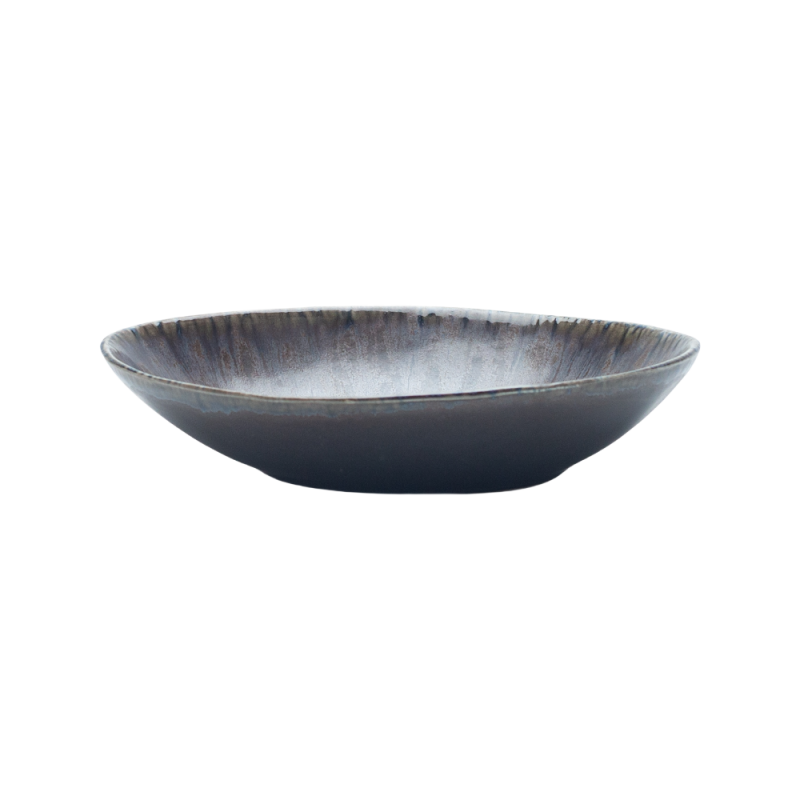
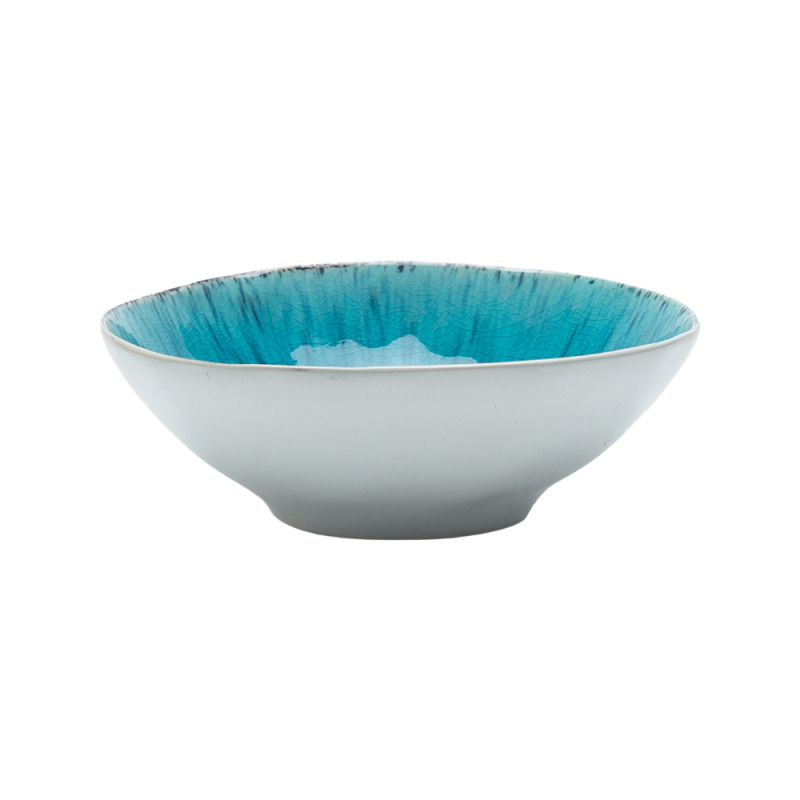
Explore products featured in this guide:
Have questions? See our Sizes & Finishes FAQ and Ordering & Certifications FAQ.
Need a custom quote? Send an inquiry or browse our full product catalog.

