Commercial China Buying Guide: How Restaurants Buy Tableware That Survives
Why Commercial China Is a Different Purchase
The restaurant buys tableware by a different logic than the home buyer, because the piece lives a different life: the home plate is handled dozens of times a year, while the restaurant plate is handled dozens of times a week - the stacking in the service, the transport in the bus tub, the dishwasher cycles, the edge impacts against the sink and the rack, and the daily turn of the same pieces (see our serving-trend guide for the dining-format context). The commercial buyer therefore buys for survival, not for beauty alone: the piece must hold its edge, its glaze and its shape through the years of service, and the buying decision - the body, the glaze, the shape, the supplier - is a durability decision before it is a design decision (see our clay-science guide for the body layer that carries the strength). This guide reads the commercial china category through the buyer's eyes: the durability variables, the edge-chipping standard, the stacking logic and the replacement buying that keep a restaurant line from breaking.
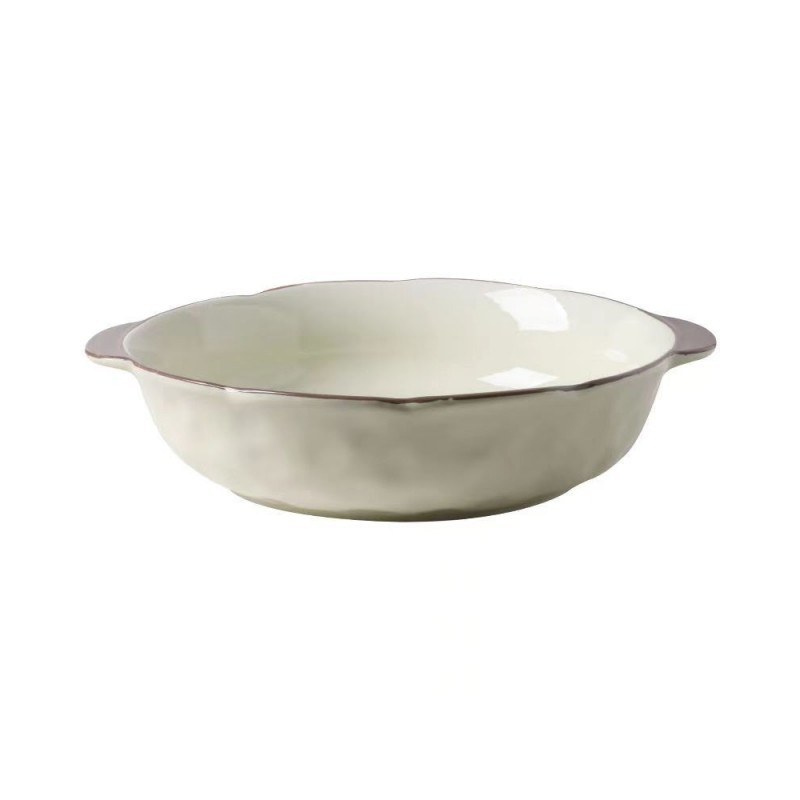
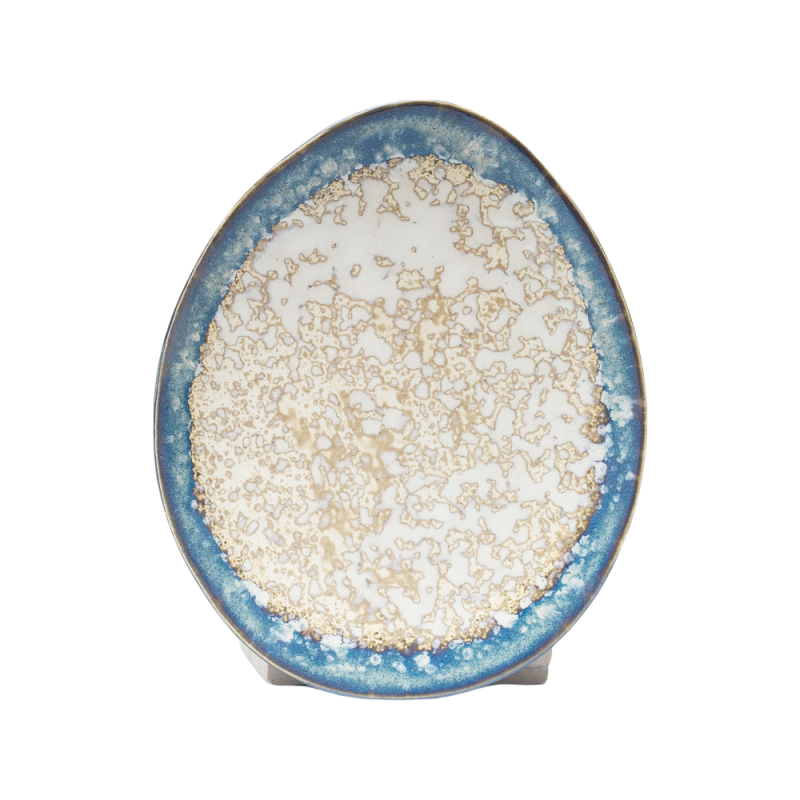
Products in this guide: Large Ceramic Soup Bowl · Ceramic Salad Plates
The Durability Variables: Body, Glaze and Edge
The durability of the commercial china lives in three variables. The first is the body: the dense, vitrified bodies - the porcelain and the high-fired stoneware - carry the strength, while the softer earthenware bodies chip and break far faster under the commercial cycle (see our clay-science guide for the body families, and our region guide for the porcelain tradition). The second is the glaze: the commercial glaze must be hard, scratch-resistant and correctly matched to the body, because the soft glaze wears in the dishwasher and shows the gray scratches that age the line quickly (see our glaze-science guide for the glaze-body match, and our defect guide for the surface wear). The third is the edge: the rim profile and the wall thickness decide how the piece takes the impacts - the rolled rim absorbs the edge hits better than the sharp rim, the thicker wall survives the stacking pressure, and the shape that stacks well survives the service better (see our forming guide for the shape effects, and our mold-engineering guide for the rim design). The signal for the buyer: specify the body type, ask for the glaze hardness and the dishwasher performance, and check the edge profile on the sample - the commercial line is bought by the variables that survive, not by the pattern that attracts.
The Edge-Chipping Standard: What the Restaurant Accepts
The edge chip is the most common commercial china failure, and the commercial buyer needs a chipping standard, because the question is not whether the chips happen but how many and where: the small chip on the foot of the bowl is a service issue, the chip on the rim is a food-contact issue, and the cracked piece is a safety issue that must leave the service immediately (see our defect guide for the chip and the crack families). The standard has three parts. First, the acceptance level: the industry practice is the edge-chipping resistance measured in the chipping test - the pieces are tumbled or impacted in the controlled test, and the factory quotes the chipping grade, with the commercial grades carrying the higher resistance (see our chain-standard guide for the test method, and our grading guide for the level system). Second, the replacement economics: the restaurant plans a replacement rate - the industry rule of thumb is the commercial line is replaced over years, with the high-turn pieces (the bowls, the plates in the daily service) replaced more often than the low-turn pieces, and the buyer should ask the factory for the durability data that predicts the replacement cycle (see our quote-reading guide for the data line, and our factory-QC guide for the test records). And third, the spare logic: the buyer orders the spares with the initial order, because the discontinued line is the classic restaurant trap - the matching piece becomes impossible to find, and the whole line must be replaced (see our FAQ for the reorder question). The signal: the commercial contract should state the chipping standard, the replacement rate expectation and the spare-stock agreement in writing.
The Stacking and the Service Logic
The third dimension of the commercial china is the service logic, because the restaurant line is bought as a system, not as individual pieces: the stacking geometry (the plates that stack evenly for the counter service, the bowls that nest for the storage), the portion logic (the plate sizes that match the menu portions, the bowl capacities that match the soup and the dessert portions), and the wash cycle (the pieces that survive the dishwasher without the glaze wear, the thermal cycles and the impact between the pieces in the rack; see our safety guide for the dishwasher behavior). The buyer should check the stacking in the sample stage - the real pieces stacked, not the spec sheet - because the stacking that looks fine in the picture can rock, stick or wear in the service (see our chain-standard guide for the dimensional checks). And the buyer should check the size system across the line: the commercial lines run in the coordinated sizes - the 25 cm dinner plate, the 20 cm salad plate, the bowl family - and the new pieces should match the existing service rather than introduce a new size that breaks the system (see our size-guide for the capacity standard, and our category guide for the coordinated lines).
The Replacement Buying: How the Restaurant Keeps the Line Alive
The commercial china purchase is never one order; it is a program of the initial order, the spares, and the reorders, and the buyer should structure the program at the start. The initial order establishes the line and the standard (see our category guide for the line structure). The spare order - the 5-10% of the high-turn pieces - covers the breakage before the first reorder. And the reorder is the test of the program: the same body, the same glaze, the same size from the same molds, because the commercial line that cannot be reordered dies in the service (see our mold-engineering guide for the mold-life logic, and our factory-QC guide for the batch consistency). The buyer should also check the supplier's reorder capability - the molds kept, the body recipes stable, the glaze batches matched - because the restaurant's line survives on the supplier's ability to reproduce the piece years later (see our manufacturing-guide for the production stability). The signal: the commercial contract should cover the mold retention, the recipe stability and the reorder terms, and the buyer should test the reorder once - order a small repeat batch before the line goes live, and check that the reorder matches the original (see our grading guide for the match checks). The restaurants that buy the commercial china as a program - with the standard, the spares and the reorder tested - are the restaurants whose lines stay alive for years, because they bought the survival, not just the tableware.
"Commercial-Grade Ceramic Tableware"
Explore products featured in this guide:
Have questions? See our Sizes & Finishes FAQ and Ordering & Certifications FAQ.
Need a custom quote? Send an inquiry or browse our full product catalog.