Coffee Cup vs Teacup vs Mug: Which Vessel for Which Menu
Coffee Cup vs Teacup vs Mug: Which Vessel for Which Menu
The vessel is part of the beverage. A double espresso in a thin porcelain cup, a sencha in a handle-less teacup, and a filter coffee in a thick stoneware mug are three different drinking experiences, and the vessel is doing half the work. For cafes, restaurants, hotels, and tea rooms, choosing the right vessel for each drink is a menu decision as much as a product decision, and the differences between coffee cups, teacups, and mugs, in capacity, heat behavior, handle design, and drinking ritual, determine whether the drink is served the way it was designed. This guide compares the three vessel families and maps them to the drinks they serve best.
The Three Families and Their Logic
The three vessel families grew from three different drinking cultures, and each one carries the logic of its culture. The coffee cup is built for espresso-based drinks: small, thick-walled, and precise, designed to hold a concentrated drink at the right temperature with a dense crema. The teacup is built for tea: often small and handle-less, designed to be held in the palm, to show the color of the infusion, and to be sipped slowly, with the heat moderated by the way the cup is held. The mug is built for volume and comfort: large, thick-walled, and handled, designed for a generous portion of filter coffee, tea, or cocoa that is drunk over time.
Understanding the logic explains the design. A coffee cup does not need to keep a drink warm for an hour; it needs to deliver a short drink at the right temperature with the crema intact. A teacup needs to show the liquor and moderate the heat for the hand. A mug needs to keep a large volume warm and be comfortable to hold. Each family solves a different problem, and the vessel that works for one drink is often wrong for another.
Coffee Cups: Precision for Espresso-Based Drinks
The coffee cup family covers espresso cups, demitasse, cappuccino cups, and flat white cups, and the defining features are small capacity, thick walls, and a shape that protects the crema and the temperature. Espresso cups hold 60 to 90 ml, cappuccino and flat white cups hold 150 to 200 ml, and the walls are thick enough to keep the small volume hot while the drink is consumed. The shape matters for the crema: a cup that is too wide or too shallow disperses the crema, while a well-shaped cup holds it as a layer over the espresso.
Coffee cups are also the vessel where the saucer plays a real role, completing the place setting and catching the drips, and where the porcelain body is the traditional choice, because it is light, bright, and elegant. For a cafe that serves espresso-based drinks, the coffee cup family is the core of the tabletop, and the cups should be specified with the same care as the espresso machine, because the cup is the last element in the extraction.
Teacups: Ritual, Color, and the Palm
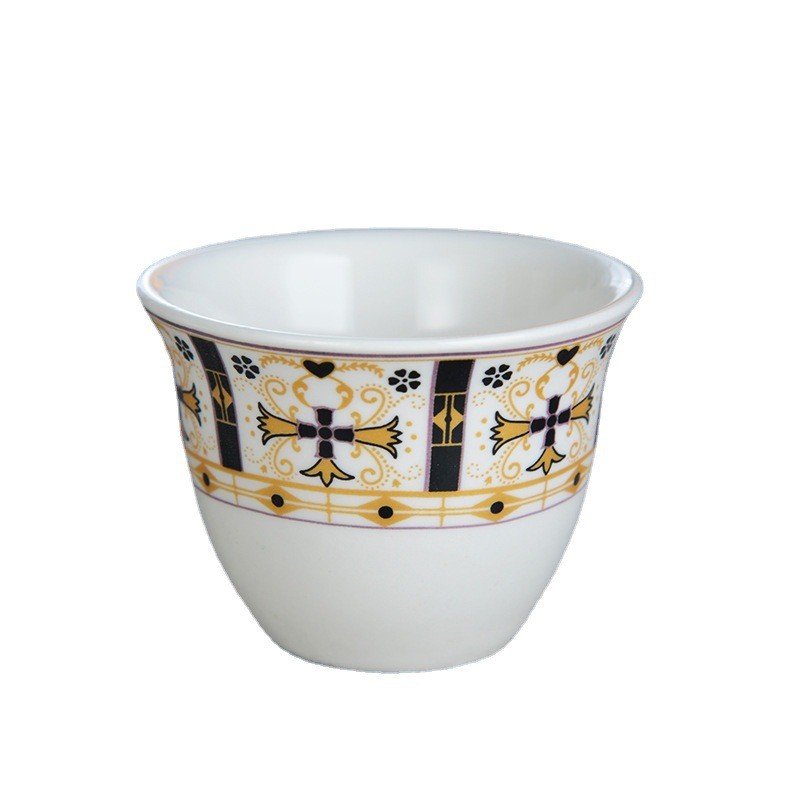
The teacup family is more varied than the coffee cup family, spanning the handle-less Chinese and Japanese cups, the saucer cups of Western tea service, and the specialized cups for gongfu and matcha. The common threads are the moderate size, the shape that shows the color of the infusion, and the drinking ritual that involves the hand and the lips. The handle-less cup, held in the palm, moderates the heat and connects the drinker to the vessel, which is central to the tea experience in East Asian tea culture.
The material and the shape of a teacup affect the tea itself. A thin-walled cup cools the infusion quickly, which suits some teas and ruins others; a thicker cup holds the heat for a slow session. A light interior shows the liquor's color, which is part of the tea's presentation. For a tea room or a tea-focused menu, the teacup should be chosen for the tea being served, with the capacity matched to the infusion and the material matched to the temperature behavior the tea needs.
Mugs: Volume, Comfort, and the Everyday
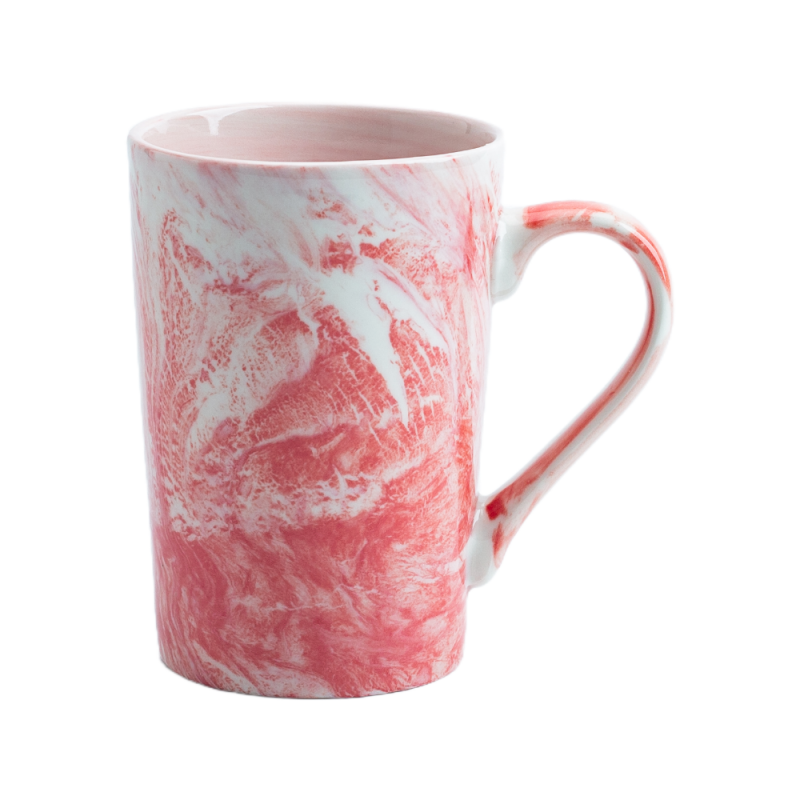
The mug is the vessel of the everyday: filter coffee, tea, cocoa, and the large drinks that are consumed over time. The defining features are the generous capacity, typically 250 to 500 ml, the thick walls that keep the drink warm, and the handle that makes a full mug comfortable to hold. The mug is also the vessel of the brand, because it is the largest printable surface of the three families and the most photographed, which is why the mug dominates branded drinkware programs.
The mug trades the precision of the coffee cup for the comfort of the everyday. It is the right vessel for a filter coffee that is drunk over an hour, a pot of tea that is refilled, and the morning drink that starts the day. It is the wrong vessel for an espresso, because the large volume and the wide opening disperse the crema and cool the concentrated drink. The mug and the coffee cup are not competitors; they are two tools for two different drinks, and a cafe that serves both needs both.
The Vessels at a Glance
| Aspect | Coffee cup | Teacup | Mug |
|---|---|---|---|
| Typical capacity | 60-200 ml | 100-250 ml | 250-500 ml |
| Wall thickness | Thick, precise | Thin to medium | Thick |
| Handle | Often yes | Often none | Always yes |
| Heat behavior | Holds short drink | Varies by culture | Holds long drink |
| Best drink | Espresso, cappuccino | Tea, ceremony | Filter coffee, tea, cocoa |
| Print area | Small | Small | Largest |
| Brand carrier | Minor | Minor | Primary |
Matching the Vessel to the Menu
The menu should be mapped to the vessels before the vessels are ordered, and the mapping follows the drinks. A menu built on espresso-based drinks needs a coffee cup family sized to the recipes, from espresso to flat white, with the saucers and the cups matched. A menu with a tea program needs a teacup family chosen for the tea styles served, with the material and the shape matched to the infusions. A menu with filter coffee and casual drinks needs a mug family, with the capacity and the wall matched to the serving style. And most menus need a combination, because the drink menu rarely lives in one family.
The combination is where the tabletop gets its logic. A cafe serving espresso, tea, and filter coffee should specify all three families in a coherent visual language, sharing the body, the glaze, and the brand accents, so the tabletop reads as one collection rather than three unrelated products. The shared program also shares the setup costs and simplifies the sourcing, which makes the three-family tabletop both a merchandising choice and a practical one.
Customizing the Vessels
The three families offer different customization opportunities, and the strategy should follow the menu. The mug is the primary brand carrier, with the largest print area, so the brand program should center on mugs, with the logo, the colors, and the packaging. The coffee cup and the teacup are smaller canvases, where a small logo, a monogram, or a subtle brand accent works best, because a crowded design on a small cup is worse than a clean one. The interior of the teacup and the coffee cup is a visible canvas, and a subtle interior logo or a brand-colored interior adds a detail that regulars notice.
The customization should respect the vessel's function. The decoration on a coffee cup should not interfere with the crema or the lip, the decoration on a teacup should not alter the way the cup is held, and the decoration on a mug should be placed where the hand and the drink do not cover it. The printable areas should be confirmed with the factory, and the design should be tested on a physical sample, because the curvature and the glaze change how the print reads on each family.
Conclusion: Serve the Drink, Not the Vessel
The coffee cup, the teacup, and the mug are three answers to three different questions, and the menu decides which vessel serves which drink. Use the coffee cup for the precision of espresso-based drinks, the teacup for the ritual and the color of tea, and the mug for the volume and the comfort of the everyday. Map the vessels to the menu, specify them in a coherent visual language, and customize them with respect for their function. A tabletop that serves each drink in the vessel it was designed for is a tabletop that serves the drink better, the brand better, and the customer better, at every service.
Looking for the right vessel for your menu? Storiware Ceramic Mugs customizes coffee cups, teacups, and mugs in matching programs, with bodies and glazes chosen for each drink, brand decoration, and physical sampling. The featured drinkware below is a great starting point, and our team will help you map the vessels to your menu.
Featured Drinkware from Storiware Ceramic Mugs
Explore products featured in this guide: