
Clay Preparation, Ageing and Moisture: The Variable That Reaches Every Piece
The Problem: The Step Nobody Photographs
A factory tour shows the kiln, the glazing line and the packing area. It rarely shows the clay store, because there is nothing to see: piles of material, a pug mill, and a worker checking by feel whether the body is ready. Yet the condition of that body decides the behaviour of every piece that follows — how it forms, how it dries, whether handles stay on, whether bases stay flat, and how much it shrinks in the kiln.
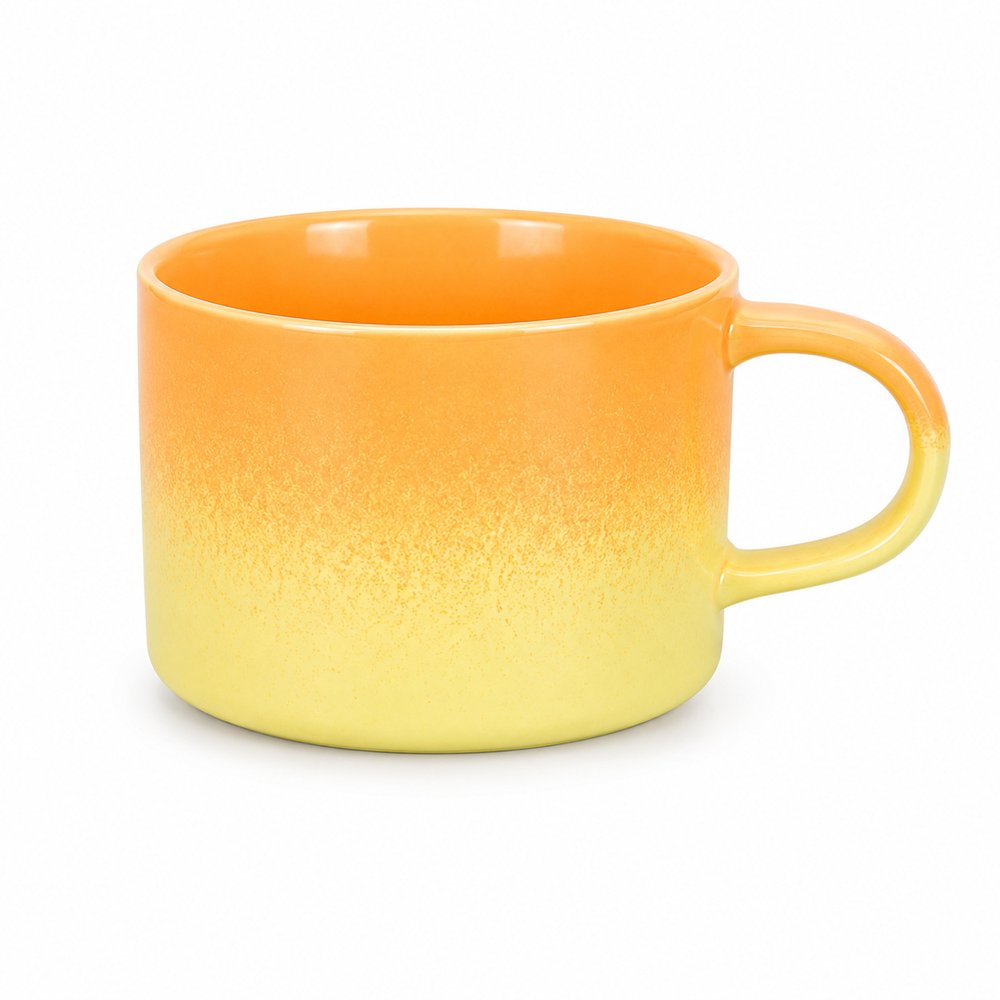
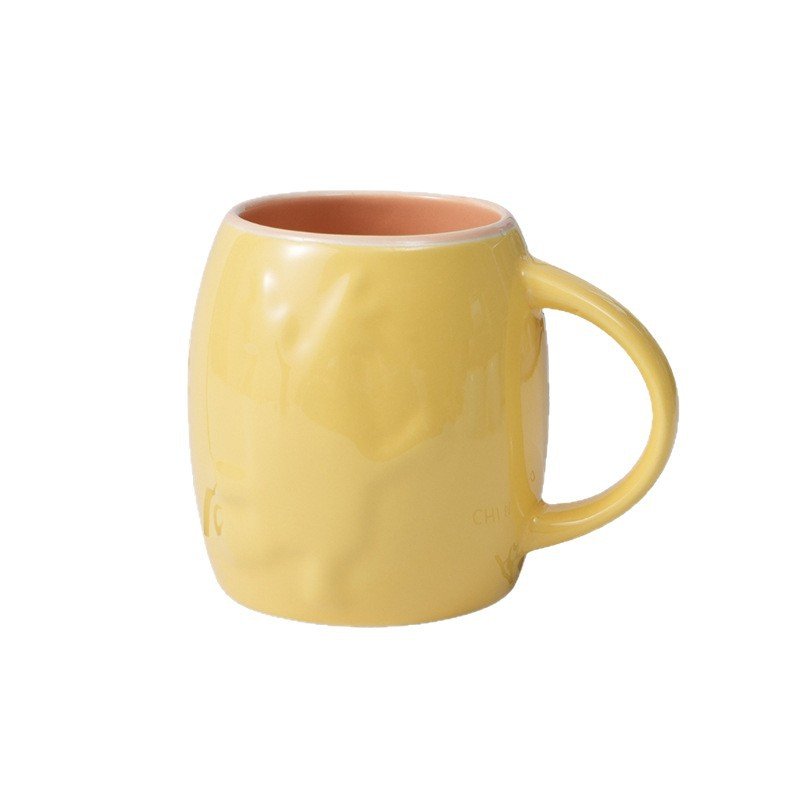
Products in this guide: Gradient Hammered Ceramic Mug 350ml · Matte Speckled Gradient Ceramic Mug 380ml
The commercial consequence is that a body change can produce a wave of defects with no visible cause. Nothing in the glaze changes, no kiln setting changes, and yet bases start warping and handle joints start failing. The answer is usually upstream, in the body.
What Preparation Actually Involves
Five steps, in order, each with a purpose and a failure mode.
Blending and blunging. Different clays and non-plastic materials are mixed — usually as a slurry, which is then dewatered or filter-pressed. The purpose is uniformity: a body that is mixed unevenly gives pieces that behave differently on the same day. The failure mode is a batch that behaves well in the first shift and badly in the second.
Ageing (souring). The prepared body is left to rest, typically for weeks rather than hours. During ageing, moisture distributes evenly through the mass, organic matter begins to break down, and the body's workability improves — it becomes more plastic, forms more easily, and holds shape better. The failure mode of skipping it is a stiff, short body: it cracks during forming, handles do not stick, and rims tear.
Pugging and de-airing. The body is extruded through a pug mill, often under vacuum, which removes air pockets and produces a consistent, dense column. Air pockets become pinholes, blisters and weak spots after firing — and they are invisible in the finished greenware.
Moisture control. The water content at forming is the most useful single figure in the whole preparation area. Too wet, and the piece slumps, warps and shrinks excessively; too dry, and it tears, cracks at the joints and refuses to be shaped.
Recovery of scrap. Green and bisque scrap is commonly returned to the body after crushing, sometimes as grog. This is normal practice, but it changes shrinkage and plasticity, so the proportion has to be controlled and recorded rather than accumulated by chance.
The spec freeze guide explains how artwork and packing files are locked between orders.
Why It Reaches the Buyer
Four defects that are usually blamed downstream but often start here.
Warping and slumping. A body that is too wet, or mixed unevenly, moves during drying; the base deforms and the rim goes oval. This is the same defect discussed under drying and warping, but the body is the first suspect when an entire batch shows it.
Handle joint failures. Clays differ in how well they bond. A body with poor plasticity, or a handle slip made from a differently aged body, produces joints that pass inspection and fail in use — which is exactly the failure discussed under handle engineering.
Shrinkage variation. A body change alters how much a piece shrinks between the mould and the fired item. Where the mould is not adjusted, this shows up as a capacity that is slightly off, a lid that no longer fits, or a stack that no longer nests. Buyers usually hear about it as "the new batch is a little smaller".
Pinholes and blisters. Air not removed in the pug mill, or contamination in recovered scrap, results in surface defects that appear after glazing and cannot be traced back by looking at the finished piece.
What a Factory Should Be Able to Tell You
Six questions, all answerable without a laboratory — and the answers reveal whether preparation is controlled or habitual.
- Which clays are in this body, and have any of them changed in the last two years? A change of source is the most common hidden cause of a batch of unexpected defects.
- How long is the body aged before forming? A stated interval — weeks rather than hours — indicates a controlled process.
- Is the body de-aired, and with what equipment? Vacuum pugging is the standard answer for a factory producing handles and thin sections.
- What moisture content is used at forming, and how is it checked? A figure and a method matter more than the answer itself.
- How much scrap is returned to the body, and how is it controlled? Uncontrolled scrap recovery changes shrinkage over time.
- Is anything recorded per batch? A body batch reference is what allows a defect to be traced at all.
What to Write Into a Specification
Three lines, and they are cheap.
- The body is a named item with a change-control clause: any change of clay source, blend or supplier requires approval and re-approval of the sample.
- A stated forming moisture range — as a control figure, recorded per batch.
- A scrap recovery limit, expressed as a maximum proportion, so that shrinkage does not drift across the season.
Where the buyer needs more, the two additions that pay are the body batch reference recorded on the production record (which is what makes traceability possible when a defect appears) and a retained fired sample per body batch, following the same discipline used for colour and glaze.
The packaging guide explains how retail-ready and protective layers are specified together.
The Buyer's Position
Body preparation is the factory's territory, and a buyer cannot manage it directly. What a buyer can do is refuse to accept an unexamined answer when defects appear in waves, and to write the three specification lines that make the factory's own control visible. The diagnostic question to keep in mind: when several different defects appear in the same batch, the cause is usually one step upstream that they all share.
The Habit That Ties It Together
The habit is to ask about the body whenever a defect appears in waves rather than at random. Programs that do this find the cause in an afternoon instead of arguing about glazes and kilns for a month.
Related Products
Explore products featured in this guide:


Have questions? See our Sizes & Finishes FAQ and Ordering & Certifications FAQ.
Need a custom quote? Send an inquiry or browse our full product catalog.