Ceramic Tableware Testing Strategy: When to Test and How to Cut Cost
The Testing Decision on Your Desk
The container is booked for Friday and your supplier has just emailed two photographs of new sample mugs: two glaze colours and one new decal, bound for a European retail programme. The factory says "already tested" and attaches a report for a different colourway from last season, issued by a laboratory you do not recognise. Your quality manager has about forty-eight hours to decide whether that paperwork clears production.
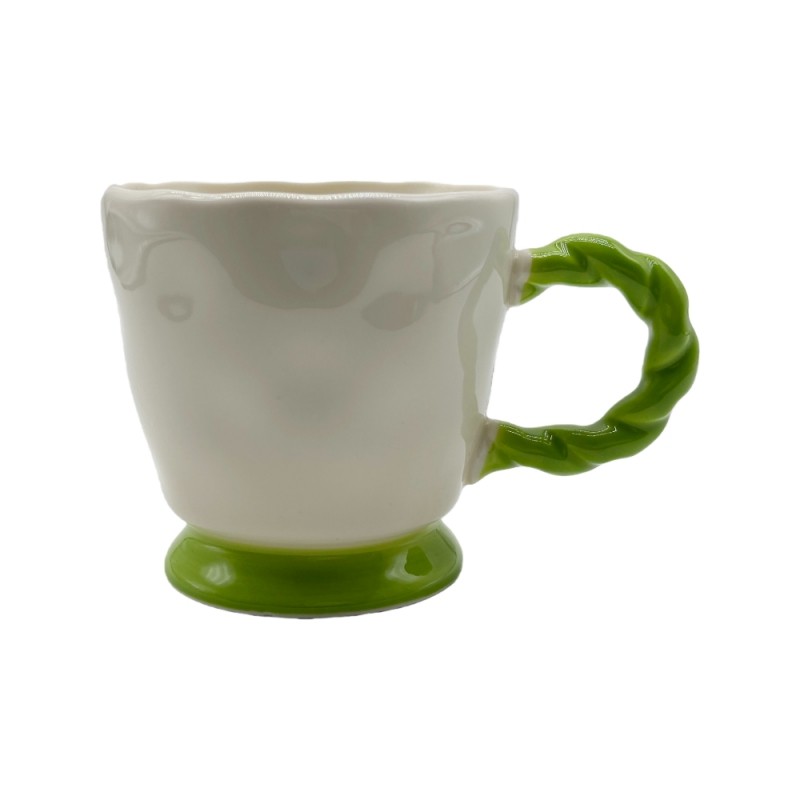
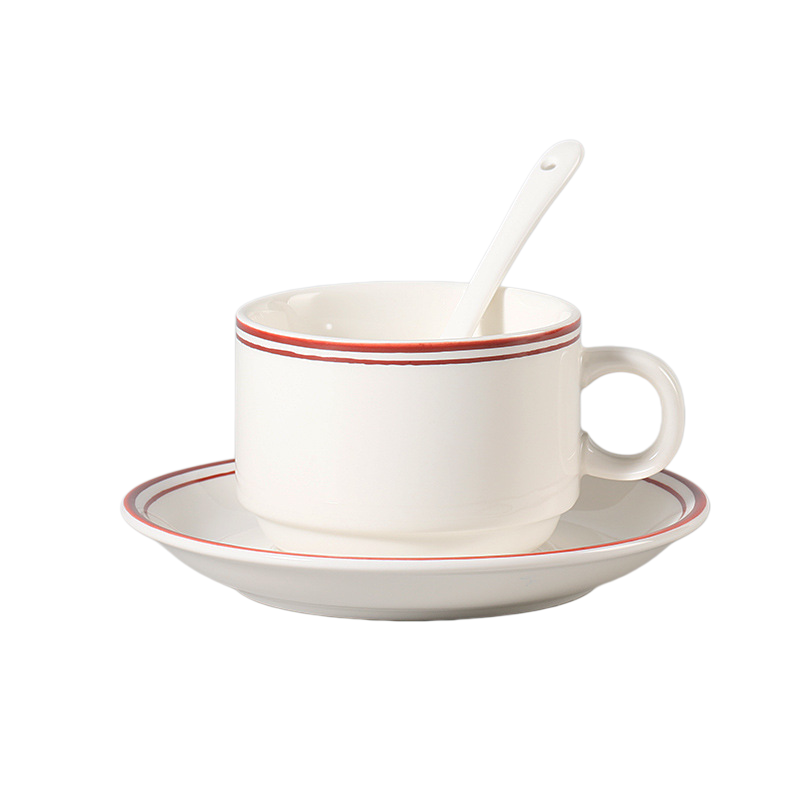
Products in this guide: Custom Design Ceramic Mug with Twisted Handle · Custom Coffee Cup and Saucer
Most testing decisions are made exactly like this: under time pressure, on the strength of a report nobody has fully read, for products that will sit on shelves for years. Earlier guides in this series covered reading test reports and what their numbers mean. This one covers the decision before a report exists: whether to test at all, what to test for, how often, how many pieces to send, and how to keep the laboratory bill from driving the conversation.
It is written for volume buyers of ceramic tableware — importers, brand owners and foodservice chains — and is not legal advice. The framework reflects the publicly available official texts as of September 2026; rules change, so check the latest official version. And record every testing decision in writing, including the decision to waive a test, so the reasoning is on file when an auditor asks.
What "Testing" Means for Ceramic Foodware: The Migration Core
For any ceramic item that touches food — plates, bowls, mugs, cups, saucers — the first test that matters is the migration of lead and cadmium from the glazed surfaces. These elements are judged not by what sits in the glaze but by what it releases into food under realistic contact; migration testing answers that question.
The methods used worldwide are close cousins. The standard most buyers meet first is ASTM C738, the Standard Test Method for Lead and Cadmium Extracted from Glazed Ceramic Surfaces, in its current version ASTM C738-94(2025). The test surface is exposed to a 4% acetic acid solution, held at room temperature (20–24 °C) for 24 hours in the dark, and the acid is then analysed for lead and cadmium by atomic absorption or ICP. ISO 6486 and EN 1388 are parallel methods in the same family, and European laboratories commonly use the EN approach.
A report names one of these methods, and the name should match the market you are shipping to — the method line is the first thing to check, before any number. And keep the boundaries in mind: the test measures only what the acid pulls from the tested surface; it says nothing about total glaze content or about the batch that was not sampled.
Migration is the door-opener, not the whole programme. Buyers may also need overall migration, sensory testing, and physical tests such as microwave, dishwasher and stacking behaviour — each with its own protocol and report line.
Matching the Method to the Destination Market
The requirement is set by the destination market, not the factory; naming the market on the order and specification lets the supplier test correctly the first time.
For the United States, the FDA runs no pre-market approval system for ceramic tableware. Instead, importers face enforcement action levels for extractable lead and cadmium from glazed ceramic foodware, set by vessel type — flatware, small hollowware, large hollowware, cups and mugs — under the FDA's Compliance Policy Guide, CPG 7117.06/7117.07. FDA evaluation uses ASTM C738 and AOAC methods. Require reports that cite the FDA framework and ASTM C738, and confirm the report states the vessel category of your product; levels are set by category, so a plate report and a mug report are not interchangeable.
For the European Union, the ceramic-specific measure is Council Directive 84/500/EEC, amended by Commission Directive 2005/31/EC. It divides ceramic articles into three vessel categories, sets lead and cadmium migration limits for each using a 4% acetic acid test, and requires a written declaration of conformity. As the importer of record you are expected to hold that DoC and the supporting report.
For Germany and Central European retail, you will often meet LFGB reports. The LFGB — the German Food and Feed Code — covers food-contact articles in sections 30 and 31: section 30 prohibits placing on the market articles that release substances harmful to health into food, and section 31 requires that articles do not alter the composition or the sensory properties of food — odour, taste and appearance. LFGB reports therefore typically add a sensory assessment and often extra metal screening to a baseline lead and cadmium certificate, using methods drawn from the recommendations of the German Federal Institute for Risk Assessment (BfR) and from DIN and EU methods. German and Central European retailers widely accept LFGB documentation.
One question separates buyers who understand LFGB from those who merely file it: does this report include the sensory test? That assessment is exactly what distinguishes an LFGB report from an ordinary lead and cadmium report, and it is the part most generic certificates omit. Remember that one market's report does not transfer to another: an EN 1388 report is not automatically accepted by a US quality team, an ASTM C738 report does not by itself prove the LFGB sensory position, and a claim of "FDA certified" is wrong by definition — the US system does not certify, it enforces. Plan sample quantities and submission dates per market.
When a Retest Is Mandatory: Change Is the Trigger
A test report is evidence about the exact sample tested, not a general licence for the product. Change the sample in any way that affects the food-contact surface, and the old report no longer describes what you are shipping. The triggers are short:
- A new body formulation or a change in raw materials.
- A new glaze colour or a new decal, even when the base mug or plate is identical.
- A new kiln or a change in firing conditions.
- A change of factory, or production moved to a different line or site.
- A long pause between production runs.
Each change creates, in testing terms, a new article.
| Change | Why the old report stops working | What the buyer should require |
|---|---|---|
| New body formula or raw material | The relationship between body and glaze changes | New migration test before mass production |
| New glaze colour or decal | A different surface now releases from the glaze | Retest a representative piece of the new colour |
| New kiln or firing change | Firing seals, or fails to seal, the glaze layer | Retest, or documented kiln qualification |
| New factory or relocated line | The report no longer describes this maker | Full qualification test and a fresh report |
| Long pause in production | Glaze stock and kiln condition are unverified | Resubmit a fresh sample before the next shipment |
Stable programmes treat this list as contract language: any change to formulation, glaze, decoration or kiln requires written notification and, where the buyer judges it necessary, a new test before shipment. Write the trigger list into the purchase terms and the specification, so the cost of a change is carried by whoever introduces it. The expensive change is the silent one — a glaze batch, pigment source or firing curve swapped without notice ships an untested article. One retest is trivial beside a container rejected at destination.
Annual Retesting and Spot Checks: A Rhythm That Costs Less Than It Saves
Testing every batch would make ceramic tableware unaffordable; testing nothing allows a quiet drift in glaze powder, pigment or decal ink — materials the factory itself buys from third parties — to put an off-specification product on your shelves. The workable position sits between.
For an established supplier with a locked formula, the standard rhythm is an annual retest of current production plus spot checks on critical batches and on anything destined for the strictest markets. "Critical" is defined by you: high-volume SKUs, mid-season colourways, decorated lines for demanding retailers. Two clean annual cycles justify holding the rhythm; a borderline result pulls the programme back to full testing until the cause is found. A first-season supplier earns no light rhythm: its first orders take the full battery for the destination market, and a failed spot check or a field complaint returns the line to full testing until the cause is corrected in writing.
Make the policy explicit: decide the rhythm per market and per supplier, log every report date, and set the next milestone the day a report arrives. Build spot checks around identifiable production — order number, production week and kiln should follow the sample to the laboratory — so a failing spot check stops the affected container before it clears customs.
How Many Pieces and How Many Styles to Send
The fastest way to multiply a testing budget is to treat every SKU as a separate subject. The correct unit of testing is not the SKU but the combination of glaze family, decoration and vessel category. Because laboratories issue findings by vessel category, a thirty-SKU dinnerware programme does not need thirty tests: one representative plate can stand for the shallow-ware category, one bowl for small hollowware, one mug for cups, provided the glaze and decoration are the same. Each new glaze colour or decal is a new member of the family and needs its own representative test, even when the body underneath is identical.
Three disciplines keep merged testing honest: confirm with the laboratory what the report covers — a good report states its own scope; test the piece that represents production, not a hand-finished master; and keep the tested sample, or an identical retained sample, as the physical reference if a dispute arrives. Send submitted samples from the production line, not the sample room, and label each as a qualification sample or a routine retest so the report shows which is which.
Choosing the Laboratory and Reading the Report
Require a laboratory holding ISO/IEC 17025 accreditation, and confirm that the methods you need — ASTM C738, EN 1388 or the LFGB suite — sit inside the scope of that accreditation; without the method in scope, accreditation is a credential for the building, not for your test. Independence is the second filter: factory equipment is useful for process control, but the document you show a retailer or inspector should come from a laboratory whose interest is the result, not the shipment. Require an independent, accredited third-party laboratory, and treat an in-house result as a screening result, not compliance evidence.
Before samples leave the factory, ask the laboratory in writing for its accreditation certificate and scope, the method and version that will appear on the report, the number of pieces required per vessel category, the limits that will be applied, and the turnaround.
When a report arrives, read four elements together: a sample description precise enough to identify the article and decoration, the method and its version, the results, and the limits applied. The report should also identify itself — a unique report number, the laboratory and the date — and if you doubt a document, ask the laboratory to verify the number.
Then comes validity. Most ceramic reports carry no printed expiry date, and you should not invent one. Validity ends when something changes — a formulation, a glaze, a decal, a kiln — because the report describes only the tested sample; it also ends, in practice, when the destination market updates its rules or production has been idle long enough that the report describes a past that no longer exists. Keep chain of custody — when samples were taken, from which week, by whom — because a report whose sample history cannot be explained cannot be defended.
Six Ways to Control the Testing Budget
- Merge, do not multiply. One representative style per glaze family and vessel category, with the coverage written into the report, turns a thirty-SKU programme into a handful of tests.
- Test at the right moment — the qualification sample before mass production, not the finished container after the fact.
- Consolidate submissions. Send the season's samples to one accredited laboratory in a single submission, which is easier to price, track and compare.
- Negotiate an annual arrangement; a standing agreement usually prices better than per-incident orders and gives you a stable report format to audit.
- Reduce frequency as evidence accumulates; two clean annual cycles justify keeping the rhythm rather than expanding it.
- Agree who pays inside the price, so a change introduced by the supplier carries its own retest.
None of these reduces the test itself; they reduce unnecessary tests, which is where the budget leaks. Note what is not on the list: shopping for the cheapest laboratory. A lab without recognisable accreditation or with a vague sample description gets questioned exactly when you need it most.
The Buyer's Testing Checklist and the Paper You Keep
A testing programme is only as good as the files that survive it. For every article, keep four things together: the declaration of conformity naming the correct market and vessel category, the test report behind it, a log of the report date and the next testing milestone, and a retained sample labelled with the order and production date.
The checklist that closes the loop:
- Confirm the destination market's recognised method before samples are even pulled.
- Test the qualification sample before mass production, not after shipment.
- Treat formulation, glaze, decoration, kiln or factory changes as new articles requiring fresh evidence.
- Hold an annual retest on stable lines and spot checks on critical batches.
- Use an ISO/IEC 17025-accredited laboratory with the method inside its scope.
- Keep the DoC, the report, the log and the retained sample together for every article.
The regulatory references here reflect the publicly available official texts as of September 2026 and should be confirmed against the latest official versions before a programme is committed. Testing strategy is a decision for you and your quality and legal advisers, not a promise printed on a certificate. A test report is evidence about a sample; the system built around it — a locked formulation, managed changes, retained samples and a log that never goes quiet — turns that evidence into confidence about the product you actually ship.
"Laboratory-Tested Ceramic Tableware"
Explore products featured in this guide:
Have questions? See our Sizes & Finishes FAQ and Ordering & Certifications FAQ.
Need a custom quote? Send an inquiry or browse our full product catalog.